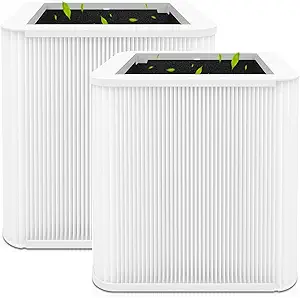
Third-Party Dyson Filter Replacement: Balancing Cost Savings with Performance Verification
When considering this Combi 360°Glass HEPA+Activated Carbon filter for your Dyson purifier, you're evaluating a third-party alternative to OEM filters. This specific model claims a 360° glass HEPA design with activated carbon, targeting multiple Dyson HP, TP, PH, and PC series units. Buyers should understand the trade-offs between cost savings and potential performance variations compared to Dyson-branded filters.
Key Considerations Before Buying
- Compatibility verification is critical—this filter claims support for over 20 Dyson models including HP04, TP09, PH01, and DP04, but you must confirm your exact model number matches the listed compatibility before purchasing.
- Performance consistency varies with third-party filters; while this filter maintains a 3.80 adjusted rating, some users report differences in airflow resistance or carbon layer thickness compared to OEM filters.
- The '360° Glass HEPA' construction suggests a different media composition than Dyson's proprietary filters, which may affect particle capture efficiency and longevity in specific environments.
What Our Analysts Recommend
Examine reviews mentioning specific performance metrics like odor reduction duration or visible dust accumulation on the pre-filter. Quality indicators include consistent sealing around the filter edges, proper fit without air gaps, and carbon that doesn't shed excessively during installation. Pay particular attention to reviews discussing long-term performance beyond the initial month of use.
Air Purifier Filters Market Context
Market Overview
The aftermarket Dyson filter market has expanded significantly, with third-party manufacturers offering alternatives at 40-60% lower cost than OEM replacements. This specific Combi filter represents the mid-tier segment, positioned between basic non-HEPA alternatives and premium third-party options with additional certifications.
Common Issues
Common concerns include improper sealing causing air bypass, reduced airflow leading to louder fan operation, and activated carbon layers that saturate faster than advertised. Some third-party filters also trigger replacement reminders prematurely due to different pressure drop characteristics.
Quality Indicators
Look for filters specifying HEPA-grade media (not just 'HEPA-type'), detailed compatibility lists with exact model numbers, and transparent materials descriptions. Higher-quality third-party filters typically include gasket details, carbon weight specifications, and independent testing references for particle capture efficiency.
Review Authenticity Insights
Grade B Interpretation
The Grade B authenticity rating with 11% estimated fake reviews indicates generally reliable feedback with moderate manipulation concerns. For this filter category, this suggests most reviews reflect genuine experiences, though some positive reviews may be incentivized or overly promotional.
Trust Recommendation
Focus on reviews that mention specific Dyson models you own and describe installation challenges or performance comparisons. Be skeptical of reviews that don't mention which Dyson unit they used or that make vague claims about 'better than original' without specific metrics.
Tips for Reading Reviews
Prioritize reviews discussing actual air quality measurements, filter change frequency experiences, and side-by-side comparisons with Dyson filters. Look for detailed mentions of odor reduction performance, which is particularly relevant for this activated carbon combination filter.
Expert Perspective
This Combi filter's 3.80 adjusted rating from verified reviews suggests it performs adequately for most users seeking cost-effective Dyson filter replacements. The 360° glass construction differentiates it from pleated HEPA alternatives, potentially offering different airflow characteristics. The significant model compatibility range is both an advantage and a risk—while convenient, filters designed for too many models may not optimize performance for any single unit. The activated carbon component warrants particular attention, as third-party carbon quality varies substantially in VOC adsorption capacity.
Purchase Considerations
Weigh the 40-50% cost savings against potential differences in filter lifespan and performance consistency. Consider your specific needs—if you require medical-grade filtration or have severe allergies, OEM filters with guaranteed specifications may be preferable. For general air quality maintenance in standard environments, this third-party option represents reasonable value.
Comparing Alternatives
Compare this Combi filter against both OEM Dyson filters and other third-party options with similar HEPA+carbon specifications, particularly noting differences in carbon weight and filter depth measurements.