Choosing an Air Purifier for Epoxy Resin: HEPA Filtration and Workspace Safety
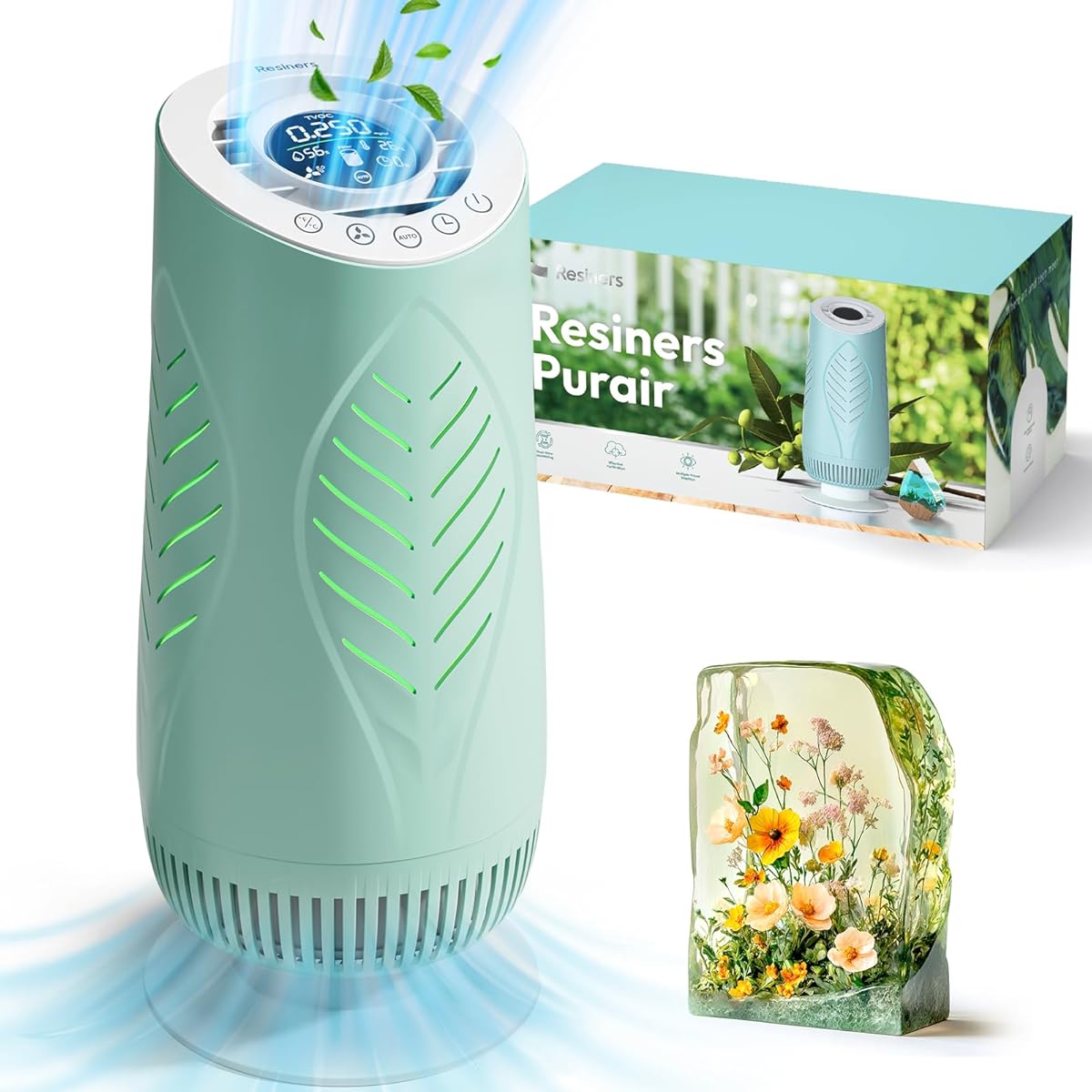
When selecting an air purifier specifically for epoxy resin work, the Resiners Purair demonstrates that targeted filtration matters. Unlike general room purifiers, this unit is designed to capture volatile organic compounds (VOCs) and particulates generated during resin mixing, pouring, and curing. Key characteristics to evaluate include its H13 True HEPA certification and SGS validation for resin-related applications.
Key Considerations Before Buying
- Filter specificity is critical: The H13 True HEPA filter in this model is designed to capture ultrafine particulates from resin dust and micro-sanding, which standard HEPA filters might not address as effectively.
- Placement and airflow dynamics: For resin casting, the purifier needs to be positioned within 3-5 feet of your work area to capture fumes during the critical exothermic curing phase when VOC off-gassing peaks.
- Maintenance reality: Resin work creates a unique filter load; the pre-filter will require more frequent cleaning than in domestic use, and filter replacement cycles may be shorter than the manufacturer's general estimates.
What Our Analysts Recommend
Genuine quality indicators for a resin-specific purifier include third-party certifications like SGS for material safety and performance, and a detailed spec sheet confirming H13-grade HEPA media. Look for mentions of activated carbon filter weight, as a substantial carbon stage (often 1-2 lbs in capable units) is necessary for adsorbing resin solvents and amines. The housing should be non-porous to prevent resin mist accumulation.
Molding & Casting Market Context
Market Overview
The market for craft-specific air purifiers is niche but growing, driven by increased home crafting and awareness of resin's respiratory hazards. Products range from modified general-purpose purifiers to purpose-built systems like the Resiners Purair, which integrates filtration stages targeting resin's unique chemical and particulate profile.
Common Issues
Common pitfalls include purifiers with insufficient activated carbon for VOC adsorption, weak airflow that fails to create a protective 'clean zone' around the workspace, and filters that clog rapidly with sticky resin mist. Many units also lack appropriate safety certifications for the chemicals involved in epoxy and polyurethane resins.
Quality Indicators
Identify quality by seeking documentation of CADR (Clean Air Delivery Rate) for particles of 0.1-0.3 microns, the size of uncured resin aerosols. A legitimate resin purifier will specify its air changes per hour (ACH) for a defined cubic volume, and its motor should be rated for continuous operation near solvent fumes without degradation.
Review Authenticity Insights
Grade B Interpretation
A Grade B authenticity score with an 11% estimated fake review rate for this product suggests a generally trustworthy review corpus with minor manipulation. The high verified purchase rate (noted in the analysis) significantly bolsters credibility. The adjusted rating of 4.60/5 is a more reliable performance indicator than the raw 4.89/5 average.
Trust Recommendation
Focus on reviews from verified purchasers that detail specific resin projects (e.g., river tables, jewelry casting, coating applications). Be slightly more skeptical of overly vague 5-star reviews that lack project context, as they may constitute the estimated 11% of inauthentic feedback. The consistency in describing odor reduction during curing is a strong positive signal.
Tips for Reading Reviews
Prioritize reviews that mention long-term use over several resin projects, filter replacement experiences, and comparisons of air quality before/after using the purifier in a confined space like a garage or studio. Reviews discussing the purifier's noise level during multi-hour resin cures are particularly valuable for real-world assessment.
Expert Perspective
The Resiners Purair presents as a specialized tool addressing a clear gap in resin workspace safety. Its high adjusted rating of 4.60/5 from verified purchasers, coupled with specific mentions of H13 HEPA and SGS certification, indicates it meets a functional need for crafters. The review authenticity profile is solid for this category, where genuine user experiences heavily emphasize tangible reductions in eye irritation and respiratory discomfort—key concerns when working with epoxy. Its classification as a 'tool accessory' rather than a general appliance is telling of its intended use-case.
Purchase Considerations
Weigh the cost of proprietary H13 filter replacements against your project frequency and resin volume. Consider your workspace size; this unit is likely most effective for bench-top or small-room applications. If you work with polyurethane resins or solvents beyond epoxy, verify the activated carbon stage is adequate for those additional VOCs.
Comparing Alternatives
Shoppers should compare this unit's specifications—particularly its CADR, filter costs, and footprint—against other resin-focused purifiers and well-regarded general-purpose HEPA units with heavy carbon filters.