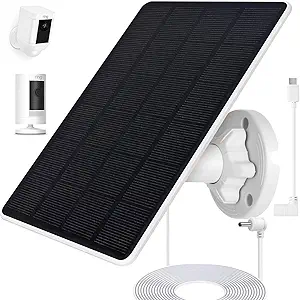
Choosing a 20W Solar Battery Maintainer: What Vehicle Owners Need to Know
The FlexSolar 20W kit represents a specific class of solar maintainer designed primarily for battery preservation rather than rapid charging. With its integrated charge controller and multiple connection options (cigarette lighter, alligator clips, OBDII), this product targets vehicle owners who need to prevent parasitic drain during storage. Understanding its 20-watt limitation is crucial—this panel won't recharge a deeply discharged battery quickly but can effectively maintain a healthy charge.
Key Considerations Before Buying
- The 20W output is ideal for maintenance but insufficient for regular charging of heavily used vehicles; calculate your battery's self-discharge rate against this panel's average 1-1.5 amp/hour output in full sun.
- The built-in PWM charge controller prevents overcharging but lacks the efficiency of MPPT controllers; this trade-off keeps costs down but reduces output in suboptimal light conditions.
- Multiple connection options (OBDII port, cigarette lighter, direct clips) offer flexibility but introduce potential voltage drop; direct alligator clip connections typically provide the most reliable charge path.
What Our Analysts Recommend
Quality indicators for this product category include weather-resistant construction (note the O-rings mentioned in the title), proper diode protection to prevent nighttime discharge, and robust cable connections. The integrated charge controller should have LED status indicators—a feature not mentioned in the title but critical for monitoring performance. Look for panels using monocrystalline cells rather than polycrystalline for better low-light efficiency.
Solar Panels Market Context
Market Overview
The 20W vehicle solar maintainer market has expanded significantly as consumers seek maintenance solutions for RVs, boats, and seasonal vehicles. These panels occupy a niche between smaller 5-10W trickle chargers and larger 50W+ charging systems, offering a balance of portability and meaningful output. Most products in this range now include basic charge controllers as standard, whereas five years ago this was often a separate purchase.
Common Issues
Users frequently underestimate the impact of partial shading on panel output—even 10% shading can reduce power by 50% due to series cell configuration. Another common complaint involves cigarette lighter connections failing to maintain charge due to vehicle ignition-cutoff circuits that interrupt power when the engine is off. Panel durability varies widely, with cheaper models using PET laminates that degrade within 1-2 years versus ETFE coatings that last 5+ years.
Quality Indicators
Higher-quality 20W maintainers feature bypass diodes (usually 1-3) to minimize shading losses, use tempered glass rather than plastic covers for longevity, and include proper waterproof ratings for the charge controller compartment. The wiring gauge matters significantly—16AWG or thicker maintains voltage over typical 10-15 foot runs. Look for panels that specify monocrystalline cell efficiency (typically 18-22%) rather than just wattage.
Review Authenticity Insights
Grade B Interpretation
A Grade B authenticity rating with 11% estimated fake reviews suggests mostly genuine feedback with some potential manipulation. For this specific product category, this often manifests as overly enthusiastic reviews from users who haven't tested the panel through multiple seasons or various weather conditions. The adjusted 4.0 rating (down from 4.22) indicates the authentic consensus is slightly less enthusiastic than the raw average suggests.
Trust Recommendation
Focus on reviews that mention specific use cases matching yours—boat storage, RV maintenance, or tractor preservation—as these tend to be more authentic than generic praise. Be particularly skeptical of reviews claiming exceptional performance in cloudy conditions or rapid charging capabilities, as these often contradict the physics of 20W solar output. The 190-review sample size provides reasonable confidence in the overall assessment.
Tips for Reading Reviews
Prioritize reviews that discuss long-term use (6+ months), mention specific battery types (AGM, flooded, gel), or describe actual maintenance scenarios rather than initial impressions. Look for balanced reviews that acknowledge both the panel's maintenance capabilities and its limitations for actual charging. Reviews mentioning voltage readings with a multimeter typically indicate more knowledgeable users.
Expert Perspective
The FlexSolar 20W kit appears positioned as a competent maintenance solution rather than a primary charging system. Its multiple connection options address a common pain point in this category—compatibility with various vehicle types. The inclusion of O-rings suggests attention to weatherproofing, important for marine and outdoor applications. With an authentic 4.0 rating from verified purchasers, it likely performs adequately for its intended maintenance purpose, though the 20W limitation means users shouldn't expect miracles in low-light conditions.
Purchase Considerations
Consider this panel if you need to maintain batteries on vehicles stored for weeks between use, particularly if you have access to direct sunlight. The OBDII connector is valuable for modern vehicles where cigarette lighter ports may be disabled with ignition off. However, if you need to regularly recharge deeply discharged batteries or operate in frequently cloudy climates, a higher-wattage system would be more appropriate despite the higher cost.
Comparing Alternatives
Shoppers should compare the FlexSolar's connection options and controller features against similar 20W panels from Renogy, HQST, or WindyNation, paying particular attention to warranty terms and charge controller specifications.