
Choosing a Capacitor Spot Welder for DIY Battery Packs: What Matters Most
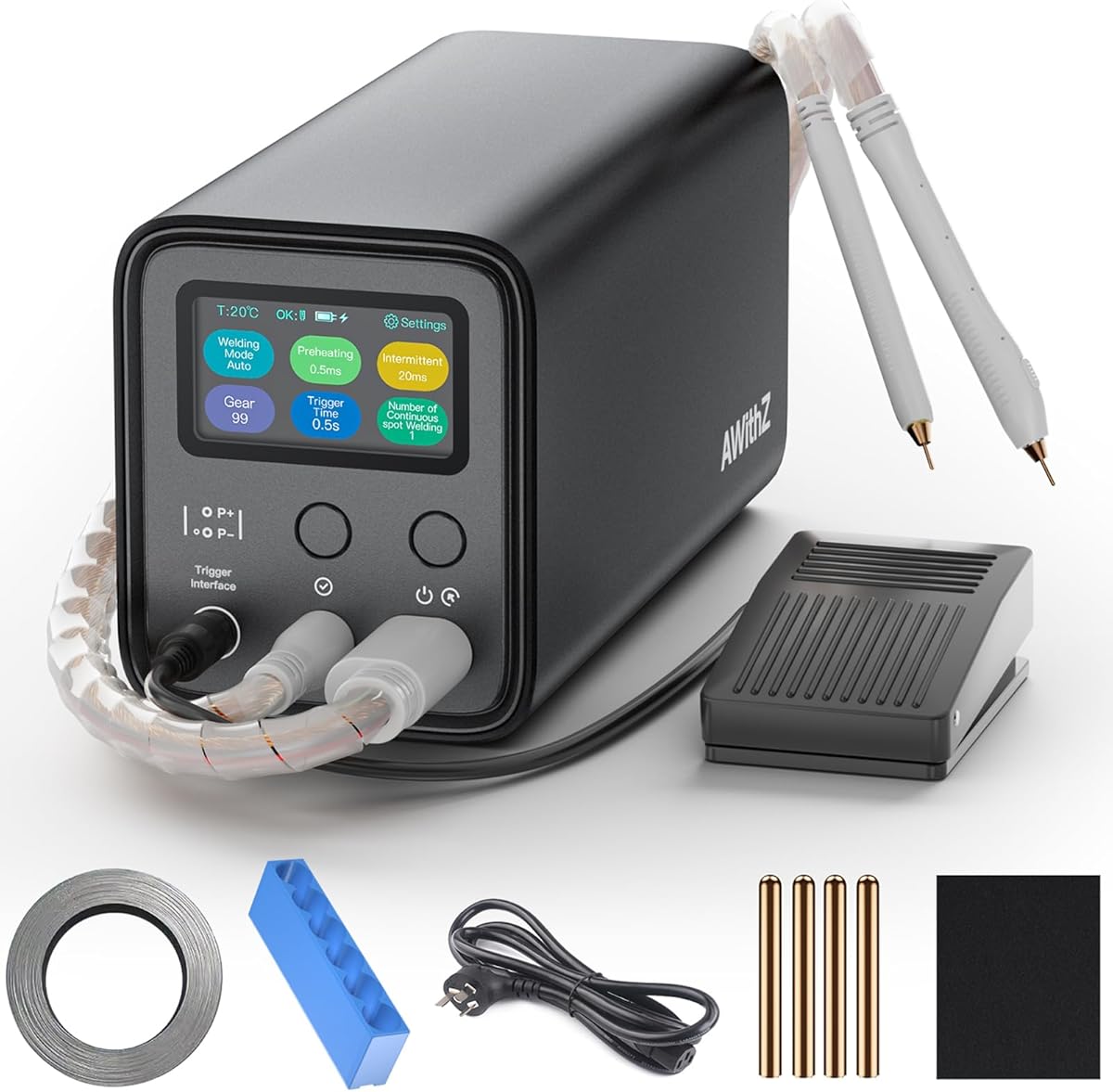
The AWithZ UF20B is a 10.5KW capacitor-based spot welder designed for building lithium battery packs from cells like 18650s and LiFePO4. Buyers should understand that its capacitor discharge system prioritizes high, instantaneous power over continuous operation, making it ideal for nickel strip welding but unsuitable for traditional metal fabrication.
Key Considerations Before Buying
- The 3-in-1 control (Auto/Manual/Foot Pedal) is crucial for workflow; Auto mode handles repetitive welds, Manual offers precision for tricky spots, and the foot pedal frees both hands for cell alignment.
- Capacitor welders like this require a brief charge cycle between welds; assess if the stated power (10.5KW) and your intended nickel thickness (typically 0.15-0.2mm) are compatible for consistent penetration without cell damage.
- This tool is specialized for battery assembly, not general welding. Verify your power source can handle its peak current draw and that you have proper workspace ventilation for the brief ozone produced during arcing.
What Our Analysts Recommend
For capacitor welders, quality indicators include robust, well-insulated welding pen connections, a clear digital display for setting weld energy and delay, and a sturdy foot pedal with a reliable switch. The build quality of the electrode holders directly impacts weld consistency and tip life.
Spot Welding Equipment Market Context
Market Overview
The market for hobbyist-grade battery spot welders is growing, driven by DIY powerwall, EV conversion, and tool battery repair projects. Capacitor-based models like the UF20B compete with lower-power AC transformer welders and more expensive microprocessor-controlled units.
Common Issues
Common problems include inconsistent weld strength due to poor tip pressure or dirty contacts, capacitor degradation over time reducing peak power, and control boards failing from back-EMF without proper protection circuits. Users often struggle with dialing in the correct energy setting for different nickel strip thicknesses.
Quality Indicators
Look for units with thick, pure copper busbars, high-quality capacitors (often labeled from brands like Nippon Chemi-Con), and a metal chassis for heat dissipation. A good warranty and available spare parts (like electrodes and tips) are strong signals of manufacturer support.
Review Authenticity Insights
Grade B Interpretation
A 'B' grade with an estimated 11% fake review rate suggests the majority of feedback is trustworthy, but a small portion may be incentivized. The adjusted rating of 4.30/5 (down from 4.56) is a more reliable performance indicator.
Trust Recommendation
Focus on reviews that detail specific projects (e.g., 'built a 14s8p 18650 pack'), mention setup challenges, or discuss long-term reliability over several months. Be slightly more skeptical of overly vague 5-star reviews that lack technical details.
Tips for Reading Reviews
Prioritize reviews that mention the three operating modes separately, discuss weld consistency across a full battery pack, or note the unit's behavior with different input voltages. These specifics indicate hands-on experience rather than superficial feedback.
Expert Perspective
The AWithZ UF20B's strong adjusted rating (4.30) from largely authentic reviews indicates it performs reliably for its niche purpose. The 10.5KW rating and three-mode operation position it as a capable mid-range tool for serious DIY battery builders. The authenticity analysis suggests the positive reception is genuine, though the minor presence of potentially fake reviews means shoppers should still scrutinize the most effusive praise. Its value lies in offering manual control for learning and automated functions for production.
Purchase Considerations
Weigh this welder's higher instantaneous power and flexible controls against simpler, cheaper transformer models. It's a compelling buy if you regularly build multi-cell packs and need the repeatability of auto mode, but may be overkill for occasional, small repairs. Ensure you're comfortable with the safety protocols for high-current capacitor systems.
Comparing Alternatives
Shoppers should compare the UF20B's specifications, particularly its joule output and charge time, against other capacitor welders like the Malectrics or Kweld units to assess value.


