
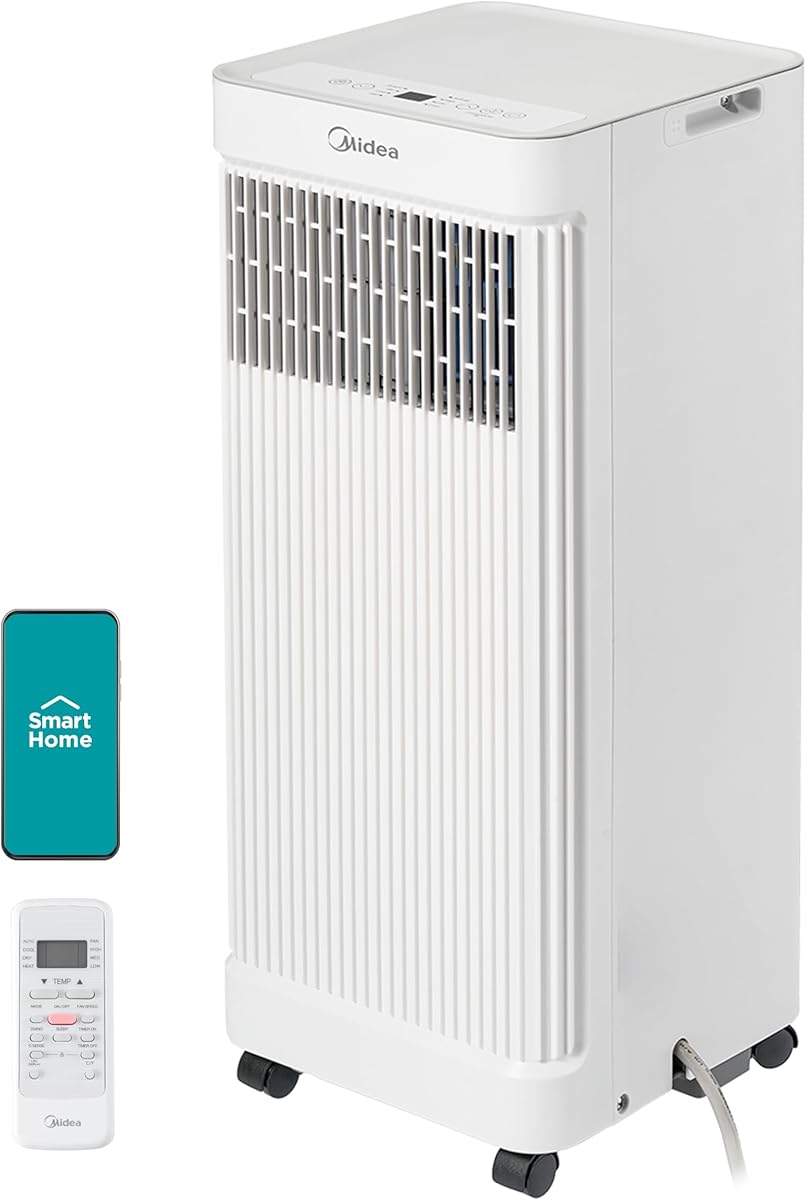
Cooling Small Spaces: Midea's Smart 8,500 BTU Portable AC Reviewed
When choosing a portable air conditioner for a room up to 150 sq. ft., it's important to understand the difference between ASHRAE and SACC BTU ratings. The Midea 8,500 BTU unit is rated at 5,000 BTU SACC, meaning it's best for small bedrooms, home offices, or dorm rooms rather than larger living areas. This guide will help you evaluate its smart features, installation requirements, and overall value.
Key Considerations Before Buying
- BTU ratings matter: The ASHRAE rating (8,500 BTU) is measured under ideal conditions, while the SACC rating (5,000 BTU) reflects real-world performance. For a 150 sq. ft. room, the SACC rating is more accurate for judging cooling power.
- Smart control convenience: This model includes Wi-Fi connectivity and app control, allowing you to adjust settings remotely. This is especially useful for pre-cooling a room before you arrive home.
- Multi-function versatility: Beyond cooling, the unit offers dehumidifier and fan modes. If you live in a humid climate, the dehumidifier function can help improve comfort without running the AC constantly.
What Our Analysts Recommend
Look for units with dual-hose designs for better efficiency, though single-hose models like this are simpler to install. Check the noise level (measured in dB) and whether the window kit fits your window type. Also, confirm the unit's energy efficiency ratio (EER) to gauge operating costs.
Portable Market Context
Market Overview
The portable air conditioner market has grown rapidly, with smart features and compact designs becoming standard for small-space cooling. Brands like Midea, LG, and Frigidaire compete with models ranging from 5,000 to 14,000 BTU, often emphasizing Wi-Fi connectivity and multi-function modes.
Common Issues
Common complaints include higher noise levels than window units, less efficient cooling in very hot climates, and condensation management requiring manual draining in humid conditions. Some users also report difficulty fitting window kits to non-standard windows.
Quality Indicators
High-quality portable ACs typically have a solid build, clear user manuals, and a reliable compressor brand. Look for models with a washable filter, a condensate pump for automatic draining, and positive reviews that mention consistent cooling over time.
Review Authenticity Insights
Grade B Interpretation
With an authenticity grade of B and an estimated 10% fake review rate, this product's reviews are largely trustworthy but not flawless. The fake reviews likely inflate the overall rating slightly, so the adjusted rating of 4.00/5 is a more realistic benchmark.
Trust Recommendation
Rely on detailed reviews that mention specific experiences, such as cooling performance in a 150 sq. ft. room or ease of using the smart app. Be cautious of reviews that lack personal context or use overly promotional language.
Tips for Reading Reviews
Focus on verified purchase reviews that describe installation challenges, noise levels, and how well the unit handles humidity. Look for patterns in feedback, such as multiple users noting the same strength or weakness.
Expert Perspective
The Midea 8,500 BTU portable AC offers a solid balance of smart features and cooling power for small rooms, but its real-world performance aligns more with its 5,000 BTU SACC rating. The 4.00/5 adjusted rating suggests it's a reliable choice for basic cooling needs, though it may struggle in extreme heat or larger spaces. Its smart control and dehumidifier add convenience, but the single-hose design is less efficient than dual-hose alternatives.
Purchase Considerations
Consider this unit if you need a flexible cooling solution for a small room and value app-based control. However, if you have a larger space or live in a hot climate, you may want a higher SACC-rated model or a dual-hose system for better efficiency.
Comparing Alternatives
Shoppers should compare this Midea model with other portable ACs in the same price range, such as the LG LP0621WSR or Black+Decker BPACT08WT, to evaluate features like noise levels and energy consumption.


