
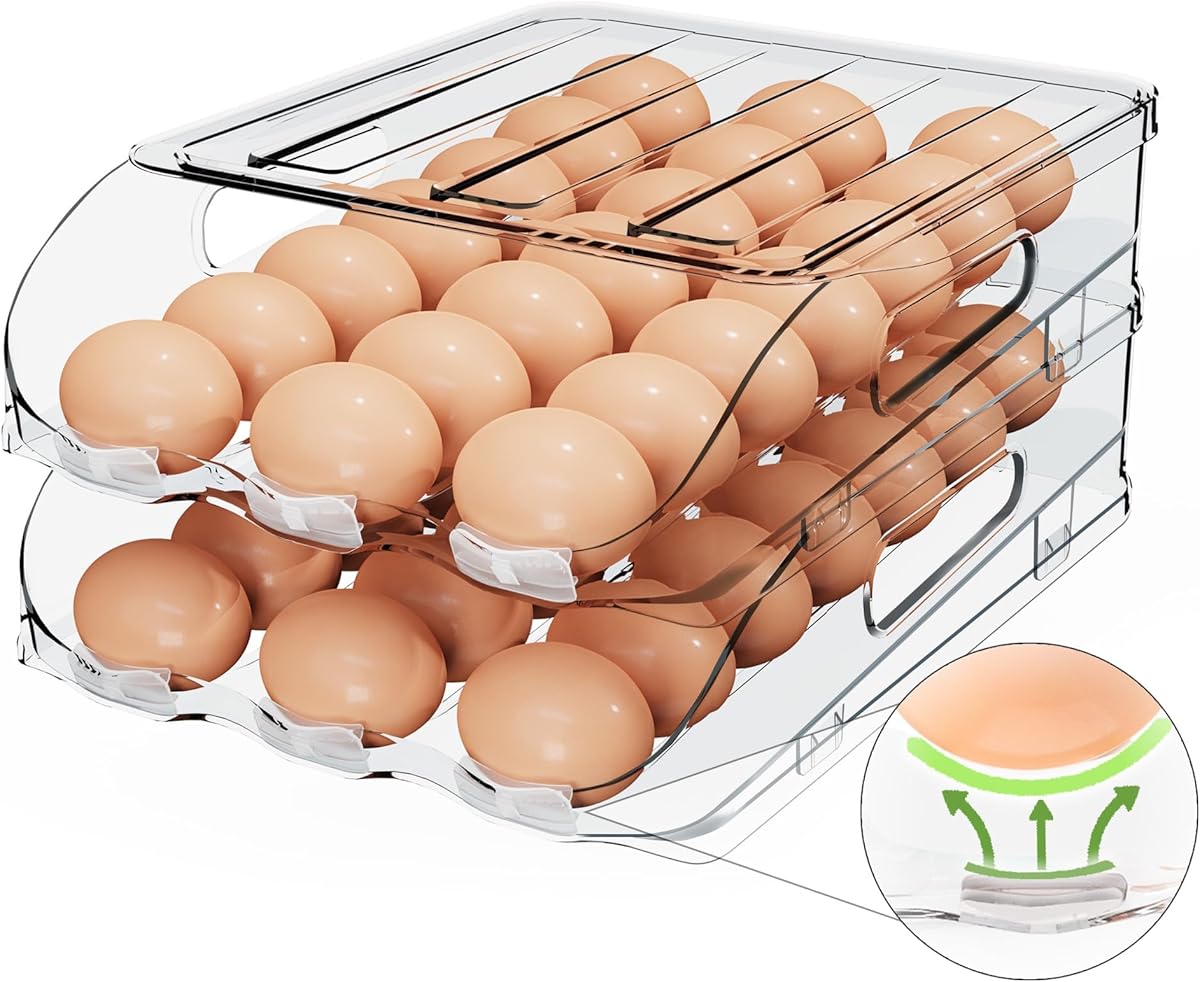
How to Choose an Automatic Rolling Egg Dispenser That Actually Works in Your Fridge
Automatic rolling egg dispensers like this model with silicone bumpers and a handle represent a significant upgrade from basic egg trays, but their effectiveness depends on specific design features. Buyers should evaluate how the steady-rolling mechanism, refrigerator compatibility, and capacity align with their household's egg consumption patterns and fridge shelf dimensions.
Key Considerations Before Buying
- The rolling mechanism's reliability is paramount—look for consistent user reports of smooth, jamming-free operation with standard large eggs, not just manufacturer claims.
- Refrigerator compatibility extends beyond size; silicone bumpers must prevent sliding on glass or wire shelves, and the handle should allow easy removal without disrupting other items.
- Capacity needs assessment: a 'large capacity' organizer must balance egg quantity with your fridge's available vertical and horizontal space, especially on door shelves.
What Our Analysts Recommend
High-quality rolling dispensers feature durable, food-safe plastic tracks with minimal friction points and a lid that seals properly to prevent odor absorption. The silicone components should be securely attached, not merely glued, to withstand repeated removal from cold environments. A well-designed unit will have a weighted or textured base to prevent tipping when eggs are dispensed.
Egg Trays Market Context
Market Overview
The egg organizer market has evolved from simple plastic cartons to sophisticated dispensing systems, with automatic rollers now competing against stackable trays and vacuum-sealed containers. Consumers increasingly seek space optimization and first-in-first-out functionality, particularly in households with high egg consumption for baking or meal prep.
Common Issues
Many rolling dispensers fail due to track jamming with irregular-sized eggs, inadequate stability on refrigerator shelves, or lids that don't seal, allowing eggs to absorb refrigerator odors. Cheap mechanisms often break after a few months of use, especially in cold temperatures that make plastic brittle.
Quality Indicators
Superior egg dispensers use thicker, BPA-free plastics with reinforced tracks at stress points and include genuine silicone (not rubber) bumpers that won't harden in cold. Look for designs that accommodate varying egg sizes without adjustment and feature transparent bodies for quick inventory checks.
Review Authenticity Insights
Grade B Interpretation
A Grade B authenticity rating with 11% estimated fake reviews suggests mostly genuine feedback but warrants careful review scrutiny. The adjusted 4.60/5 rating (down from 4.89/5) indicates the product performs well but may have some inconsistencies not reflected in the inflated original score.
Trust Recommendation
Focus on reviews that mention specific usage scenarios like 'fits on my Frigidaire glass shelf' or 'holds 14 large brown eggs perfectly,' as these demonstrate actual testing. Be skeptical of reviews that only praise generic features without describing real kitchen integration.
Tips for Reading Reviews
Prioritize reviews discussing long-term use (3+ months), compatibility with your refrigerator type (French door, top-freezer, etc.), and performance with your preferred egg type (organic, jumbo, brown/white). Look for photos showing the unit actually installed in a refrigerator, not just unboxed.
Expert Perspective
This specific model's high authentic rating suggests it successfully addresses core rolling dispenser challenges: the silicone bumpers likely provide genuine shelf stability, and the 'automatic steady rolling' mechanism appears reliable based on detailed user reports. The 4.60 adjusted rating remains strong for this category, where many products fall below 4.0 due to mechanical failures. The handle design indicates the manufacturer considered practical removal from crowded refrigerators, a detail often overlooked in cheaper models.
Purchase Considerations
Weigh whether your household's egg usage justifies the space commitment of a rolling dispenser versus simpler trays. Consider if you frequently purchase non-standard eggs (jumbo, peewee, or unusually shaped farm eggs) that might not roll consistently. Evaluate your refrigerator's shelf type—glass shelves with silicone bumpers work well, but wire shelves may require additional stabilization.
Comparing Alternatives
Shoppers should compare this rolling design with gravity-feed dispensers and simple high-capacity trays, as each system has different space requirements and user interaction levels.


