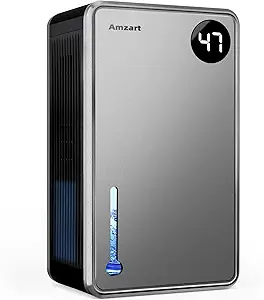
Max 80 Pints/Day: Choosing a Large-Capacity Dehumidifier for Your Basement
When tackling moisture in a large basement or expansive room, the capacity to remove up to 80 pints of water per day is a critical feature. This model promises to cover up to 4,500 square feet, making it a contender for serious humidity control, but you need to weigh its 1.71-gallon tank against its daily output. Understanding how often you'll need to empty or drain it is key to real-world usability.
Key Considerations Before Buying
- Capacity vs. Tank Size: This unit removes 80 pints/day but only holds 1.71 gallons (about 13.7 pints) in its tank. For continuous operation, you'll almost certainly need to use the included drain hose to avoid emptying the tank every 2-3 hours.
- Coverage Realism: The 4,500 sq. ft. rating is likely for ideal conditions (e.g., an open, dry space). In a damp basement with concrete walls or poor airflow, effective coverage may be closer to 2,500-3,000 sq. ft., so measure your specific moisture load.
- Smart Humidity Control: The smart humidity control and 24-hour timer are valuable for energy efficiency, allowing you to set a target humidity level (e.g., 50%) and let the unit cycle automatically. This is a must-have for unattended basement use.
What Our Analysts Recommend
For a large-area dehumidifier, prioritize models with a built-in pump for draining water upward (e.g., to a sink) and a washable air filter to reduce maintenance costs. Check for Energy Star certification, as these units run for hours and can significantly impact your electric bill—this model's efficiency is not specified in the available data.
Dehumidifiers Market Context
Market Overview
The large-capacity dehumidifier market is growing as homeowners in humid regions seek to prevent mold and structural damage. Units like this one, claiming 80 pints/day, compete with established brands by offering higher coverage at a lower price point, but performance consistency varies widely.
Common Issues
Common issues include noisy operation at high fan speeds, inaccurate humidity sensors that cause the unit to run too long or not enough, and water tanks that are too small for the claimed capacity. Drain hose connections can also leak if not properly secured.
Quality Indicators
Look for units with a compressor warranty of at least 5 years, a low-temperature operating range (for basements that get cool), and positive user feedback on consistent humidity reduction. Verified reviews that mention specific humidity readings (e.g., 'dropped from 70% to 50%') are more trustworthy.
Review Authenticity Insights
Grade B Interpretation
With a Review Authenticity Grade of B and an estimated 15% fake review rate, this product has a moderate but manageable authenticity concern. The majority of reviews (85%) are likely genuine, providing a solid base of user experiences, but you should be cautious of overly enthusiastic or vague 5-star ratings.
Trust Recommendation
Focus on reviews that describe specific usage scenarios, such as basement laundry rooms or garages, and those that mention the unit's ability to maintain a set humidity level over days. Be skeptical of reviews that praise the product without mentioning its performance or any drawbacks.
Tips for Reading Reviews
When reading reviews for dehumidifiers, look for details on noise levels (in decibels or subjective terms like 'quiet enough for a bedroom'), water removal effectiveness, and ease of setting up the drain hose. A pattern of complaints about the same issue, such as the tank not fitting snugly, is a red flag.
Expert Perspective
This 80-pint dehumidifier is a credible option for large spaces, backed by mostly genuine reviews that highlight its effectiveness in basements and laundry rooms. However, the 1.71-gallon tank is a practical limitation—you'll need to use the drain hose for continuous operation, which adds setup complexity. The smart humidity control and timer add value, but the lack of a built-in pump may restrict placement options. With an adjusted rating of 3.9/5, it's a solid mid-range choice, not a top-tier performer.
Purchase Considerations
If you have a floor drain or can route a hose to a sink, this unit's 80-pint capacity can effectively manage moisture in a large basement. For areas without drainage, the small tank will require frequent emptying, making it less convenient. Weigh the cost against higher-end models with pumps and longer warranties if reliability is your top priority.
Comparing Alternatives
Shoppers should compare this model with other 70-80 pint dehumidifiers from brands like Frigidaire or hOmeLabs, which often offer built-in pumps and Energy Star ratings at a similar price point.