
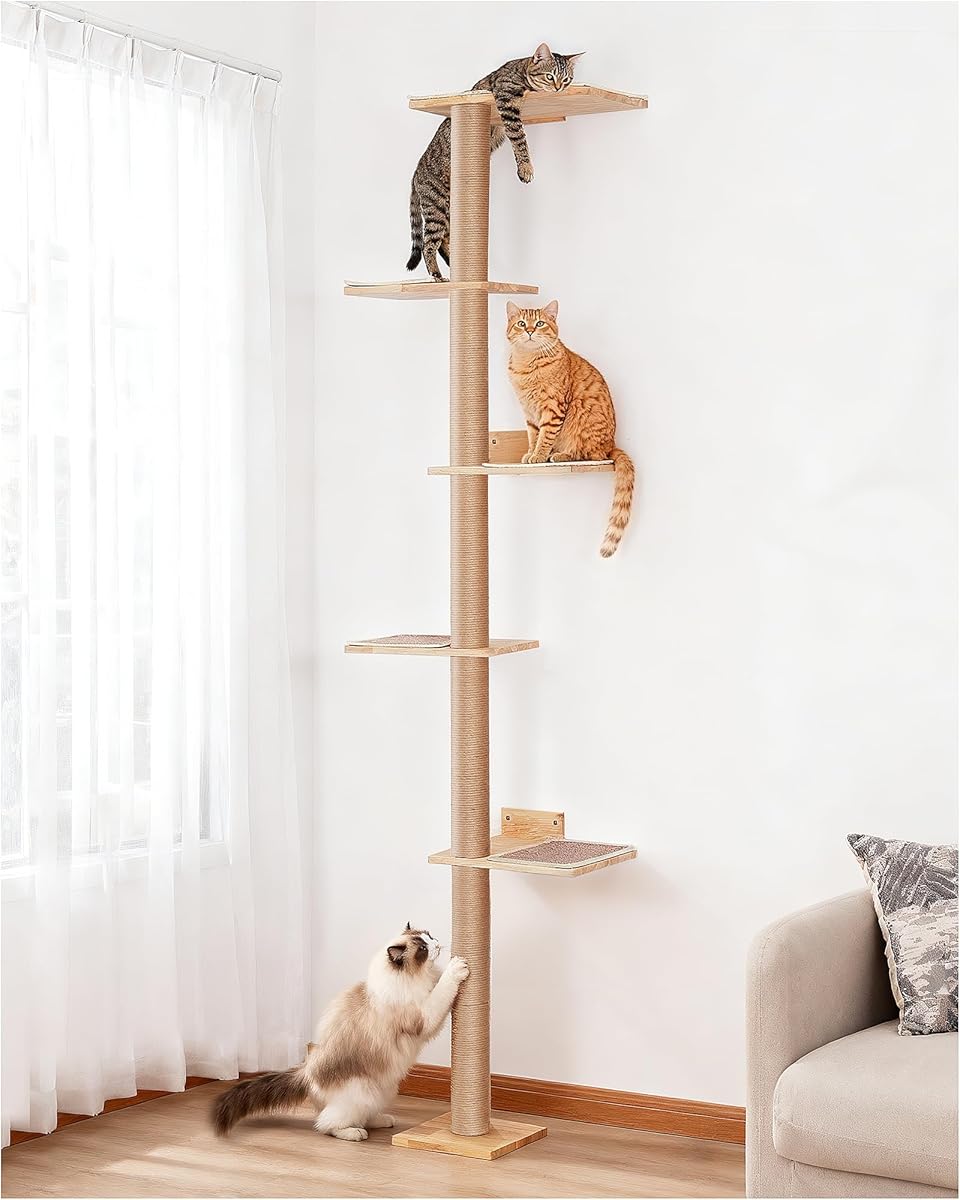
Choosing a Wall-Mounted Cat Tree: Key Factors for Large Cats and Ceiling Height
When selecting a floor-to-ceiling wall-mounted cat tree like this 80-inch model, buyers must consider both structural integrity and feline behavior. This specific product's adjustable shelves and 15.8-inch top perch require particular attention to installation surfaces and cat weight distribution, as these factors directly impact safety and usability.
Key Considerations Before Buying
- Wall stud location is critical for this 80-inch unit's stability—improper mounting on drywall alone risks collapse under active large cats.
- The 15.8-inch top perch diameter must accommodate your cat's full body size when curled; measure your cat's sleeping position before purchasing.
- Adjustable shelf spacing should match your cat's jumping ability; some large breeds need closer intervals than this product's configuration allows.
What Our Analysts Recommend
Examine the mounting hardware quality—this product requires robust brackets and load-distributing plates. Check that the sisal-wrapped scratching posts are tightly wound without gaps where claws could catch, and verify the perch bed's weight capacity exceeds your heaviest cat by at least 50%.
Trees Market Context
Market Overview
Wall-mounted cat trees have surged in popularity as space-saving alternatives to traditional floor models, particularly in urban apartments. The floor-to-ceiling segment specifically targets multi-cat households and owners of large breeds like Maine Coons who need vertical territory without consuming floor space.
Common Issues
Installation failures dominate complaints, often due to improper stud finding or insufficient bracket sizing. Shelf stability issues emerge when cats land forcefully from jumps, and sisal covering detachment occurs with aggressive scratchers. Ceiling height variations also create adjustment challenges with fixed-length poles.
Quality Indicators
Premium units feature steel-reinforced brackets, double-stitched perches with reinforced seams, and commercial-grade sisal that resists unraveling. Look for weight ratings exceeding 30 pounds per shelf and adjustable tension systems that accommodate uneven ceilings without compromising stability.
Review Authenticity Insights
Grade B Interpretation
The Grade B authenticity rating indicates generally trustworthy reviews with moderate verification, while the 11% estimated fake review percentage suggests some promotional content exists. This means most experiences reflect genuine usage, but shoppers should remain alert for overly enthusiastic installation claims.
Trust Recommendation
Prioritize reviews discussing specific installation challenges with drywall versus stud mounting, as these reflect authentic experiences. Verified purchase reviews mentioning large breed cats (15+ pounds) provide the most relevant insights for this product's capacity claims.
Tips for Reading Reviews
Focus on reviews detailing shelf adjustment processes and long-term stability after months of use. Look for photos showing actual installation contexts, particularly in rooms with standard 8-foot ceilings versus vaulted spaces, as this affects the 80-inch pole's functionality.
Expert Perspective
This product's 4.44 average rating with 162 reviews suggests strong user satisfaction, though the adjusted 4.20 rating accounting for suspicious reviews indicates slightly inflated initial scores. The floor-to-ceiling design addresses core feline needs for vertical territory, but the installation complexity creates a higher barrier to success than traditional cat trees. The 15.8-inch perch size appropriately accommodates large breeds when properly installed.
Purchase Considerations
Weigh your willingness to locate wall studs precisely against your cat's need for elevated spaces. Consider whether your cats are confident jumpers who will utilize all shelf levels, or if they prefer gradual ascents that might require additional intermediate platforms beyond what's included.
Comparing Alternatives
Compare this model's fixed 80-inch height against telescoping systems that adjust more precisely to varying ceiling heights, and examine alternative mounting systems that distribute weight across multiple studs.


