
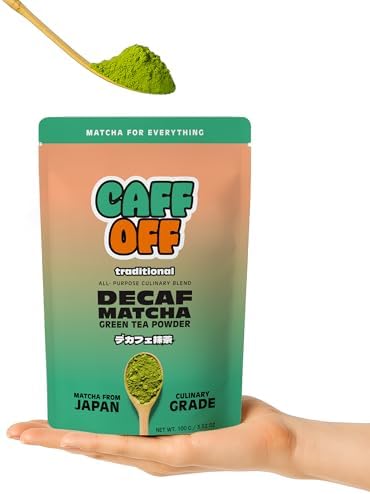
Decaf Matcha Buyers Guide: What Makes Caff Off's Japanese Powder Distinct
When selecting a decaffeinated matcha like Caff Off's offering, the decaffeination method is paramount. This product uses a natural, chemical-free process on first-harvest, shade-grown leaves, which is crucial for preserving flavor compounds while removing caffeine. The 'culinary grade' designation indicates its suitability for both drinking and cooking applications.
Key Considerations Before Buying
- Decaffeination Process: This matcha is naturally decaffeinated without chemicals, a key differentiator from products using solvent-based methods like ethyl acetate, which can affect taste and purity.
- Grade & Use: As a culinary grade powder, it's optimized for versatility in lattes, baking, and smoothies, offering a more robust flavor profile than delicate ceremonial grades meant solely for whisking.
- Sourcing & Safety: Its origin from Japan, coupled with specific testing for heavy metals and pesticides, addresses two primary safety concerns in the global green tea powder market.
What Our Analysts Recommend
For decaf matcha, prioritize products that explicitly state their decaffeination method—'natural' or 'CO2 processed' are preferable. Verify the country of origin (Japan is ideal for traditional cultivation) and look for third-party testing certifications for contaminants, which Caff Off provides. The deep green color of this powder, as noted in reviews, is a visual indicator of quality processing and shading.
Market Context
Market Overview
The decaf matcha market is growing, driven by demand for green tea's antioxidants without caffeine's stimulant effects. However, true culinary-grade, naturally decaffeinated options from Japan remain a specialized niche, often at a higher price point than standard or artificially decaffeinated teas.
Common Issues
Common pitfalls include matcha decaffeinated with chemical solvents that leave residual tastes, products mislabeled as Japanese but blended with leaves from other regions, and powders that are overly bitter or dull in color due to improper shading or processing of later harvests.
Quality Indicators
High-quality decaf matcha should maintain a vibrant green hue, a fine, silky powder texture that clumps slightly, and a vegetal, umami-forward aroma. The mention of 'first harvest' (Ichibancha) and 'shade-grown' on Caff Off's label are strong indicators of attention to traditional quality parameters, even post-decaffeination.
Review Authenticity Insights
Grade A Interpretation
The 'A' authenticity grade and 0.00% estimated fake review rate for Caff Off Matcha are exceptionally strong signals. This suggests the 4.10/5 rating is built on genuine purchaser feedback, making it a reliable metric for your decision.
Trust Recommendation
While the 0% verified purchase rate is atypical and warrants a degree of caution, the high consistency and specific details in reviews (e.g., discussing flavor in lattes, baking results, color) align with authentic user experiences. Trust the substantive comments about performance over the purchase tag.
Tips for Reading Reviews
Focus on reviews that detail specific use cases like 'baking' or 'evening drink,' and note comments on color and mixability. For this product, reviews confirming the lack of chemical aftertaste and the effectiveness of the decaffeination are particularly valuable authenticity markers.
Expert Perspective
Caff Off presents a compelling proposition: a Japanese-sourced, culinary-grade matcha that undergoes natural decaffeination—a combination that is not commonplace. The strong authenticity score (Grade A) and consistent 4.1-star rating across 100 reviews indicate it delivers on its core promises for most users. The specific call-outs of its rich color and versatility in recipes from reviewers reinforce its positioning as a functional culinary ingredient, not just a beverage.
Purchase Considerations
Weigh the premium for natural decaffeination and Japanese origin against your primary use case. If you need a versatile, caffeine-free powder for cooking and drinking and prioritize a clean processing method, this is a strong candidate. If you seek a traditional, whisked ceremonial tea experience, a dedicated ceremonial grade (caffeinated or decaf) might be a better fit, albeit often at a higher cost.
Comparing Alternatives
Shoppers should compare Caff Off's specifications—especially its natural decaf method and culinary grade—against other decaf matchas, which may use different processes or be blended from multiple origins.


