
High-Capacity Power Banks: Balancing Massive Capacity with Practical Portability
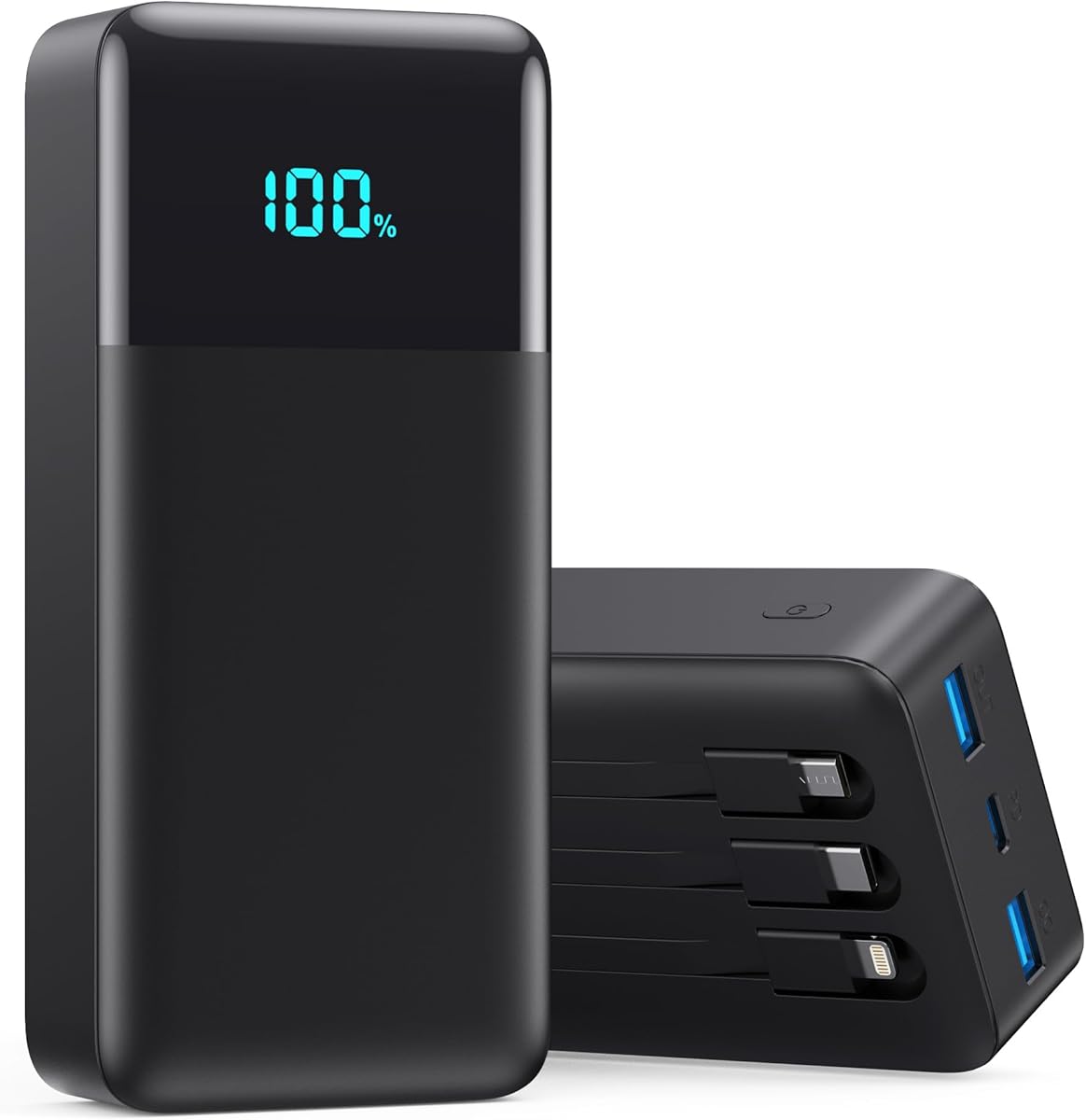
The AONIMI 50800mAh model represents the high-capacity segment of power banks, designed for users who prioritize multiple full charges over ultra-portability. With its 25W PD QC4.0 fast charging and six outputs, this product targets travelers and multi-device users who need extended power away from outlets. The three built-in cables add convenience but also impact the overall form factor.
Key Considerations Before Buying
- Capacity vs. Portability: At 50800mAh, this bank can charge an iPhone 15 Pro approximately 8-9 times, but weighs over 2 pounds—consider if you truly need this much capacity versus a lighter 20000mAh option.
- Fast Charging Compatibility: The 25W PD and QC4.0 support means it can fast-charge modern Samsung phones and provide decent speeds for iPhones, but won't match the 45W+ speeds some premium Android devices support.
- Built-in Cable Utility: The integrated Lightning, USB-C, and Micro-USB cables eliminate dongle hunting but represent potential failure points; assess your device mix and whether you'd prefer removable cables.
What Our Analysts Recommend
For high-capacity banks, examine the actual output wattage distribution across ports—some banks advertise 25W but only deliver it on one port. Check for clear capacity labeling in watt-hours (Wh) for airline compliance; this 50800mAh bank equals approximately 185Wh, requiring airline approval. Quality indicators include robust casing around built-in cables and clear input specifications for recharging this massive battery.
Portable Power Banks Market Context
Market Overview
The power bank market has bifurcated into ultra-portable 10000mAh models and high-capacity 30000mAh+ units like this AONIMI, with the latter growing among frequent travelers and outdoor enthusiasts. Current trends emphasize faster PD charging standards and multi-device support, reflected in this product's six outputs and 25W rating.
Common Issues
High-capacity banks often suffer from inaccurate capacity reporting, with actual output sometimes 30% below advertised mAh due to conversion losses and circuit inefficiencies. Built-in cables present durability concerns, as strain relief is challenging to engineer, and the integrated cables may become obsolete with connector changes.
Quality Indicators
Look for UL certification or CE/FCC marks indicating safety testing, especially important with large lithium packs. Premium units specify the battery cell type (Li-polymer vs. Li-ion) and include temperature protection circuits. The presence of digital capacity displays, like some competitors offer, provides more precise remaining charge information than four-LED systems.
Review Authenticity Insights
Grade B Interpretation
A Grade B with 11% estimated fake reviews suggests generally authentic feedback with some promotional padding. The adjusted 4.60 rating (from 4.89) indicates genuine satisfaction likely sits between 'very good' and 'excellent' rather than near-perfect. This pattern is common for electronics accessories where sellers incentivize early reviews.
Trust Recommendation
Focus on verified purchase reviews mentioning specific use cases like 'weekend camping' or 'international travel'—these demonstrate real-world testing of the claimed capacity. Be skeptical of reviews that only praise the product count (50800mAh) without discussing actual charging cycles achieved or recharging time.
Tips for Reading Reviews
Prioritize reviews discussing the 25W charging speed with specific devices (e.g., 'charged my Galaxy S23 Ultra 50% in 35 minutes') and those mentioning airline travel with the bank. Look for mid-term durability reports (3-6 months of use) that address built-in cable reliability and capacity retention over time.
Expert Perspective
This AONIMI power bank occupies a specific niche: maximum capacity with built-in convenience cables. The 4.60 adjusted rating from 628 reviews suggests it delivers on core promises for most users, though the 25W charging is becoming mid-tier as 45W+ banks emerge. The six outputs are genuinely useful for families or multiple devices, but simultaneous high-wattage charging will reduce total capacity due to conversion efficiency losses. The product's main trade-off is weight and size versus its exceptional charge count capabilities.
Purchase Considerations
Consider this bank if you regularly need 4+ full phone charges between outlets, travel to areas with unreliable power, or charge multiple devices simultaneously. Avoid it if you prioritize pocketability or need maximum charging speeds above 30W for compatible laptops or tablets. The built-in cables are convenient but assess whether your device mix matches the included types long-term.
Comparing Alternatives
Compare with similarly priced 50000mAh banks from Anker or INIU that may offer higher PD speeds or digital displays, though often without integrated cables.


