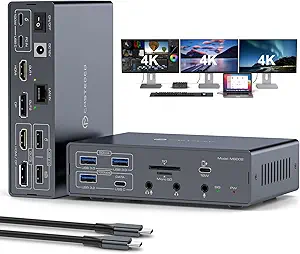
Choosing a USB-C Dual Monitor Hub: What Matters for 4K@60Hz and 100W Charging
This specific USB-C hub distinguishes itself by combining true 4K@60Hz video output on two displays with full 100W power delivery, a combination not all hubs achieve. Buyers should verify their laptop's USB-C port supports DisplayPort Alt Mode to utilize the dual monitor functionality as advertised.
Key Considerations Before Buying
- Confirm your laptop's USB-C port supports DP Alt Mode; without it, you'll only get a single display output or mirrored screens.
- The 100W PD charging is ideal for power-hungry laptops, but ensure your charger can deliver that wattage to benefit fully.
- For true 10Gbps data transfer, you'll need compatible USB 3.2 Gen 2 devices; otherwise, speeds will default to lower standards.
What Our Analysts Recommend
Quality hubs like this one specify 4K@60Hz on both DisplayPort and HDMI, not just 30Hz. Look for clear labeling of power delivery (PD) wattage and data transfer protocols (USB 3.2 Gen 2) rather than vague 'high-speed' claims. A compact, metal housing often indicates better heat dissipation for sustained performance.
Docking Stations Market Context
Market Overview
The market for USB-C docking stations is saturated with hubs claiming dual 4K support, but many cap at 30Hz refresh rates or share bandwidth between video and data. Products that genuinely deliver dual 4K@60Hz with simultaneous high-speed data and charging, like this model, occupy a premium segment.
Common Issues
Common failures include overheating under load, dropped video signals when both monitors and PD are active, and compatibility issues with specific laptop models (especially Apple Silicon Macs and some Windows laptops). Many hubs also overstate their power delivery capabilities.
Quality Indicators
Beyond specs, genuine user reviews mentioning stable dual-monitor setups over weeks of use are key. Quality is shown in consistent performance of all functions simultaneously—data transfer doesn't slow when video is at 4K@60Hz, and charging remains stable.
Review Authenticity Insights
Grade B Interpretation
A Grade B with a 10% estimated fake review rate suggests generally reliable feedback, but shoppers should be slightly cautious of overly glowing 5-star reviews. The adjusted rating of 4.40/5 (down from 4.60) is a more realistic performance indicator.
Trust Recommendation
Focus on the 3- and 4-star reviews for balanced insights into real-world performance quirks, like specific laptop compatibility notes. The high number of verified purchases (2325 reviews) adds credibility to the overall sentiment.
Tips for Reading Reviews
Prioritize reviews that detail specific use cases—like driving two 4K monitors while transferring large files—over generic 'works great' comments. Look for mentions of long-term reliability (3+ months of use) and check for patterns in complaints about video flickering or charging inconsistencies.
Expert Perspective
This hub's specifications target power users needing a true desktop replacement experience from a single USB-C port. The high adjusted rating (4.40/5) from a substantial review pool indicates it largely delivers on its core promises of dual 4K@60Hz and 100W PD. The authenticity grade suggests the positive reception is credible, though not without some minor, consistent issues reflected in the rating adjustment. Its value lies in consolidating high-bandwidth functions without a bulky traditional dock.
Purchase Considerations
Weigh your need for simultaneous dual 4K@60Hz displays against potential compatibility checks with your laptop model. If your workflow relies on sustained, high-bandwidth data transfers while both monitors are active, this hub is a strong contender. If you only need a single 4K display or lower refresh rates, more basic hubs may suffice.
Comparing Alternatives
Shoppers should compare this hub's specific video bandwidth (HBR3 for DP 1.4) and PD chipset against competitors to ensure equal performance tiers.