Unlock Your USB-C Arsenal: How a Tester Reveals True Cable Specs
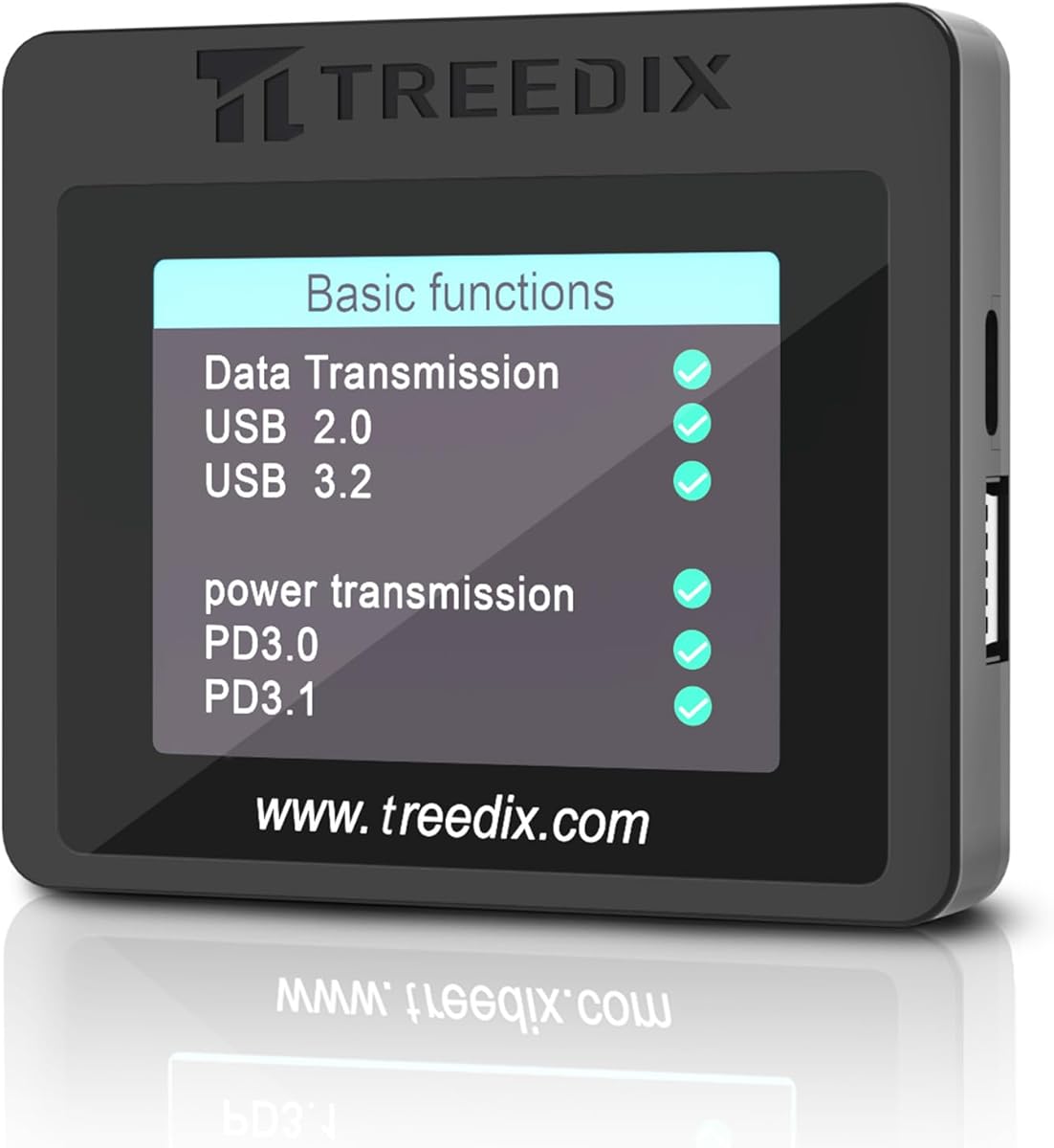
Navigating the world of USB cables can be a minefield of misleading marketing and underperforming hardware. A dedicated USB cable tester, like the Treedix model with its 2.4-inch screen, moves beyond guesswork by physically verifying the eMarker chip, resistor values, and supported protocols (like PD 3.0/3.1) inside your cables. This guide will help you understand what to look for when choosing a tester to ensure you're getting accurate, actionable data about your Thunderbolt 3/4/5, USB-C, Lightning, and legacy cables.
Key Considerations Before Buying
- Screen size and readability: A 2.4-inch screen is a distinct advantage for viewing complex data like eMarker information, resistance values, and protocol support at a glance, especially in a workshop or on a lab bench. Smaller screens can make it difficult to parse detailed specifications.
- Compatibility breadth: The Treedix tester's support for Lightning, Type-C, Micro-B 2.0/3.0, and Mini-B cables is crucial for anyone with a diverse collection of devices. A tester that only handles USB-C will leave you in the dark about older, equally critical cables.
- eMarker and resistor analysis: The ability to read the eMarker chip (which contains the cable's capabilities) and measure pull-up/down resistors is essential for verifying if a cable truly supports 100W+ charging or high-speed data transfer. This goes beyond a simple continuity test.
What Our Analysts Recommend
Look for a tester that provides clear, numerical readouts for voltage, current, and resistance, as well as a decoded view of the eMarker's data. A quality device will also offer a dedicated mode for reading Thunderbolt cable capabilities, as this is a high-stakes area where cheap cables often fail. Build quality, such as a sturdy USB-C connector and a well-protected screen, is a strong indicator of long-term reliability.
Network & Cable Testers Market Context
Market Overview
The market for USB cable testers is growing rapidly, driven by the proliferation of USB-C and the increasing power demands of modern laptops and monitors. Many testers on the market are basic 'pass/fail' devices, but a segment is emerging that focuses on deep protocol analysis, like the Treedix, which caters to tech enthusiasts and professionals who need to verify cable performance.
Common Issues
A common issue with inexpensive cable testers is inaccurate resistor readings or an inability to properly communicate with eMarker chips, leading to false positives. Another frequent problem is poor build quality of the test ports themselves, which can degrade after repeated use and introduce their own resistance, skewing measurements.
Quality Indicators
A quality tester will have a well-regarded chipset that can correctly interpret the USB PD 3.1 standard, including Extended Power Range (EPR) cables. Look for testers that have received firmware updates to address new protocols, and those that have a clear, detailed user manual explaining how to interpret the displayed data.
Review Authenticity Insights
Grade B Interpretation
With a Review Authenticity Grade of B and an estimated 10% fake review rate, the Treedix tester's overall rating of 4.89/5 is likely inflated, but the core sentiment is probably positive. The high number of verified, detailed reviews suggests the product genuinely performs well, but a small fraction of overly promotional or unverified posts may be boosting the score.
Trust Recommendation
You can generally trust the high rating, but pay close attention to the 'critical' reviews and those from verified purchasers who describe specific technical scenarios. The adjusted rating of 4.60/5 is a more realistic baseline, and you should weigh the product's feature set against that figure, not the inflated 4.89.
Tips for Reading Reviews
Focus on reviews that mention testing specific cable types (e.g., 'Anker 100W cable' or 'Apple Thunderbolt 4 cable') and report concrete readings. Be skeptical of any review that uses vague language like 'works great' without providing any numbers or specific cable tests, as these are often part of the 10% fake review pool.
Expert Perspective
The Treedix USB Cable Tester fills a valuable niche for anyone who needs to go beyond a simple continuity check and verify the actual capabilities of their USB and Thunderbolt cables. Its broad compatibility and detailed eMarker and resistor analysis make it a powerful tool for diagnosing charging issues, data transfer bottlenecks, and ensuring cable safety with high-wattage chargers. The high, albeit slightly adjusted, rating from a large sample of users strongly suggests it delivers on its core promises, making it a reliable choice for tech enthusiasts, IT professionals, and even home users with multiple devices.
Purchase Considerations
Before purchasing, consider your primary use case: if you only need to check for basic connectivity, a simpler, cheaper tester may suffice. However, if you frequently work with high-power PD chargers, Thunderbolt docks, or need to validate a large collection of cables, the Treedix's detailed readouts and large screen justify the investment.
Comparing Alternatives
Shoppers should compare this model with other popular testers like the FNB58 or the Power-Z family, which may offer different feature sets or form factors, particularly regarding PC-based data logging capabilities.