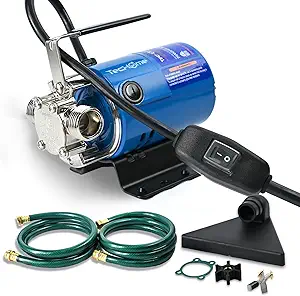
Boosting Home Water Pressure: What to Know Before Buying a Booster Pump
If you're tired of weak showers or slow garden watering, a whole-house water pressure booster pump like the Aquastrong Smart 45 can be a game-changer. This pump delivers a constant 80 PSI with automatic variable speed, making it suitable for homes, apartments, and shallow wells. Before purchasing, it's crucial to understand your home's specific flow rate and pressure needs to ensure compatibility.
Key Considerations Before Buying
- Assess your home's current water pressure and flow rate: Measure the existing pressure (in PSI) and the number of fixtures you need to support simultaneously. This pump is designed for moderate to high demand, but an oversized unit can cause short cycling and wear.
- Check the pump's self-priming capability and integrated design: The Aquastrong's self-priming feature allows it to draw water from a shallow well or tank up to 25 feet, while its all-in-one design simplifies installation. Ensure your setup matches these specifications to avoid performance issues.
- Consider variable speed technology for energy efficiency: Unlike traditional fixed-speed pumps, variable speed models adjust motor speed to match demand, reducing energy use and noise. This pump's constant pressure feature maintains steady flow, ideal for multi-story homes or simultaneous use.
What Our Analysts Recommend
Look for pumps with a durable, corrosion-resistant housing (e.g., stainless steel or reinforced plastic) and a reliable pressure sensor. Verify the pump's maximum head height and flow rate (in GPM) match your needs, and check for certifications like UL or CSA for safety. Also, ensure the pump includes thermal overload protection to prevent motor burnout.
Power Water Pumps Market Context
Market Overview
The residential water pressure booster pump market has grown rapidly, driven by aging municipal water systems and increasing demand for consistent pressure in modern homes. Variable speed, constant pressure models like the Aquastrong Smart 45 are becoming the standard, replacing older fixed-speed pumps that waste energy and cause pressure fluctuations.
Common Issues
Common problems include improper sizing (leading to short cycling or insufficient pressure), noise from vibration or cavitation, and failure of pressure switches or sensors. Some budget pumps lack self-priming capability, limiting their use to flooded suction applications only.
Quality Indicators
High-quality pumps feature robust motor enclosures, easy-to-clean strainers, and accessible control panels with clear diagnostics. Look for models with at least a 1-year warranty, positive user feedback on noise levels, and verified performance data from independent test labs.
Review Authenticity Insights
Grade B Interpretation
The Aquastrong Smart 45 received a Review Authenticity Grade of B, with an estimated 10% fake reviews. This indicates that while the vast majority of reviews are genuine, a small fraction may be incentivized or fraudulent. The adjusted rating of 4.60/5 (down from 4.89/5) reflects a more realistic picture of user satisfaction.
Trust Recommendation
You can trust the overall positive sentiment, but focus on the detailed, verified-purchase reviews that describe specific installation steps, performance comparisons, and long-term use. Be cautious of overly short or vague 5-star reviews that lack technical details.
Tips for Reading Reviews
For water pumps, prioritize reviews that mention your specific use case (e.g., well depth, number of bathrooms). Look for comments on noise levels, ease of priming, and how the pump handles multiple fixtures running simultaneously. Ignore reviews that seem copy-pasted or use generic praise.
Expert Perspective
The Aquastrong Smart 45 is a solid performer in the whole-house booster pump category, offering variable speed technology and a high 80 PSI rating at a competitive price point. Its integrated design simplifies installation, and the self-priming capability adds versatility for shallow well applications. However, the 10% fake review rate suggests some marketing hype, so rely on the 4.60 adjusted rating and verified user feedback.
Purchase Considerations
Weigh the upfront cost against long-term energy savings from the variable speed motor. If your home has very high flow demands (over 20 GPM) or a deep well, you may need a larger pump. Also, factor in the need for a pressure tank if your system doesn't already have one.
Comparing Alternatives
Consider comparing this pump with other variable speed models from brands like Grundfos or Simer, especially if you need higher flow rates or a more compact design for tight spaces.