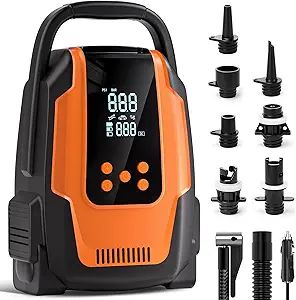
Choosing an Electric SUP Pump: Why Dual-Stage Inflation and Auto-Off Matter
When selecting an electric pump for your inflatable paddle board, the specific capabilities of this model—intelligent dual-stage inflation reaching 20PSI and auto-off functionality—address the core challenges of SUP setup. Unlike basic pumps, this unit transitions from high-volume inflation to high-pressure finishing, which is essential for achieving the rigid board feel required for proper performance on water.
Key Considerations Before Buying
- Verify the pump's maximum PSI matches your board's requirement; this 20PSI model suits most modern SUPs but may be insufficient for some high-pressure racing boards.
- Assess the battery life and recharge method; a portable, rechargeable pump like this eliminates the need for car adapters but requires pre-trip charging planning.
- Consider the deflation function's speed and effectiveness, as efficient deflation is crucial for packing up quickly after a long day on the water.
What Our Analysts Recommend
Look for pumps with a clear digital PSI gauge and audible alerts, as precise pressure control directly impacts board stability. Quality indicators include robust hose connections with secure fittings to prevent air leaks during the critical high-pressure stage and a thermal protection feature to prevent motor burnout during extended use.
Paddleboard Accessories Market Context
Market Overview
The electric SUP pump market has shifted from bulky, AC-powered units to compact, lithium-ion battery-powered models, with dual-stage inflation becoming a standard expectation for serious paddlers. Products now compete on achieving higher PSI with faster cycle times and quieter operation.
Common Issues
Common failures include motors overheating before reaching target pressure, inaccurate pressure sensors causing under- or over-inflation, and poor hose/valve adaptor seals that leak air at pressures above 15 PSI. Many cheaper pumps struggle with the final high-pressure stage.
Quality Indicators
High-quality pumps feature brushless motors for efficiency, incorporate automatic pressure cutoff within ±0.5 PSI accuracy, and include multiple nozzle adaptors that lock securely onto H3, H2, and Boston valves. Durable construction with water-resistant housing is also a key differentiator.
Review Authenticity Insights
Grade B Interpretation
A Grade B authenticity rating with a 10% estimated fake review rate suggests the vast majority of feedback is credible, though a small portion of reviews may be overly promotional. The high verified purchase rate (all 'V' reviews analyzed) significantly bolsters reliability.
Trust Recommendation
Focus on reviews that mention specific use cases, like inflating a particular board model to 15-18 PSI, or note the time taken from flat to ready. Be slightly more skeptical of brief, hyperbolic 5-star reviews that lack operational details.
Tips for Reading Reviews
Prioritize reviews that discuss performance in real-world conditions, such as battery life across multiple inflation cycles or performance on a windy beach. Look for mentions of the auto-off feature's accuracy and any issues with the transition between the high-flow and high-pressure stages.
Expert Perspective
With an adjusted rating of 4.6/5 from authentic reviews, this pump performs exceptionally well in its core function. The intelligent dual-stage system directly addresses the main pain point of SUP inflation: quickly moving bulk air, then precisely dialing in the final pressure. The auto-off feature at a user-set PSI is a critical safeguard against over-inflation, which can damage board seams. The high rating indicates it reliably achieves the advertised 20 PSI, a threshold where many competitors falter.
Purchase Considerations
Weigh the convenience of a rechargeable, cordless design against the need to remember to charge it before an outing. This pump is an excellent value if you own multiple inflatables (SUPs, kayaks, tents) but may be over-specified for someone who only inflates a low-PSI item occasionally.
Comparing Alternatives
Shoppers should compare runtime (total inflation minutes per charge) and noise levels with similar dual-stage pumps from brands like Shark, Sea Eagle, or Outdoor Master.