
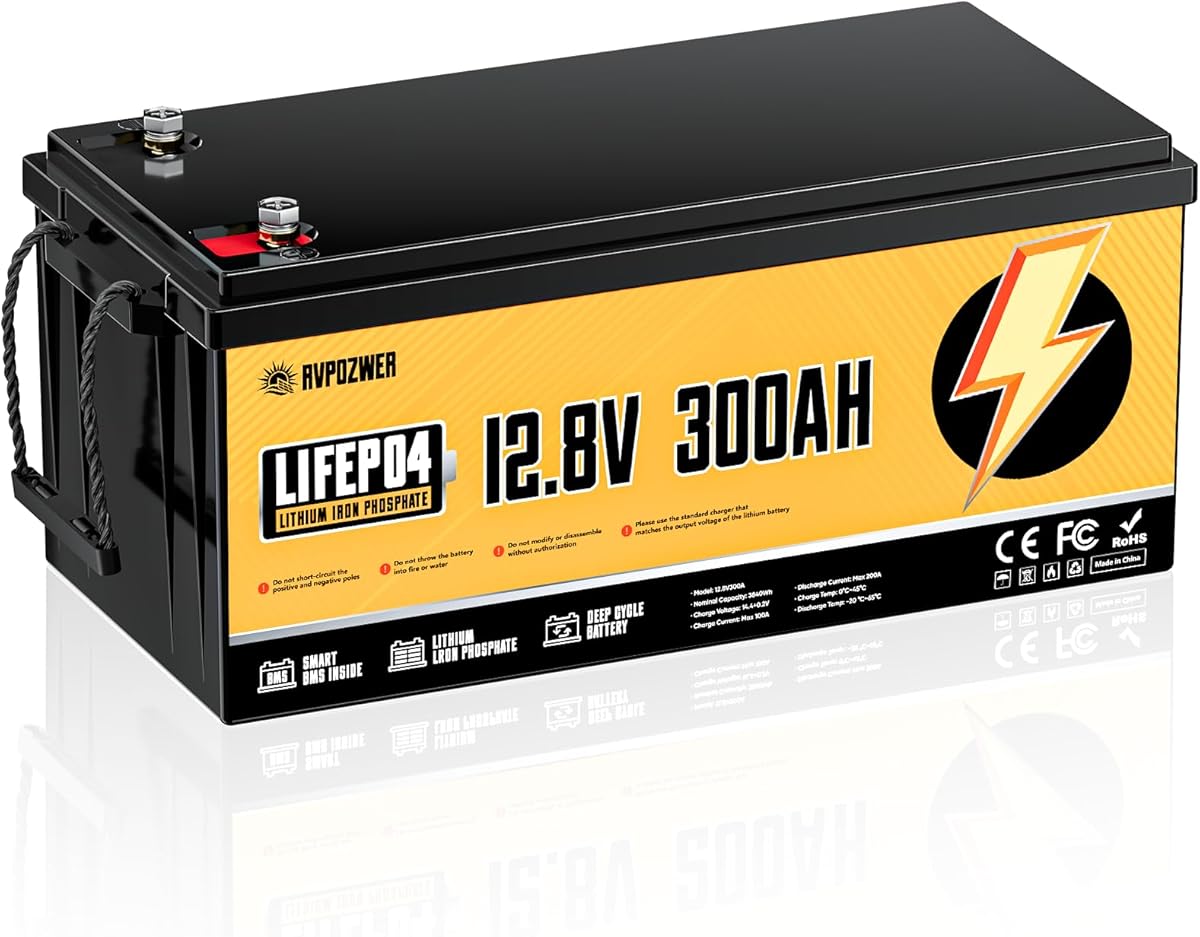
Choosing a 300Ah LiFePO4 battery requires balancing capacity, BMS protection, and application needs
When evaluating this specific 12V 300Ah LiFePO4 battery, buyers should understand that its 3840Wh capacity and 200A BMS define its practical limits. This isn't just about capacity—it's about how the built-in battery management system handles real-world loads like RV air conditioners or trolling motors that can spike above 200A.
Key Considerations Before Buying
- The 200A BMS limits continuous draw to about 2400W; verify your peak loads won't exceed this, especially for motor starts or power inverters running heavy appliances.
- With 15000 deep cycles claimed, this battery targets long-term solar or off-grid use where daily cycling occurs; for occasional RV trips, you may not need this cycle depth.
- Low temperature protection is critical for marine or winter RV use, but ensure your charging environment stays above the protection threshold to avoid charging interruptions.
What Our Analysts Recommend
Quality indicators for this battery include verified cycle life documentation (not just claims), BMS communication ports for monitoring, and robust terminal construction that can handle the 200A continuous current without overheating. Check that the low-temp cutoff aligns with your climate needs—some protect only charging, not discharging.
12V Market Context
Market Overview
The 12V 300Ah LiFePO4 market has become crowded with similar-sounding specifications, but actual performance varies significantly in BMS implementation and cell quality. This 3840Wh unit sits at the higher end of capacity for single 12V batteries, competing with modular systems.
Common Issues
Common problems include BMS tripping under high loads, capacity inconsistencies between brands claiming identical Ah ratings, and communication protocol limitations that hinder integration with solar controllers. Physical size discrepancies also create installation challenges in tight RV battery compartments.
Quality Indicators
Look for UL1973 certification mentions, Grade A cell specifications (not just 'LiFePO4'), and detailed BMS documentation showing protection thresholds. Quality units provide clear low-temperature cutoff specifications and include balancing capabilities for long-term capacity retention.
Review Authenticity Insights
Grade B Interpretation
A Grade B authenticity rating with 11% estimated fake reviews suggests generally reliable feedback but warrants careful reading. The drop from 4.44 to 4.20 adjusted rating indicates some review inflation, though the majority of experiences appear genuine.
Trust Recommendation
Focus on verified purchase reviews that mention specific applications like solar array sizes or trolling motor runtimes. Be skeptical of reviews lacking technical details or those that seem overly focused on packaging rather than performance.
Tips for Reading Reviews
Prioritize reviews discussing actual capacity tests, BMS behavior under load, and long-term performance over months of cycling. Look for mentions of voltage sag under high draws and how the low-temp protection actually functions in cold environments.
Expert Perspective
This battery's specifications suggest it targets serious off-grid or marine users who need the full 300Ah capacity and are willing to manage the 200A current limit. The 15000 cycle claim is aggressive but aligns with quality LiFePO4 chemistry if properly managed. The 4.20 adjusted rating from verified purchasers indicates generally positive real-world performance, though the BMS limitations may disappoint users expecting to run 3000W+ inverters continuously.
Purchase Considerations
Consider whether your application truly needs 3840Wh in a single unit or if two smaller batteries might provide more flexibility and redundancy. Evaluate your maximum continuous and surge currents against the 200A BMS limit—trolling motors and induction cooktops often exceed this during startup.
Comparing Alternatives
Shoppers should compare BMS current ratings, low-temperature specifications, and physical dimensions with similar 300Ah offerings, as these vary significantly between brands despite identical capacity claims.


