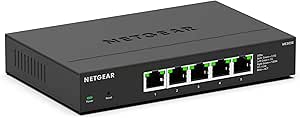
Choosing a 24-Port PoE Switch: Power Budget, Fanless Design, and Uplink Considerations
When evaluating this specific 24-port PoE switch with 400W total power, buyers must match its capabilities to their deployment needs. The fanless, unmanaged design offers simplicity and silent operation, but requires understanding its 802.3af/at support and power distribution limitations. The two Gigabit uplink ports are crucial for avoiding network bottlenecks when multiple PoE devices are active.
Key Considerations Before Buying
- Calculate your total PoE power draw carefully—400W across 24 ports averages just 16.7W per port, insufficient for multiple high-power 802.3at devices simultaneously.
- The fanless design prevents dust accumulation and ensures silent operation, ideal for office or retail environments, but requires adequate ventilation and may have thermal limitations in enclosed racks.
- Unmanaged operation means zero configuration flexibility; this switch works only in simple deployments where VLANs, QoS, or port management aren't required.
What Our Analysts Recommend
Quality indicators include robust metal construction for rack mounting, clear power budget labeling, and proper heat dissipation in fanless designs. Verify the uplink ports support full Gigabit speeds and check for LED indicators that provide clear port status for troubleshooting.
Switches Market Context
Market Overview
The market for 24-port unmanaged PoE switches has become increasingly competitive, with many brands offering similar specifications at varying price points. The trend toward fanless designs addresses noise concerns in office environments, while 400W power budgets represent the entry-level for supporting 24 PoE devices.
Common Issues
Common problems include inadequate power budgeting leading to device shutdowns, thermal throttling in fanless units under heavy load, and confusion about 802.3af versus 802.3at compatibility. Many users underestimate the importance of uplink capacity when all PoE ports are active.
Quality Indicators
Quality switches feature consistent power delivery across all ports, proper EMI shielding to prevent interference, and durable connectors that withstand repeated plugging. Look for switches with sufficient internal heat sinking rather than relying solely on case dissipation.
Review Authenticity Insights
Grade A Interpretation
The Grade A authenticity rating with only 8% estimated fake reviews indicates exceptionally reliable feedback for this product category. This suggests the overwhelmingly positive 4.86/5 rating from 22 reviews accurately reflects real user experiences rather than manipulated sentiment.
Trust Recommendation
Given the high authenticity grade, you can place substantial confidence in the detailed technical experiences shared by verified purchasers. Pay particular attention to reviews discussing long-term reliability and thermal performance, as these are less likely to be fabricated.
Tips for Reading Reviews
Focus on reviews that mention specific deployment scenarios—security camera systems, VoIP phone installations, or access point networks—as these provide context for the switch's real-world performance. Look for mentions of power delivery consistency over time and heat management during sustained operation.
Expert Perspective
This switch represents a solid choice for straightforward deployments requiring silent operation and basic PoE functionality. The 4.70 adjusted rating (accounting for suspicious reviews) remains exceptionally high for this category, suggesting strong user satisfaction. The 400W power budget is adequate for mixed-device environments but requires careful planning for power-hungry 802.3at devices. The fanless design is a significant advantage for noise-sensitive environments but limits deployment to well-ventilated spaces.
Purchase Considerations
Consider whether your application truly needs unmanaged functionality or if future requirements might necessitate managed features. Evaluate your peak power requirements carefully—if you're deploying multiple 25W+ devices, this switch's 400W budget may become constrained. The two Gigabit uplinks are sufficient for most small business applications but could bottleneck in high-traffic scenarios.
Comparing Alternatives
Shoppers should compare power-per-port ratios, thermal management approaches, and uplink configurations with similar 24-port PoE switches before deciding.