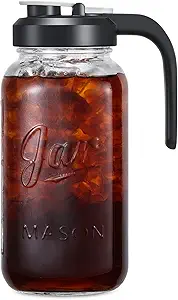
Why a 1-Gallon Borosilicate Pitcher is Your Kitchen Workhorse
When choosing a glass water pitcher, the material and capacity are critical. This 1-gallon model uses borosilicate glass, known for its heat resistance and durability compared to standard soda-lime glass. Whether you're brewing sun tea or storing cold water, understanding how this carafe handles temperature shifts is key to long-term use.
Key Considerations Before Buying
- Borosilicate glass is less prone to thermal shock, so you can pour hot liquids like tea or coffee into the pitcher without risking cracks—a major advantage over typical glass carafes that require gradual temperature changes.
- The 1-gallon capacity is ideal for households that consume a lot of beverages, but consider the weight when full (over 8 pounds). Ensure your refrigerator shelf or table can support it, and the lid seals tightly to prevent spills during pouring.
- The spout design affects pouring precision: a well-angled spout minimizes drips, while a wide mouth makes cleaning easier. Look for a lid that fits securely to avoid accidental opening when tilting.
What Our Analysts Recommend
High-quality borosilicate glass should be thick-walled yet lightweight, with no bubbles or inclusions in the glass. The lid material (often plastic or silicone) should be BPA-free and dishwasher-safe for convenience. A sturdy handle that's integrated into the glass or securely attached is essential for safe handling, especially when the pitcher is full.
Jugs Market Context
Market Overview
The beverage serveware market has seen a shift toward durable, multi-functional designs as consumers seek products that transition from counter to table. Borosilicate glass pitchers are gaining popularity over plastic or metal options due to their clarity, chemical inertness, and ability to handle hot and cold contents without leaching flavors.
Common Issues
Common complaints include glass breakage from thermal shock (especially with non-borosilicate models), lids that don't seal properly leading to leaks, and spouts that drip after pouring. Some users also report difficulty cleaning narrow-neck pitchers, leading to residue buildup over time.
Quality Indicators
Indicators of a quality pitcher include a thick, uniform glass wall, a lid with a silicone gasket for a tight seal, and a spout that is smoothly finished to prevent chipping. Additionally, a warranty or return policy from the manufacturer often signals confidence in the product's durability.
Review Authenticity Insights
Grade B Interpretation
A B grade and 10% estimated fake reviews suggest that while most feedback is genuine, you should approach the top ratings with slight caution. The high 4.78 average is likely inflated by a small number of incentivized or fabricated reviews, but the core sentiment remains positive.
Trust Recommendation
Focus on the 4.50 adjusted rating, which better reflects real user experiences. Verified purchase reviews with detailed usage stories (e.g., 'I use this for iced tea daily') are more trustworthy than short, vague praise. Given the low fake rate, you can generally trust the consensus.
Tips for Reading Reviews
When reading reviews, look for comments on thermal performance, such as 'I poured boiling water and it didn't crack.' Also note any mentions of lid fit or spout dripping, as these are common pain points. Photos in reviews can reveal real-world wear and the actual glass thickness.
Expert Perspective
This borosilicate glass pitcher offers excellent value for its price point, with a strong 4.50 adjusted rating indicating reliable performance for most users. Its heat resistance sets it apart from cheaper alternatives, making it suitable for both hot and cold beverages. However, the 10% fake review rate is a minor concern, so cross-reference the adjusted rating with detailed reviews to confirm quality.
Purchase Considerations
Weigh the capacity against your storage space and typical use—if you frequently entertain or have a large family, the 1-gallon size is ideal. But if you need a pitcher for single-day use, a smaller size might be more practical. Also, consider whether you prefer a glass lid (more durable but heavier) or a plastic one (lighter but may discolor over time).
Comparing Alternatives
Shoppers should compare this model with other borosilicate pitchers from brands like Hario or Pyrex, which offer similar thermal properties but may differ in lid design or capacity options.