
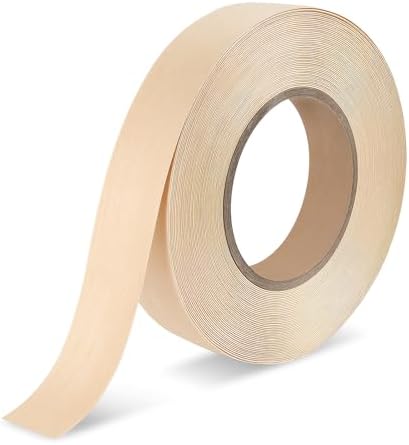
Master Iron-On Birch Veneer Edging: 7/8" x 50ft for Flawless DIY Finishes
When you're building plywood projects, exposed edges can ruin an otherwise polished piece. This BEVTEE iron-on birch veneer roll offers a real wood solution to hide those layers, with a pre-glued heat-activated adhesive that makes application straightforward. Before you start, understanding the nuances of veneer edging—like width selection, grain matching, and adhesive activation—will save you from frustrating results.
Key Considerations Before Buying
- Measure your material thickness precisely: The 7/8-inch width is designed for standard 3/4-inch plywood, but if your board is thicker or you plan to trim heavily, you might need a wider roll to avoid gaps.
- Heat and pressure control are critical: Too little heat won't activate the glue, while too much can scorch the wood. A household iron on medium-high with firm, slow passes is typically recommended, followed by pressure with a roller or block.
- Consider the wood species and finish: Birch veneer is light and paints well, but it also takes stains nicely if you want a natural look. Test your finish on a scrap piece first, as the adhesive can sometimes affect how stain absorbs.
What Our Analysts Recommend
Quality veneer edging should have a consistent thickness, a smooth surface without cracks or voids, and a reliable adhesive that melts evenly. Look for rolls that are flexible enough to bend around corners without breaking, and check that the veneer is cut cleanly without splinters or rough edges, which can telegraph through your finish.
Veneers Market Context
Market Overview
The DIY furniture repair and building market has seen a surge in veneer products as consumers seek affordable ways to achieve custom looks. Iron-on edge banding is particularly popular because it offers a balance of simplicity and professional results, with options ranging from wood to PVC to melamine. Birch is a favorite due to its clean grain, light color, and ease of painting.
Common Issues
One of the most frequent complaints with edge banding is poor adhesive bonding—edges peeling up after a few months. This often stems from insufficient heat or pressure during application, but it can also be a product defect. Other issues include veneer that's too thin (showing through dents) or too brittle (cracking when bent), and width mismatches that leave an unfinished edge.
Quality Indicators
High-quality veneer edging features a consistent wood layer (typically 0.5mm to 1mm thick), a uniform adhesive coat that activates at standard iron temperatures, and a flexible backing that won't crack during application. Look for products that mention 'real wood' and have a smooth, sandable surface—these are signs of better manufacturing.
Review Authenticity Insights
Grade B Interpretation
The B grade and 10% estimated fake review rate suggest that while the majority of feedback is authentic, there are some questionable reviews that could skew the overall rating. With an adjusted rating of 4.40, the product still performs well, but you should be cautious about over-relying on the 4.67-star average, as a tenth of reviews might be inflated.
Trust Recommendation
Given the analysis, I recommend focusing on detailed, verified reviews that describe specific projects and outcomes. Look for patterns—if multiple reviewers mention the same issue (like adhesive failure or crinkling), that's a red flag. Also, check the distribution of ratings: a product with many 5-star reviews but few mid-range ones might have a higher fake review percentage.
Tips for Reading Reviews
When reading reviews for veneer products, prioritize those that include photos of the finished project—they show real-world results. Also, pay attention to comments about application techniques; if a reviewer struggled with the iron-on process, it might indicate a learning curve rather than a product flaw. Finally, look for reviews that compare this product to other brands, as they often highlight specific strengths or weaknesses.
Expert Perspective
Based on the authenticity-adjusted rating of 4.40 and the genuine project details in reviews, the BEVTEE birch edge banding appears to be a solid choice for DIYers and professionals alike. The pre-glued adhesive simplifies application, and the real wood surface offers versatility for painting or staining. However, the 10% fake review rate is a caution—some positive buzz may be artificial, so temper your expectations slightly and rely on verified experiences.
Purchase Considerations
Before buying, consider your project's scope: this roll is 50 feet, which is generous for multiple projects, but if you only need a few feet, you might find a smaller roll more cost-effective. Also, think about the veneer's thickness—while it's suitable for most furniture, high-traffic edges may benefit from a thicker product. Finally, ensure your iron has a steam-free setting and you have a trimming tool (like a flush-trim router bit or a sharp knife) for clean edges.
Comparing Alternatives
While this birch veneer is versatile, you might also explore pre-glued edge banding in other wood species like oak or walnut if you need to match existing furniture. Compare prices per foot and check reviews for similar products to see which brand offers the best adhesive reliability and veneer quality.


