Choose the Right PLA+ Filament: Focus on Consistency and Food Safety Claims
When shopping for PLA+ filament like the YXPOLYER 1.75mm black option, you're looking for a balance of strength, printability, and surface finish. This guide helps you evaluate key factors such as diameter tolerance, spool design for AMS compatibility, and the practical meaning of 'food grade' in 3D printing contexts.
Key Considerations Before Buying
- Diameter tolerance is critical for consistent extrusion; look for filaments claiming ±0.02mm or better to avoid clogs or under-extrusion during long prints.
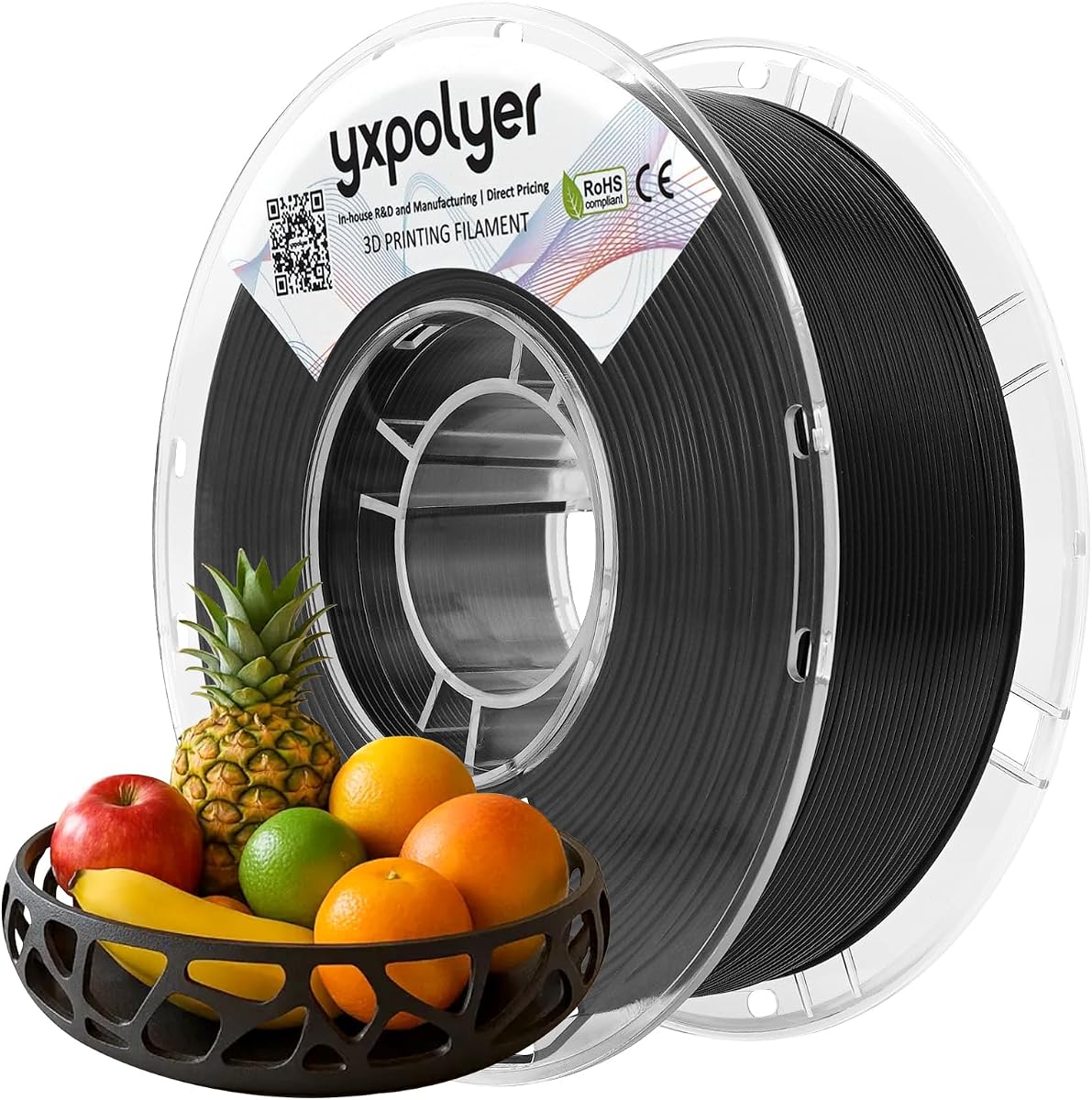
- AMS compatibility requires a spool that fits snugly and feeds smoothly; transparent spools like this one let you monitor filament levels without opening the enclosure.
- Food grade PLA+ is rare and typically means the raw material is safe for incidental food contact, but printed objects may still have crevices that harbor bacteria—so treat any 'food grade' claim with caution.
What Our Analysts Recommend
Quality indicators include a consistent round cross-section, a smooth spool edge without burrs, and clear labeling of the material's glass transition temperature (usually around 60°C for PLA+). Also, check for real user photos showing layer adhesion and bridging performance, which reveal true print quality.
3D Printing Filament Market Context
Market Overview
The PLA+ filament market is crowded with options ranging from budget brands to premium engineered materials. YXPOLYER positions itself as a mid-tier contender, leveraging a high Amazon rating of 4.89/5 and a transparent spool design that appeals to users of automated material systems like Bambu Lab AMS.
Common Issues
Common complaints across PLA+ filaments include inconsistent diameter causing extrusion issues, moisture absorption leading to brittle prints, and spools that tangle or don't fit AMS units. For YXPOLYER's product, the authentic reviews highlight good layer adhesion and minimal stringing, but a few note the need for drying before use in humid environments.
Quality Indicators
Quality filaments often have a matte finish that hides layer lines, minimal warp on large prints, and a consistent color throughout the spool. The YXPOLYER filament's black color is reported as deep and uniform, which is a positive sign of controlled manufacturing.
Review Authenticity Insights
Grade B Interpretation
A Grade B with an estimated 10% fake review rate means the vast majority of feedback is genuine, but about 1 in 10 reviews may be incentivized or fabricated. This is better than average for 3D printing supplies on Amazon, where fake rates can exceed 30%.
Trust Recommendation
You can trust the overall sentiment from verified purchasers, especially detailed reviews that mention specific print settings or comparisons to brands like Hatchbox or eSUN. Be cautious of overly brief 5-star reviews with no context, as they may be part of the 10% fake pool.
Tips for Reading Reviews
Focus on reviews that include photos of completed prints or describe the filament's behavior at different temperatures (e.g., 200-220°C). Look for mentions of the spool's fit in AMS units and whether it feeds without friction—this is a key practical detail for Bambu users.
Expert Perspective
YXPOLYER PLA+ Black offers a compelling combination of high user satisfaction (4.89/5 adjusted to 4.60/5 after filtering) and practical features like a transparent AMS-compatible spool. The strong authenticity grade B suggests the positive feedback is largely earned, though the food grade claim should be understood as a material property, not a safety guarantee for printed objects. For most hobbyists and light industrial users, this filament likely delivers reliable prints with good layer adhesion and minimal odor.
Purchase Considerations
Consider this filament if you value AMS compatibility and want a deep black finish without paying premium prices. However, if you require certified food contact safety or need extremely tight tolerances for engineering parts, you may want to look at specialty brands with documented specifications.
Comparing Alternatives
Compare with other top-rated PLA+ filaments like Overture, eSUN, or Polymaker, especially if you need a different color range or more detailed technical data sheets.