
Evaluating AI-Enhanced Point-and-Shoot Cameras for Beginners and Kids
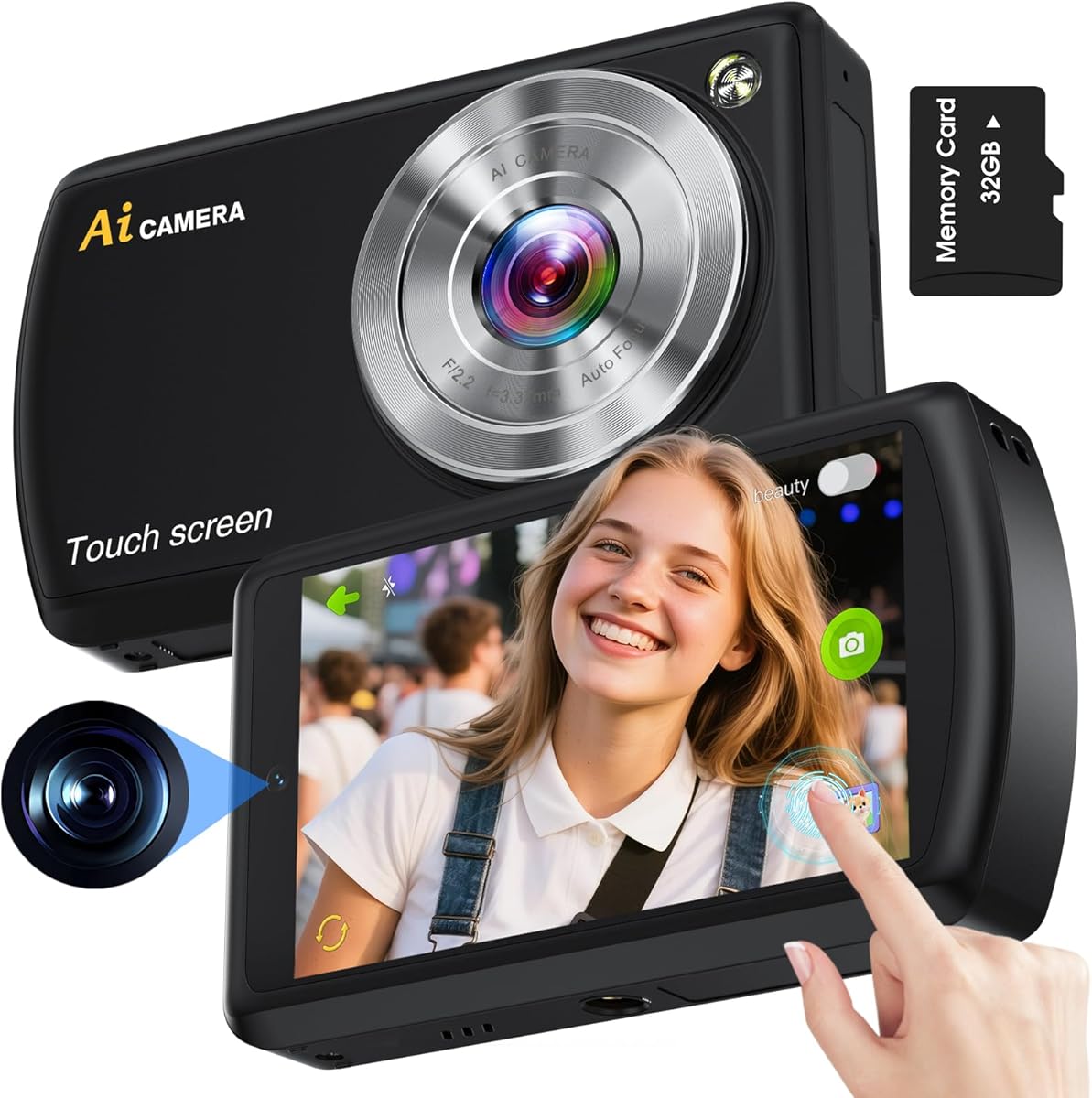
This AI digital camera represents a new hybrid category blending traditional point-and-shoot functionality with smartphone-inspired features like WiFi connectivity and object recognition. Buyers should understand this camera's dual positioning as both a photography tool and an educational device for younger users, with its 3.6'' touch screen and compact form factor designed for intuitive operation.
Key Considerations Before Buying
- The 'AI' and 'object recognition' features likely refer to basic scene detection and subject tracking rather than advanced computational photography—manage expectations accordingly for this price segment.
- WiFi connectivity enables photo transfer to smartphones, but check compatibility with your devices and whether the companion app receives regular updates for long-term usability.
- The front and rear camera configuration suggests versatility for vlogging or self-portraits, but verify the sensor quality and aperture differences between the two lenses.
What Our Analysts Recommend
For this category, examine the touch screen responsiveness in various lighting conditions and test the autofocus speed on moving subjects. Quality indicators include consistent color reproduction across different scenes and stable WiFi transfer speeds without frequent disconnections. The build should feel durable enough for occasional drops while remaining lightweight for younger users.
Point & Shoot Digital Cameras Market Context
Market Overview
The entry-level digital camera market has bifurcated into premium compacts and budget-friendly 'starter' cameras like this model, which compete directly with smartphone cameras by offering physical controls and dedicated photography features. Many brands now incorporate basic AI assistance to simplify shooting for novices.
Common Issues
Budget point-and-shoots often suffer from inconsistent low-light performance, sluggish autofocus in challenging conditions, and companion apps with poor user interfaces. Battery life can be disappointing when using WiFi features extensively, and touch screens may lack precision for detailed settings adjustments.
Quality Indicators
Look for cameras with reliable autofocus that maintains accuracy in moderate motion situations and consistent exposure metering across backlit and evenly lit scenes. Better models in this segment offer intuitive menu systems, responsive touch interfaces, and companion apps that maintain functionality through smartphone OS updates.
Review Authenticity Insights
Grade B Interpretation
A Grade B authenticity rating with 11% estimated fake reviews indicates generally trustworthy feedback with minor manipulation concerns. The adjusted 4.70/5 rating (from 5.00/5) suggests genuine satisfaction is high but slightly inflated by potentially incentivized reviews.
Trust Recommendation
Focus on reviews that mention specific use cases like children's photography, travel usage, or comparisons with smartphone cameras. Verified purchase reviews carry more weight here, particularly those discussing long-term performance beyond initial setup.
Tips for Reading Reviews
Look for reviews that detail the object recognition accuracy with different subjects and WiFi transfer reliability over weeks of use. Be skeptical of reviews that only praise generic features without mentioning actual photographic results or that lack any criticism of limitations.
Expert Perspective
This camera's strong adjusted rating (4.70/5) and authentic review pattern suggest it delivers satisfactory performance for its intended audience of beginners and younger users. The combination of AI features, dual cameras, and touch interface positions it as a transitional device between smartphone photography and dedicated cameras. However, the 'AI' labeling likely overstates capabilities compared to computational photography in modern smartphones. The product appears strongest as an educational tool introducing photography fundamentals through physical controls rather than as a technical upgrade from current smartphone cameras.
Purchase Considerations
Weigh whether the dedicated camera experience justifies the purchase versus using a smartphone, particularly if the user already owns a recent model phone. Consider if the physical controls and simplified interface provide educational value for children learning photography basics. Evaluate whether the WiFi transfer functionality addresses your specific workflow needs for sharing images.
Comparing Alternatives
Shoppers should compare this model against similar entry-level point-and-shoots from established brands and assess whether slightly higher-priced options offer meaningful improvements in sensor size or lens quality.


