
Titanium Cutting Boards: When Metal Meets Modern Kitchen Needs
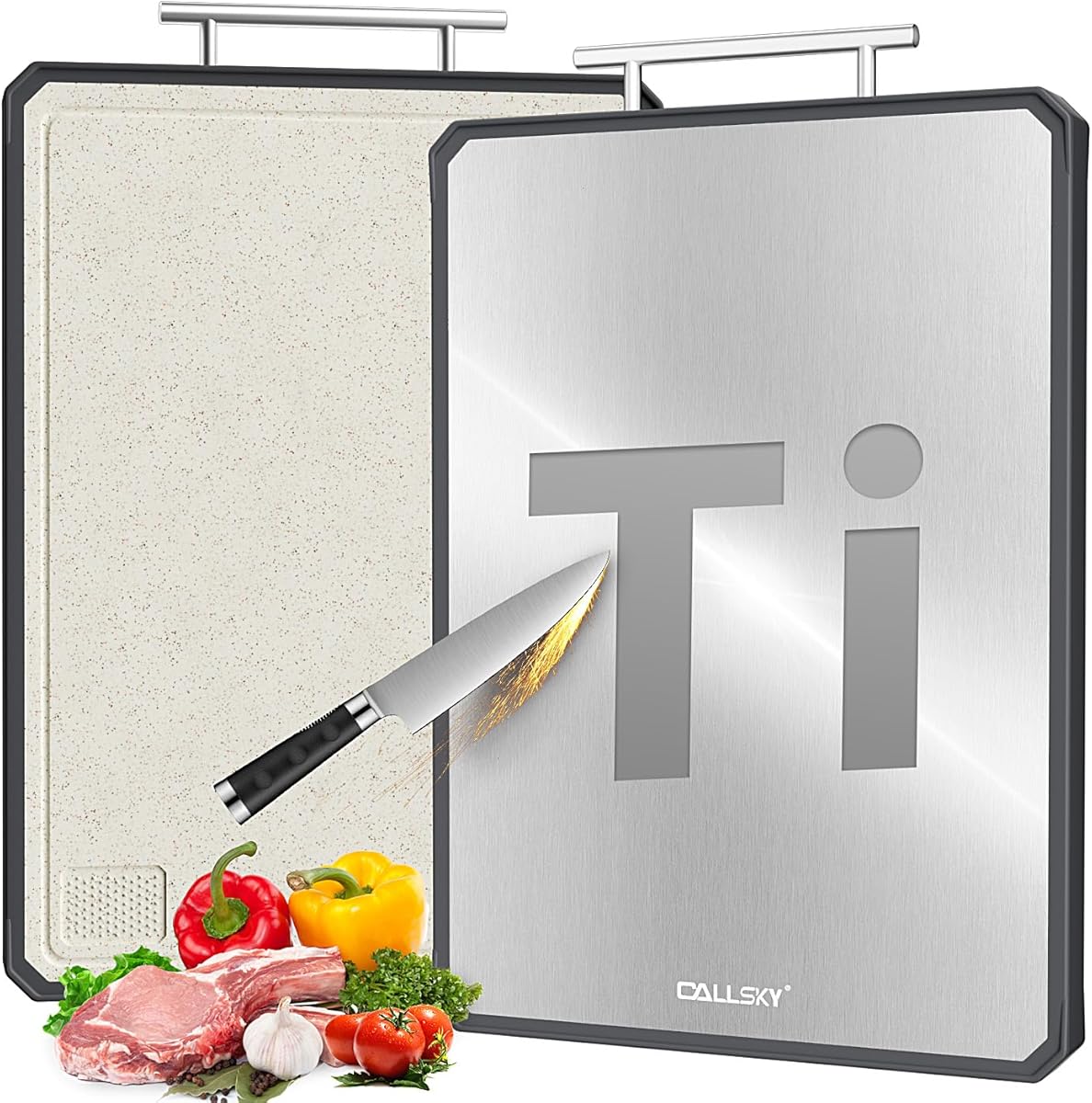
The titanium cutting board category represents a premium evolution from traditional wood and plastic boards, offering distinct advantages in hygiene and durability. This specific model combines a pure titanium surface with a wheat straw PP backing and includes functional juice grooves, positioning it as a hybrid solution for serious home cooks.
Key Considerations Before Buying
- Titanium's non-porous surface prevents bacterial absorption, making it ideal for raw meat preparation, but requires consideration of knife edge maintenance versus traditional boards.
- The double-sided design with wheat straw PP backing provides both a hard titanium surface for precise cutting and a softer composite side that's gentler on knife edges.
- Dishwasher safety (claimed up to 392°F) addresses convenience concerns but requires verification of long-term performance with repeated high-temperature cycles.
What Our Analysts Recommend
Examine the junction between the titanium surface and composite backing for seamless bonding without gaps where moisture could penetrate. Quality titanium boards should have precisely milled juice grooves with smooth edges that won't trap food particles, and the surface should exhibit consistent grain without visible seams or welding marks.
Cutting Boards Market Context
Market Overview
Metal cutting boards have gained traction as consumers prioritize hygiene and durability, with titanium emerging as a premium alternative to stainless steel due to its lighter weight and corrosion resistance. The market now features hybrid designs like this wheat straw PP-backed model that attempt to balance knife-friendliness with metal's sanitary advantages.
Common Issues
Consumers frequently report concerns about knife dulling on hard metal surfaces, noise during use, and potential slipping if the board lacks adequate grip. Some metal boards develop surface scratches that can harbor bacteria despite claims of non-porosity, while others may warp or separate at material junctions.
Quality Indicators
Superior titanium boards feature food-grade certified materials, precisely engineered juice grooves that don't compromise structural integrity, and non-slip elements integrated into the design. The best models maintain flatness under temperature variations and demonstrate consistent surface hardness without compromising the bond with composite backings.
Review Authenticity Insights
Grade B Interpretation
A Grade B authenticity rating with 11% estimated fake reviews indicates predominantly genuine feedback but suggests some review manipulation exists. For this titanium cutting board, this means most experiences reflect actual use, though shoppers should be slightly more critical of excessively glowing reviews.
Trust Recommendation
Focus on reviews that mention specific use cases like meat preparation or vegetable chopping over extended periods, as these demonstrate real product interaction. The 0.28-point rating drop after adjustment suggests some inflated positive feedback, so pay particular attention to mid-range (3-4 star) reviews for balanced perspectives.
Tips for Reading Reviews
Look for reviews discussing knife interaction details, dishwasher performance after multiple cycles, and long-term surface condition—these indicate genuine usage. Be skeptical of reviews that don't mention the dual-surface functionality or juice groove utility, as they may not reflect thorough evaluation of this specific hybrid design.
Expert Perspective
This titanium cutting board's exceptionally high 4.78 rating (4.50 adjusted) across 890 reviews suggests strong user satisfaction, particularly noteworthy for a premium-priced metal board where expectations are high. The hybrid titanium/wheat straw PP design addresses common metal board complaints about knife damage while maintaining hygiene benefits. The sustained positive feedback indicates the manufacturer has likely solved typical issues like material separation or excessive noise.
Purchase Considerations
Weigh the titanium surface's sanitary advantages against potential increased knife maintenance, and consider whether the dual-surface design justifies the premium over single-material boards. The dishwasher claim is significant but requires verification through long-term user experiences, as thermal cycling can stress material bonds in hybrid constructions.
Comparing Alternatives
Compare this board's specific dimensions (16.3×11 inches) and hybrid construction against solid titanium or composite-only alternatives to ensure it matches your primary use cases.


