
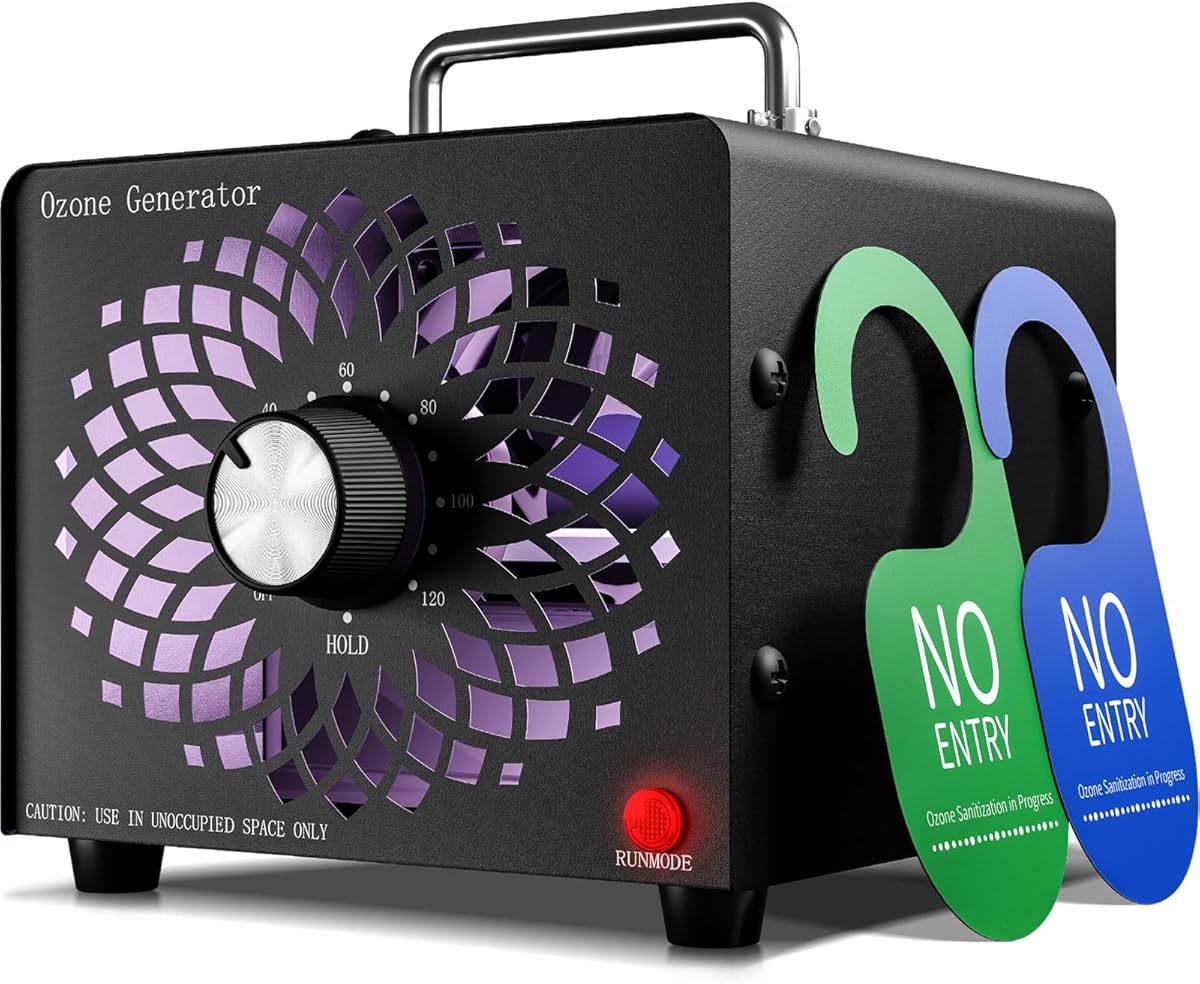
High-capacity ozone generators require understanding of safety protocols and space calculations
The 2026 Upgraded Ozone Generator's 6000 sq.ft. capacity makes it suitable for large-scale odor remediation, but ozone machines operate differently than standard air purifiers. This unit's high-output design requires careful consideration of room size, exposure timing, and the specific odor sources you're targeting, particularly smoke or pet odors that have penetrated surfaces.
Key Considerations Before Buying
- Ozone generators must be used in unoccupied spaces with proper ventilation afterward—this unit's high capacity means longer re-entry wait times compared to smaller models.
- The 6000 sq.ft. rating represents maximum coverage under ideal conditions; actual effectiveness depends on room layout, airflow, and odor concentration levels.
- Ozone treatment works best on embedded odors in porous materials like upholstery or drywall, not just airborne particles, requiring strategic placement and multiple treatments for severe cases.
What Our Analysts Recommend
Quality ozone generators feature adjustable output settings, durable ceramic plates or tubes for ozone generation, and clear safety warnings. The 2026 model's upgraded designation suggests improvements over previous versions, potentially in plate longevity or fan efficiency for better ozone distribution.
Air Ionizers Market Context
Market Overview
The air ionizer and ozone generator market has expanded with more residential-grade high-capacity units, driven by demand for smoke and pet odor remediation solutions. Unlike HEPA purifiers that filter continuously, ozone generators are intermittent treatment devices with specific use cases.
Common Issues
Users frequently underestimate the required treatment time for severe odors or overestimate coverage areas, leading to disappointing results. Another concern is improper safety practices, as ozone exposure can irritate respiratory systems and damage certain materials like rubber or electronics.
Quality Indicators
Look for units with ceramic ozone plates rather than cheaper alternatives, as they typically last longer and maintain consistent output. Quality machines also include timers for automated shut-off and clear documentation about ozone output in mg/hour, which this 6000 sq.ft. model should specify for proper application.
Review Authenticity Insights
Grade B Interpretation
A Grade B authenticity rating with 11% estimated fake reviews indicates generally reliable feedback, though shoppers should remain cautious of overly enthusiastic reviews lacking specific usage details. The adjusted 4.60/5 rating from 4.89/5 suggests some review inflation but still reflects positive reception.
Trust Recommendation
Focus on reviews that detail specific odor scenarios like 'cigarette smoke in a 400 sq.ft. bedroom' or 'cat urine on carpet,' as these demonstrate genuine use cases. Be skeptical of reviews claiming miraculous results without mentioning treatment duration or room size.
Tips for Reading Reviews
Prioritize reviews discussing multiple treatment cycles or comparing results to previous ozone generators, as these indicate experienced users. Look for mentions of the unit's noise level during operation and the distinct ozone smell afterward, both authentic experience indicators.
Expert Perspective
This 2026 Upgraded model appears positioned as a solution for challenging odor problems in larger spaces, with its high capacity rating suggesting commercial-grade applications in residential form. The strong adjusted rating of 4.60/5 from verified purchasers indicates satisfaction among users who properly applied the technology. However, ozone generators remain specialized tools requiring education—their effectiveness depends entirely on correct usage protocols that many consumers misunderstand.
Purchase Considerations
Evaluate whether your odor problem truly requires ozone treatment versus simpler solutions like enzymatic cleaners for pet accidents or deep cleaning for smoke residues. Consider if you can safely vacate the treatment area for sufficient time, as this unit's high output likely requires 4-8 hours of post-treatment ventilation before re-entry.
Comparing Alternatives
Shoppers should compare this high-capacity model with lower-output ozone generators for smaller spaces and investigate hydroxyl generators as a safer alternative for occupied spaces.


