Evaluating Countertop Mineralizing Filters: What Santevia's Glass System Actually Delivers
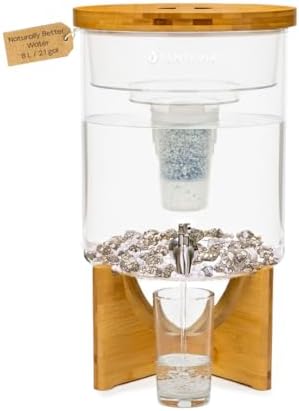
The Santevia Glass Water Filtration System represents a specific niche: countertop filters that aim not just to remove contaminants but to actively add minerals and alter pH. Unlike basic carbon filters, this system combines a fluoride-specific filter medium with proprietary mineral stones, promising both purification and enhancement. Buyers should understand this dual-action claim separates it from standard filtration units.
Key Considerations Before Buying
- Verify your water source's fluoride levels, as this system's primary advertised strength is fluoride removal via its proprietary filter media, which may be unnecessary for some municipal or well water supplies.
- Consider the ongoing cost and availability of the specific replacement filters and mineral stones, as proprietary systems like Santevia's can have higher long-term costs than standardized cartridges.
- Assess your tolerance for manual filling and the 2.75-gallon glass reservoir's footprint on your counter, as this is a gravity-fed, non-plumbed system requiring regular user intervention.
What Our Analysts Recommend
For mineralizing filters, scrutinize the specific mineral blend (Santevia uses Maifan, limestone, and ceramic balls) and whether the pH adjustment claims are backed by testable results. Genuine quality indicators include borosilicate glass construction (like Santevia's) for durability over plastic and clear documentation of filter certification, such as NSF standards for contaminant reduction claims.
Under-Sink & Countertop Filtration Market Context
Market Overview
The countertop filtration market is increasingly segmented, with basic pitchers competing against advanced systems like Santevia that promise added health benefits through mineralization and alkalization. This has created a premium tier where consumers pay for perceived wellness enhancements beyond simple contaminant removal.
Common Issues
Common complaints in this niche include inconsistent pH elevation, slow filtration rates for gravity systems, and 'mineral taste' that some users find unpalatable. There's also debate over the efficacy and necessity of adding minerals back into water that was demineralized during filtration.
Quality Indicators
Superior systems use medical-grade or certified filter media for specific contaminants like fluoride (often a bone char or activated alumina blend), have transparent component lists for their mineral stones, and offer robust, spill-proof designs. Glass reservoirs, while heavier, avoid plastic leaching concerns common in cheaper models.
Review Authenticity Insights
Grade B Interpretation
A Grade B with an estimated 15% fake review rate suggests generally reliable feedback but warrants cautious scrutiny. For a product in the wellness-adjacent water filter category, which can attract incentivized reviews, this level indicates a solid core of authentic experiences but some potential sentiment inflation.
Trust Recommendation
Focus on the detailed 3- and 4-star reviews in this case; they're more likely to be genuine and discuss tangible trade-offs, like filtration speed versus water quality. Be skeptical of reviews that only parrot marketing terms like 'alkaline' and 'minerals' without describing taste, clarity, or measurable changes.
Tips for Reading Reviews
Prioritize reviews that mention long-term use (3+ months), specific replacement filter experiences, or comparisons of water taste before/after. For this system, pay special attention to comments about the mineral stones' longevity and whether the 'balanced pH' claim resulted in noticeable differences in coffee/tea taste.
Expert Perspective
The Santevia system's high adjusted rating (4.3/5) from a reasonably authentic review pool indicates it largely satisfies buyers seeking its specific dual-purpose design. The significant drop from the raw 4.67 rating to 4.3 after analysis, however, highlights that the perfect scores should be viewed with some caution. Its appeal is specific: for consumers prioritizing fluoride removal *and* believing in the benefits of remineralization, it consolidates two steps into one countertop unit. The glass construction is a legitimate differentiator for health-conscious buyers avoiding plastic.
Purchase Considerations
This product is not a generic water filter. Purchase it if your primary concerns are fluoride and chlorine removal coupled with a desire for mineral-enhanced, higher-pH water. It is less ideal if you need high-volume, hands-off filtration, require NSF certification for all claims, or are skeptical of the health benefits of alkaline mineral water.
Comparing Alternatives
Shoppers should compare Santevia's replacement filter costs and mineral stone lifecycle against other alkaline water systems like those from Invigorated Water or standard fluoride filters from Clearly Filtered.