
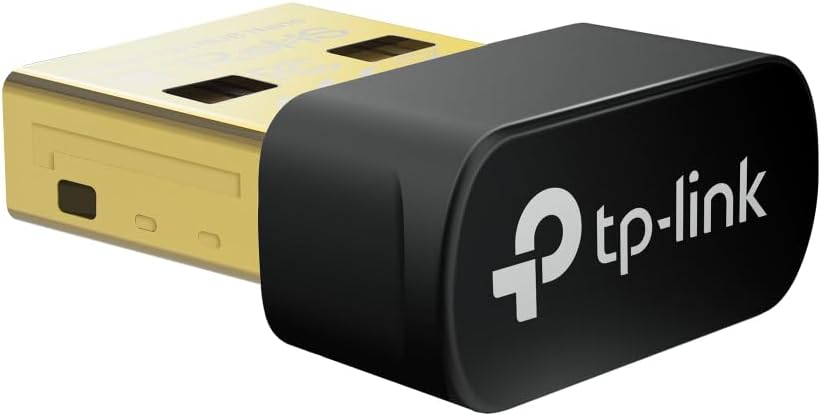
Choosing a USB WiFi 6/Bluetooth adapter requires balancing speed, compatibility, and form factor
The TP-Link Archer TX10UB Nano combines WiFi 6 (AX900) and Bluetooth 5.3 in a compact USB 2.0 dongle, targeting users who need modern wireless connectivity for older desktops or laptops lacking built-in support. Buyers should understand that while USB 2.0 limits maximum WiFi throughput, this adapter prioritizes convenience and dual-functionality in a travel-sized package.
Key Considerations Before Buying
- The USB 2.0 interface caps theoretical WiFi 6 speeds well below the advertised AX900 rating—expect real-world speeds closer to 300-400Mbps, which is still a significant upgrade for users on older WiFi 4 or 5 standards.
- Bluetooth 5.3 support enables low-energy audio and improved peripheral connectivity, but verify your PC's audio drivers and intended Bluetooth devices are compatible with Windows 11/10's native Bluetooth stack.
- The nano form factor sacrifices external antennas, making signal strength more dependent on your PC's placement relative to the router; this design trades some performance for extreme portability.
What Our Analysts Recommend
For USB adapters, scrutinize driver support longevity and installation processes—reliable brands provide straightforward software. Genuine reviews often mention specific router models they're paired with and any intermittent dropout issues, which are more telling than generic speed claims.
USB Network Adapters Market Context
Market Overview
The USB adapter market is increasingly bifurcated between basic WiFi 5 units and newer WiFi 6/6E models with Bluetooth combos, with TP-Link positioning this nano adapter in the compact, modern-connectivity segment. Competition focuses on balancing the inherent bandwidth limitation of USB 2.0/3.0 with the convenience of plug-and-play upgrades.
Common Issues
Users frequently encounter driver conflicts with existing network hardware, Bluetooth interference in crowded 2.4GHz environments, and thermal throttling in compact designs during sustained transfers. The lack of external antennas on nano models can exacerbate signal reliability in congested networks.
Quality Indicators
Look for explicit mention of OFDMA and MU-MIMO support for efficient multi-device handling, WPA3 security for future-proofing, and manufacturer commitment to driver updates across Windows versions. Consistent praise for plug-and-play reliability in verified reviews is a stronger indicator than isolated speed test results.
Review Authenticity Insights
Grade B Interpretation
A Grade B with an 11% estimated fake review rate suggests the majority of feedback is authentic, but a modest portion of reviews may be incentivized or overly promotional. The 0.24-point drop from the displayed 4.44 to the adjusted 4.20 rating indicates some review inflation, though the core rating remains positive.
Trust Recommendation
Prioritize reviews that detail specific setup scenarios, like pairing with particular motherboards or Bluetooth headphones, over those using vague praise. The high number of verified purchases lends credibility, but cross-reference common criticisms about driver installation or Bluetooth stability across multiple sources.
Tips for Reading Reviews
For technical products like this, focus on reviews discussing real-world use cases—connecting to specific WiFi 6 routers, using Bluetooth mice/keyboards simultaneously, or performance in densely populated apartment buildings. These provide more actionable insights than star ratings alone.
Expert Perspective
The Archer TX10UB Nano fills a specific niche: providing a compact, dual-purpose connectivity upgrade for systems lacking modern wireless capabilities. Its 4.2 adjusted rating from verified purchasers suggests it reliably delivers on core promises, though the USB 2.0 bottleneck means it won't achieve full WiFi 6 potential. The integration of Bluetooth 5.3 is a forward-looking feature that adds value beyond mere WiFi connectivity, making it suitable for users seeking to add both wireless standards with one port.
Purchase Considerations
This adapter makes the most sense for travelers or users with compact PCs where internal card installation isn't feasible, and who value Bluetooth 5.3 support. Consider your current internet plan speed—if you subscribe to gigabit service, the USB 2.0 limitation will be more noticeable than for sub-500Mbps connections.
Comparing Alternatives
Shoppers should compare internal PCIe WiFi 6/Bluetooth cards for desktops (offering better performance) and USB 3.0 adapters with external antennas if signal strength is a primary concern.

![Lightning to Ethernet Adapter for iPhone,[Apple MFi Certified] 1.6ft RJ45 Ethernet LAN Network Adapter with 8Pin Compatible for iPhone 14/13/12/11/XS/XR/8/7/6/iPad/iPod,Plug and Play,Support 100Mbps](https://m.media-amazon.com/images/I/51IpoTv+XzL._AC_SY300_SX300_.jpg)


