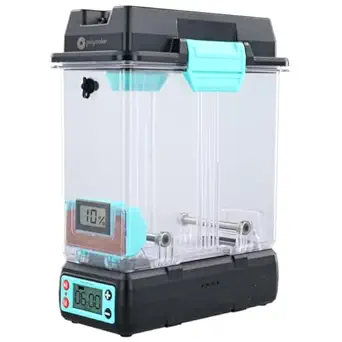
SUNLU S2 Filament Dryer: Does a Circulation Fan Justify the Upgrade?
If you're tired of brittle prints from moisture-laden nylon or PETG, the SUNLU S2 aims to solve that with a built-in circulation fan and a 70°C max temperature. Unlike basic dehydrators that rely on passive heating, this unit actively moves hot air around the spool, which is critical for hygroscopic materials like TPU and Nylon. For 3D printing enthusiasts, understanding whether this active drying system delivers consistent results is key to avoiding failed prints.
Key Considerations Before Buying
- Material compatibility matters: The S2 handles a wide range of filaments from 1.75mm to 3.00mm, but its 70°C limit is ideal for PLA and PETG, while Nylon may require extended drying cycles at the upper temperature range. Check your filament's recommended drying specs to ensure this unit meets them.
- The built-in circulation fan is a standout feature—it accelerates moisture removal by preventing hot spots and ensuring even drying across the spool. This is particularly beneficial for larger spools (up to 1kg) where passive drying can leave the core damp.
- Consider the dual function: The S2 works as both a dehydrator and a storage box, but its effectiveness as a long-term storage solution depends on ambient humidity. For consistently dry conditions, you may need to pair it with a desiccant pack or a sealed container.
What Our Analysts Recommend
In a filament dryer, look for uniform temperature distribution and a fan that circulates air without creating excessive noise or vibration. The S2's 70°C maximum is standard, but ensure the unit can maintain that temperature consistently for hours—check for a digital thermostat or timer. Durable construction and a clear lid for monitoring filament condition are also signs of a quality design.
3D Printing Filament Market Context
Market Overview
The 3D printing filament dryer market has exploded as hobbyists and professionals realize that moisture is the #1 cause of print defects. Most dryers now offer temperatures between 50°C and 70°C, but few integrate active circulation fans, making the S2 a step above basic heated boxes. With more users printing advanced materials like Nylon and PC, demand for reliable drying solutions is driving innovation in this niche.
Common Issues
Common problems in this category include uneven heating that leaves spool centers damp, flimsy lids that don't seal properly, and inaccurate temperature controls that risk melting or under-drying filament. Some dryers also lack the capacity for larger spools, forcing users to cut or pre-dry filament in batches.
Quality Indicators
A quality filament dryer should have a robust heating element with adjustable temperature settings, a sealed enclosure to prevent moisture ingress, and a fan that operates quietly but effectively. Look for models with digital displays for precise control and positive user feedback on long-term reliability, especially from verified purchasers who print challenging materials.
Review Authenticity Insights
Grade B Interpretation
With a Grade B and an estimated 10% fake review rate, the SUNLU S2's review profile is largely trustworthy, but not perfect. The 10% suspicious reviews likely inflate the 4.89 rating slightly, so the adjusted 4.60 is a more realistic benchmark. This means the product genuinely satisfies most buyers, but a few reviews may overstate benefits or be from incentivized sources.
Trust Recommendation
Given the high verified purchase rate and personal context in reviews, you can trust the overall sentiment that the S2 effectively dries filament and reduces print failures. However, focus on reviews that mention specific materials (e.g., Nylon or TPU) and drying times, as these are likely from experienced users. Ignore overly generic praise without technical details.
Tips for Reading Reviews
When reading reviews for filament dryers, prioritize those that describe pre- and post-drying print quality, especially with hygroscopic materials. Look for mentions of temperature accuracy and fan noise—these are practical concerns. Be skeptical of reviews that only say 'works great' without context, as they may be fake or from users with low expectations.
Expert Perspective
The SUNLU S2 stands out in a crowded market due to its active circulation fan, which theoretically improves drying efficiency compared to passive units. The 70°C maximum temperature is adequate for most common filaments, though Nylon users may need to run multiple cycles. The strong 4.89 rating, even adjusted to 4.60, suggests high user satisfaction, particularly for its ability to turn brittle, failed prints into reliable ones. However, the 10% fake review rate warrants caution—some positive buzz may be manufactured.
Purchase Considerations
If you frequently print with moisture-sensitive materials like Nylon, TPU, or PETG, the S2's active drying is a worthwhile investment over cheaper passive dryers. For PLA-only users, the benefit is less pronounced, as PLA is less hygroscopic. Weigh the cost against your print failure rate—if you're losing spools to dampness, the S2 pays for itself quickly.
Comparing Alternatives
Shoppers should compare the S2 with other dryers in its price range, such as the Eibos Polyphemus or the Sunlu FilaDryer S1, to see if features like larger capacity or dual-spool drying better fit their workflow.