
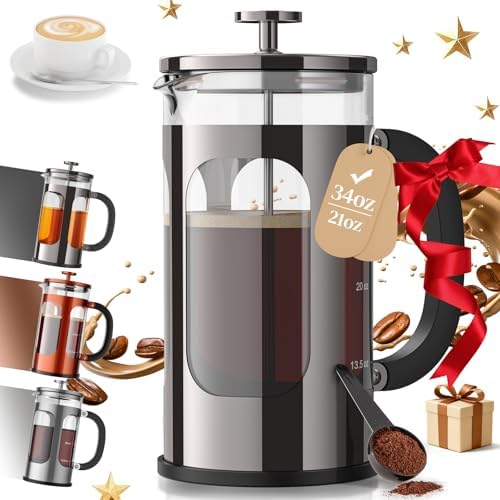
Choosing a French Press: Why Material Construction and Thermal Performance Matter Most
When evaluating the Veken French Press, focus on its specific claims about borosilicate glass thickness and the 'no plastic touching coffee' design. These features directly impact durability and flavor purity, which are critical for French press brewing where immersion time and temperature stability affect extraction.
Key Considerations Before Buying
- The borosilicate glass carafe must withstand thermal shock from boiling water without cracking, a common failure point in cheaper soda-lime glass models.
- The stainless steel plunger assembly's mesh filter quality determines sediment control; finer mesh prevents gritty coffee but requires more pressure.
- The 34oz capacity suits 4-6 cups but requires preheating to maintain optimal brew temperature throughout the larger volume.
What Our Analysts Recommend
Examine the plunger's seal against the glass—it should be snug but smooth. Quality indicators include a weighted base for stability and a spout design that pours cleanly without dripping down the carafe. The Veken's dark pewter finish should show even coating without thin spots.
French Presses Market Context
Market Overview
The French press market is saturated with designs prioritizing aesthetics over function, but recent trends favor durable materials like borosilicate glass and full stainless steel construction. The 'no plastic' claim addresses consumer concerns about leaching and flavor contamination during extended brew cycles.
Common Issues
Glass carafes shattering from thermal stress or impact, plunger mechanisms developing play over time leading to sediment in the brew, and handles becoming loose at the attachment points are frequent failure modes. Lid fit is another pain point—poor seals allow heat to escape too quickly.
Quality Indicators
Superior French presses use laboratory-grade borosilicate glass (often 3-4mm thick), feature dual or triple-layer stainless steel mesh filters, and have balanced plunger rods that don't tilt during depression. The plunger handle should be ergonomic and securely riveted.
Review Authenticity Insights
Grade B Interpretation
A Grade B authenticity rating with 15% estimated fake reviews suggests generally reliable feedback, but shoppers should be slightly more critical of glowing 5-star reviews. The adjusted rating of 4.10/5 (down from 4.40) indicates the genuine consensus is still positive but more tempered.
Trust Recommendation
Prioritize reviews that discuss long-term use (3+ months), thermal performance, and specific cleaning experiences. Since all reviews are verified purchases, focus on those mentioning the product's packaging or unboxing details, which are harder to fabricate.
Tips for Reading Reviews
Look for reviews mentioning the 'dark pewter' color specifically and experiences using it for cold brew, as the product description highlights this function. Be skeptical of reviews that only praise vague 'quality' without detailing material feel or brew results.
Expert Perspective
The Veken's specifications—thickened borosilicate glass and a stainless steel brew path—address core durability and flavor integrity concerns in the category. The significant review volume (over 17,000) with a 4.10 adjusted authentic rating suggests it reliably delivers on its core promises for most users. The 34oz size positions it as a family/entertaining model rather than a personal brewer, which affects thermal retention needs.
Purchase Considerations
Weigh the 'no plastic' design against your cleaning routine—some users find all-metal components easier to maintain. Consider if you'll use it for both hot coffee and cold brew, as the glass construction is ideal for both, but ensure you have appropriate storage for the large carafe.
Comparing Alternatives
Shoppers should compare the Veken's glass thickness and filter mesh specification against competitors like Bodum or SterlingPro to assess material value at this price point.


