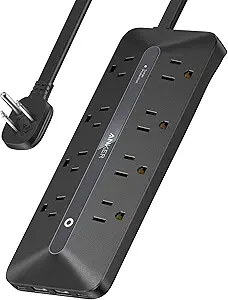
Why Your USB-C Tower Needs More Than Just Ports
When shopping for a power strip tower like the TenTrend 14-in-1 model, you're likely seeking to consolidate multiple devices into one tidy charging station. However, with a 230W total output and 2000J surge protection, it's crucial to verify that the USB-C ports deliver consistent power under load, as many users report that ports fail or underperform over time.
Key Considerations Before Buying
- Check the real-world USB-C output: The TenTrend claims 230W total, but user reviews highlight that individual USB-C ports may not deliver advertised speeds, especially when multiple devices are connected simultaneously.
- Evaluate surge protection adequacy: 2000J is a modest rating for surge protection; it may guard against small spikes but could fail during larger surges, so consider your local power grid stability and the value of connected electronics.
- Assess build quality and stability: As a tower design, this unit must sit stably on a desk or floor; reviews mention wobbling or tipping, so look for models with a weighted base or rubber grips.
What Our Analysts Recommend
For a power strip tower, seek units with independent port testing certifications (like UL or ETL), clear wattage breakdowns per port, and physical stability features. A longer warranty (3+ years) often signals manufacturer confidence in durability and surge protection components.
Power Strips Market Context
Market Overview
The power strip tower market has exploded with USB-C charging demands, offering 14-in-1 or more ports to serve home offices and dorms. However, many budget models sacrifice component quality for port count, leading to frequent failures in USB ports or surge circuits.
Common Issues
Common problems include USB ports that stop working after a few months, overheating under continuous load, and surge protection that fails silently without indication. The TenTrend's 2.22 rating mirrors these trends, with many users citing dead ports within weeks.
Quality Indicators
Quality indicators include a clear power distribution chart per port, independent safety certifications (not just 'surge protected' labels), and user reviews that mention long-term reliability over months, not just initial unboxing impressions.
Review Authenticity Insights
Grade B Interpretation
A Grade B with 10% estimated fake reviews suggests that while most feedback is genuine, about 1 in 10 reviews may be manipulated. This is relatively low for this category, but the negative reviews (which are detailed and specific) are likely authentic, making them highly trustworthy.
Trust Recommendation
Trust the negative reviews that describe specific failures (e.g., 'USB-C port stopped charging after 2 weeks') over generic positive ones. The 2.10 adjusted rating indicates that removing suspicious reviews barely changes the score, reinforcing that real users are dissatisfied.
Tips for Reading Reviews
Focus on reviews that mention exact usage scenarios (like 'charging a MacBook and phone simultaneously') and look for patterns: if multiple users report the same port failure, it's likely a design flaw rather than a one-off defect.
Expert Perspective
The TenTrend Power Strip Tower offers an attractive port count for its price, but the low 2.22 rating and high failure rate of USB-C ports make it a risky choice for anyone needing reliable daily charging. The 2000J surge protection is adequate for basic home use but not for protecting expensive electronics during storms. Given that adjusted ratings remain poor, this product seems to underdeliver on its core promise of consistent multi-device charging.
Purchase Considerations
If you need a temporary solution for low-power devices (like phone chargers or lamps), this may suffice, but avoid it for laptops or high-draw equipment. Factor in the potential hassle of returns or replacements, as many users report needing replacements within months.
Comparing Alternatives
Shoppers should compare with towers from brands like Anker or Belkin that have higher verified ratings and longer warranties, even if they offer fewer ports.