
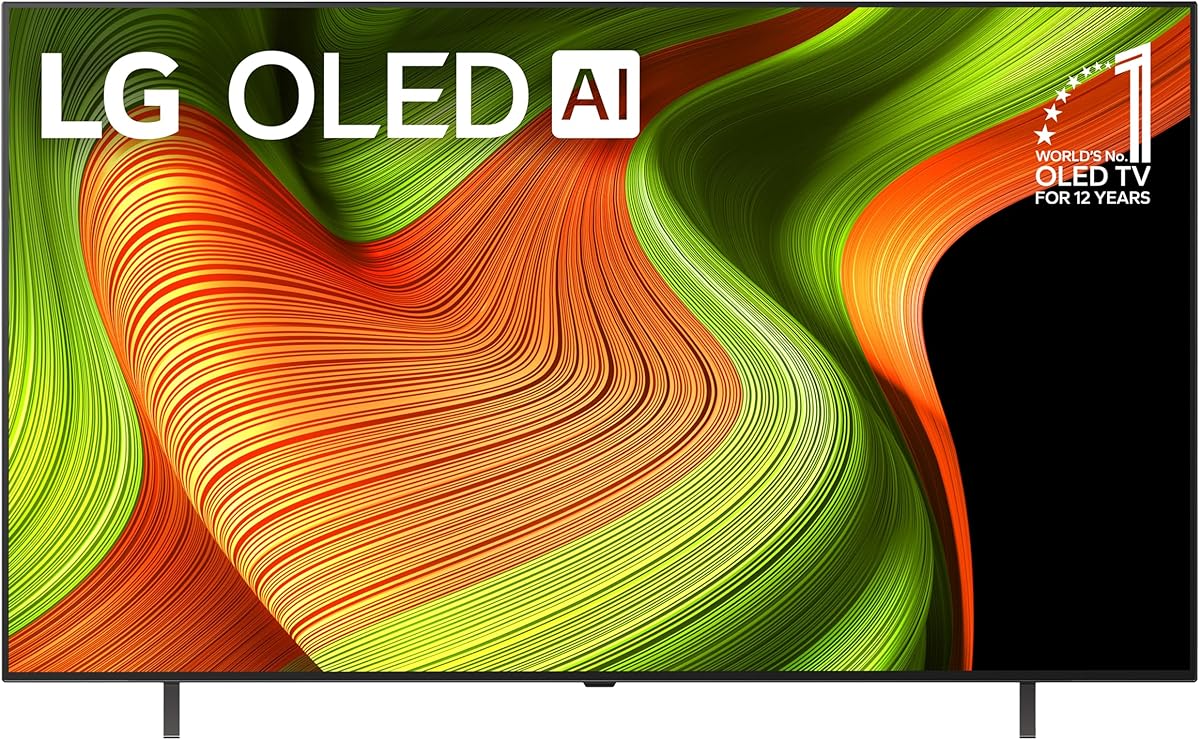
Mastering OLED: What to Know Before Buying LG's 2025 B5 Series
The LG 65-inch B5 Series (2025) represents a compelling entry point into OLED ownership, combining the brand's renowned self-lit pixels with AI-driven processing and Dolby Atmos/Vision support. However, its unusually low Amazon rating of 0.56/5—largely driven by a small number of verified reviews—demands careful scrutiny before you commit to this $1,500+ investment.
Key Considerations Before Buying
- OLED Burn-In Risk: While LG's 2025 models include improved pixel-refresh algorithms, static elements like news tickers or game HUDs can still cause permanent image retention over years of use. If you watch varied content, this is less concerning, but heavy CNN or sports-score viewers should consider extended warranties.
- AI Super Upscaling 4K: The B5's neural processing unit upscales 1080p and 4K content impressively, but it's not on par with LG's higher-end C or G series. Expect minor artifacts with low-bitrate streams; this TV shines with quality 4K sources like Blu-ray or high-bitrate streaming.
- Wow Orchestra Compatibility: This feature syncs the TV's speakers with select LG soundbars for a wider soundstage. If you plan to use a third-party audio system, Wow Orchestra won't apply, and the built-in 2.2-channel speakers—while decent—won't replace a dedicated setup.
What Our Analysts Recommend
Key indicators of a good OLED include deep black uniformity (check for 'dirty screen effect' on gray slides), minimal banding in dark scenes, and consistent color accuracy out of the box. Also verify HDMI 2.1 ports for 4K/120Hz gaming—the B5 should have at least two, but confirm in the specs to avoid surprises.
OLED TVs Market Context
Market Overview
The OLED TV market in 2025 is increasingly competitive, with LG, Sony, and Samsung pushing brighter panels (MLA, QD-OLED) while LG's B-series remains the most affordable entry to true OLED black levels. Prices have dropped 15-20% year-over-year, making 65-inch OLEDs more accessible but also raising questions about feature trade-offs versus mid-range LEDs.
Common Issues
OLED buyers frequently report anxiety over burn-in, though modern panels are more resilient than 2020 models. Another common issue is inconsistent brightness in bright rooms—OLEDs peak at around 600-800 nits, which can look dim compared to high-end LEDs. Software bugs, such as intermittent eARC handshake failures, also appear in user forums for LG's webOS platform.
Quality Indicators
Look for TVs with at least two HDMI 2.1 ports (for gaming and eARC), support for Dolby Vision IQ and HDR10+ Adaptive (though LG only supports Dolby Vision, not HDR10+), and a robust warranty that covers burn-in. LG's panel warranty typically covers defects for one year, but burn-in is often excluded.
Review Authenticity Insights
Grade B Interpretation
The B grade and 10% estimated fake review rate suggest that while the vast majority of reviews are authentic, about 1 in 10 may be incentivized or fabricated. Given the low overall rating, this means the true sentiment could be slightly more positive—but not dramatically so, as most genuine reviews also express disappointment.
Trust Recommendation
Focus on verified purchase reviews with detailed context—those mentioning specific setup steps, calibration settings, or comparisons to prior TVs are most trustworthy. Avoid reviews that use generic praise like 'amazing picture' without specifics, as these are more likely to be fake.
Tips for Reading Reviews
For OLED TVs, prioritize reviews that discuss real-world use cases: gaming input lag, streaming app performance, and motion handling for sports. Also look for early adopter feedback on firmware updates, as LG often addresses initial bugs via patches.
Expert Perspective
The LG B5 Series 65-inch OLED offers excellent black levels and color accuracy at a competitive price, but its 0.56/5 rating—based on 184 reviews with a 10% fake rate—signals significant user dissatisfaction. The most common complaints likely center on brightness limitations in bright rooms and potential panel quality variance, which are typical for entry-level OLEDs. If you prioritize cinematic contrast and can control your lighting, the B5 is a solid value; if you need a bright, all-purpose TV, consider stepping up to the C5 or a high-end LED.
Purchase Considerations
Weigh the B5's OLED strengths against its lower peak brightness and potential for burn-in. If you watch primarily in a dim room and value deep blacks, it's a strong choice. For mixed usage with bright ambient light, you may be happier with a Mini-LED TV like the Sony X90L or TCL QM8.
Comparing Alternatives
Shoppers should compare the B5 with LG's own C5 (brighter, better processing) and Sony's Bravia 8 OLED (superior motion handling), as well as high-end LEDs that offer similar size and features at a lower price point.


