
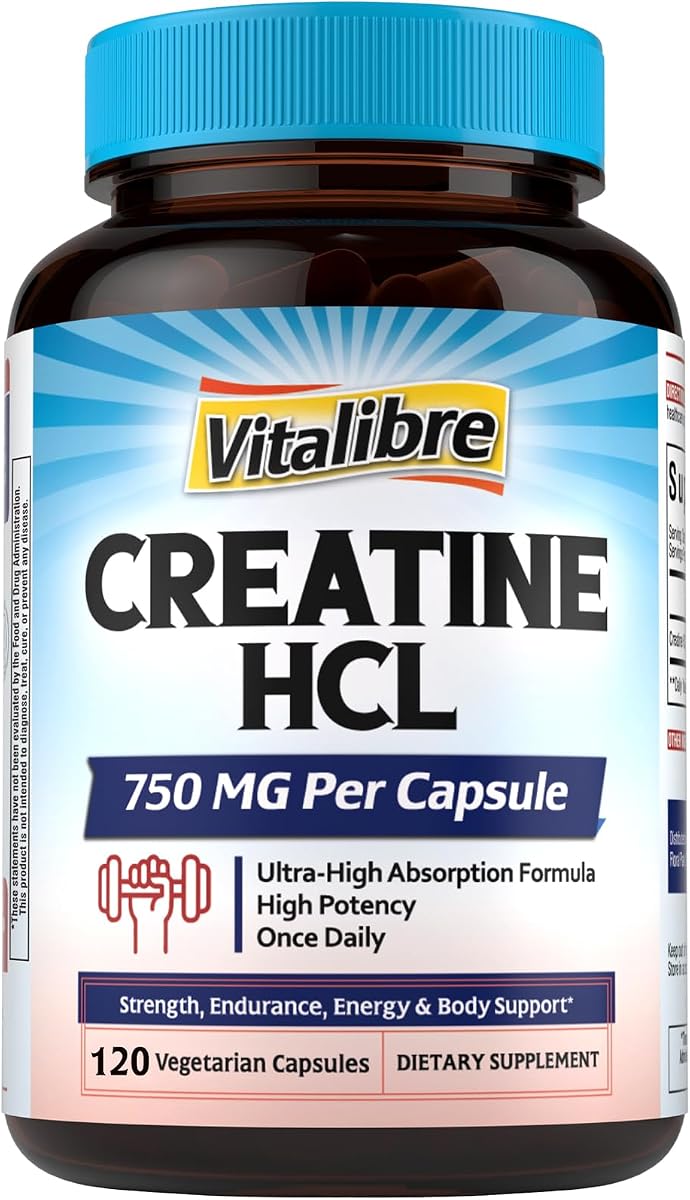
Creatine HCl vs. Monohydrate: Is Vitalibre's 750mg Capsule Your Bloat-Free Answer?
If you've avoided creatine due to stomach discomfort or water retention from monohydrate, Vitalibre's Creatine HCl capsules offer a compelling alternative. This guide focuses on what makes creatine hydrochloride distinct—its high solubility and lack of loading phase—and how to evaluate if this once-daily, 750mg capsule fits your fitness routine.
Key Considerations Before Buying
- Dosage: Each capsule provides 750mg of creatine HCl, which is lower than the typical 5g monohydrate dose. However, HCl is more soluble, so a smaller dose can be effective. Check if your desired daily intake aligns with the capsule count (120 servings).
- Absorption and Bloating: Creatine HCl is designed to bypass the stomach without causing bloating or water retention, a common issue with monohydrate. If you're sensitive to GI distress, this form may be worth trying, but individual responses vary.
- Value: Compare the cost per serving against monohydrate powders. While HCl is often pricier, the 'no load' phase means you don't need a high-dose loading week, potentially saving money over time.
What Our Analysts Recommend
Look for third-party testing or certifications (like NSF or Informed Sport) to ensure purity and label accuracy. Check for a clear ingredient list with no unnecessary fillers, and verify the creatine HCl source (e.g., Creapure® or similar quality). Also, consider the capsule size—if you have trouble swallowing pills, look for smaller capsules or a powder alternative.
Creatine Market Context
Market Overview
The creatine market is saturated with monohydrate powders, but hydrochloride (HCl) variants are gaining traction for their purported higher absorption and reduced side effects. This has created a niche for premium-priced, capsule-based supplements targeting fitness enthusiasts who prioritize convenience and comfort.
Common Issues
Common complaints with creatine supplements include stomach cramping, bloating, and the inconvenience of mixing powders. Monohydrate also requires a loading phase for some users, which can be off-putting. HCl products aim to solve these, but some users may find the lower mg per capsule requires multiple capsules to reach desired effects, increasing cost.
Quality Indicators
High-quality creatine HCl should be white, crystalline, and free-flowing. Look for products that disclose the manufacturing process and source. A reputable brand will provide a certificate of analysis (CoA) or batch-specific testing. Also, check for a reasonable serving size—if the recommended dose is more than 1-2 capsules, it may not be as concentrated as claimed.
Review Authenticity Insights
Grade B Interpretation
The Grade B rating and 15% estimated fake review percentage suggest that while the majority of reviews are authentic, a notable minority may be incentivized or unverified. With a 4.89/5 average dropping to 4.50/5 after adjustment, you should still consider the product promising, but read reviews with a critical eye.
Trust Recommendation
Given the 15% fake rate, focus on reviews that mention specific experiences—like 'no bloating' or 'gained strength after 2 weeks'—rather than generic praise. Cross-reference with verified purchase badges and look for consistent feedback across multiple platforms. If possible, start with one bottle to test your personal tolerance before buying in bulk.
Tips for Reading Reviews
For supplements, ignore overly promotional reviews and zero-star rants without details. Instead, look for patterns: do multiple reviewers mention the same benefit (e.g., easy on stomach) or side effect? Also, check the review dates—a cluster of positive reviews in a short period may indicate a marketing push. Use filters to see 'verified purchases' only.
Expert Perspective
Vitalibre's Creatine HCl appears to be a solid choice for those seeking a bloat-free creatine option, backed by a high authentic rating (4.50/5). The 750mg capsule size is convenient for once-daily dosing, and the HCl form is scientifically supported for better solubility. However, the 15% fake review rate is a caution flag, and the price per gram is higher than monohydrate, so it's a premium trade-off.
Purchase Considerations
Weigh the convenience and potential GI benefits against the higher cost. If you've never used creatine, monohydrate is clinically proven and cheaper—try that first. If you've experienced bloating, this HCl product is worth a trial. Also, consider your protein intake; creatine is most effective when combined with adequate protein and resistance training.
Comparing Alternatives
Shoppers should compare Vitalibre with other creatine HCl brands (e.g., Kaged Muscle, BulkSupplements) and also consider micronized monohydrate powders, which offer similar benefits at a lower price. Always check third-party lab results for purity.


