Choosing a TPMS for RVs: Solar Charging, Sensor Range, and Alarm Reliability
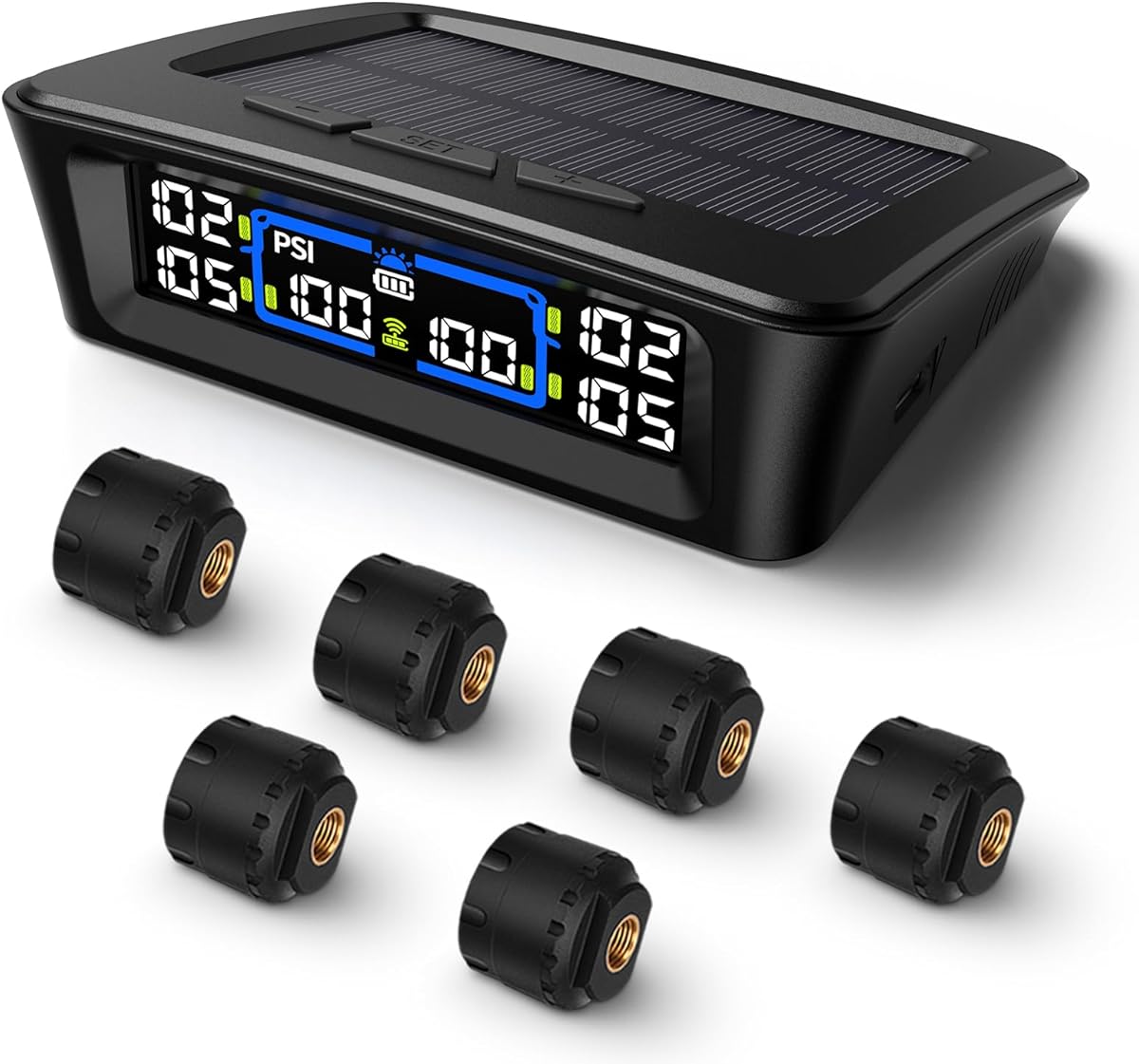
For RV and trailer owners, the Tymate TM12's dual USB/solar charging capability addresses a critical need for continuous power during extended trips. This system's 50-foot range and ability to monitor up to 12 tires make it particularly suited for larger vehicles, but its 0-116 PSI sensor range requires verification against your specific tire requirements. The six alarm modes represent a notable feature expansion over basic TPMS units.
Key Considerations Before Buying
- Verify your tire's maximum PSI rating against the TM12's 0-116 PSI sensor limit; many RV tires operate at 110+ PSI, leaving minimal headroom.
- The 50-foot wireless range is adequate for most trailers but may experience signal dropout on longer fifth-wheel configurations or when the monitor is placed far from the vehicle's rear.
- Dual USB/solar charging is valuable for boondocking, but assess the solar panel's efficiency in shaded or overcast conditions common during travel.
What Our Analysts Recommend
In this category, prioritize systems with programmable high/low pressure and temperature thresholds, not just basic alerts. Look for specific mentions of sensor battery life (typically 1-5 years) and whether replacements are user-serviceable. Quality indicators include detailed installation feedback about sensor torque specs and valve stem compatibility to prevent leaks.
Tools Market Context
Market Overview
The aftermarket TPMS market is increasingly segmented, with RV-specific systems like the Tymate TM12 emphasizing multi-sensor support and extended range over passenger car models. The '2026 Latest Version' branding suggests frequent hardware iterations, which can mean feature improvements but also potential compatibility issues with older components.
Common Issues
Common failures include sensor battery depletion within 1-2 years, signal interference in metal-heavy RV environments, and false alarms triggered by rapid pressure changes during altitude shifts. Many systems struggle with reliable solar charging unless placed in direct, consistent sunlight.
Quality Indicators
Superior TPMS tools feature metal valve stem sensors instead of plastic, include detailed tire position programming, and offer adjustable alarm delay settings to prevent nuisance alerts during normal pressure fluctuations. Look for systems that provide both real-time pressure and temperature readings simultaneously.
Review Authenticity Insights
Grade B Interpretation
A Grade B with 11% estimated fake reviews indicates a moderately trustworthy review pool where most feedback is genuine, but shoppers should be slightly skeptical of uniformly glowing reviews. The drop from 4.44 to 4.20 after adjustment suggests some review inflation, though not severe.
Trust Recommendation
Focus on verified purchase reviews that mention specific use cases like '32-foot travel trailer' or 'Ford F-350 dually,' as these demonstrate actual application. Pay particular attention to the critical 1-star review and any recurring technical complaints across multiple authentic reviews.
Tips for Reading Reviews
Prioritize reviews discussing long-term performance (6+ months) and sensor battery replacement experiences. Be wary of reviews that only praise packaging or quick shipping without detailing installation, calibration, or real-world alarm functionality.
Expert Perspective
The Tymate TM12 presents as a feature-rich option in the mid-range TPMS market, with its expandable 12-sensor capacity and dual charging being legitimate advantages for RV owners. The 4.20 adjusted rating from verified purchasers suggests satisfactory performance, though the 11% fake review rate warrants cautious evaluation. Its value proposition hinges on reliable solar charging performance and whether the 116 PSI maximum accommodates your specific tires without operating at the sensor's upper limit.
Purchase Considerations
Weigh the convenience of solar charging against your typical travel patterns—if you frequently camp in shaded areas, the USB backup becomes essential. Consider whether you truly need 12-sensor capacity or if a smaller system would suffice, as more sensors increase maintenance complexity and potential failure points.
Comparing Alternatives
Compare the TM12's solar efficiency and sensor battery replacement process against competitors like TireMinder or EEZTire, particularly regarding long-term cost of ownership.