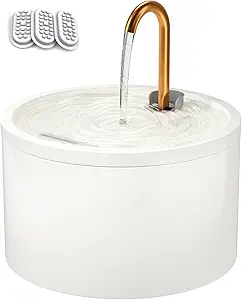
Why a 73oz Stainless Steel Cat Water Fountain Boosts Hydration and Health
When shopping for a cat water fountain, the material and capacity are critical factors. This 73oz/2.2L stainless steel fountain offers a generous water supply that reduces frequent refills, while the non-porous steel surface resists bacteria buildup better than plastic models. Understanding these specifics helps you choose a fountain that encourages your cat to drink more, supporting urinary tract health.
Key Considerations Before Buying
- Material matters: Stainless steel is less likely to harbor bacteria or cause feline chin acne compared to plastic, making it a safer, more hygienic choice for daily use.
- Capacity and flow: A 73oz tank suits multi-cat households or owners who travel, but ensure the pump provides a gentle, quiet stream that cats find inviting rather than intimidating.
- Ease of cleaning: Look for models with dishwasher-safe parts and wide openings for thorough scrubbing, as neglected fountains can grow biofilm and deter drinking.
What Our Analysts Recommend
Quality indicators include a stable, non-slip base to prevent tipping, a replaceable charcoal filter to remove impurities, and a pump that operates below 30 decibels for silent operation. Also check that the stainless steel is food-grade (304 series) for durability and safety.
Fountains Market Context
Market Overview
The pet water fountain market has expanded rapidly, driven by awareness of feline dehydration risks and the benefits of moving water. Stainless steel models now compete with ceramic and plastic options, offering a durable, non-porous alternative that appeals to health-conscious owners.
Common Issues
Many fountains suffer from noisy pumps, difficult-to-clean crevices, and water stagnation if filters aren't changed regularly. Plastic fountains can develop scratches that harbor bacteria, while stainless steel models sometimes lack the aesthetic variety of ceramic designs.
Quality Indicators
Top-tier fountains feature submersible pumps with low-voltage safety certifications, BPA-free materials, and multi-stage filtration (foam, charcoal, and ion-exchange resin). Positive reviews that mention long-term reliability and quiet operation are strong signals of quality.
Review Authenticity Insights
Grade B Interpretation
With a Grade B and an estimated 10% fake review rate, this product's review pool is largely trustworthy but requires cautious reading. The adjusted rating of 4.30/5 suggests genuine satisfaction slightly below the inflated 4.56, meaning some positive reviews may be incentivized or exaggerated.
Trust Recommendation
Focus on verified purchase reviews that detail specific experiences with pump noise, cleaning ease, and cat acceptance over weeks of use. Be skeptical of reviews that lack personal context or use generic language, as these are more likely to be fabricated.
Tips for Reading Reviews
For fountains, prioritize reviews that mention water flow adjustability, filter lifespan, and whether cats took time to adapt. Look for balanced critiques that note minor flaws (e.g., 'pump is quiet but cord is short') as signs of authenticity.
Expert Perspective
This stainless steel fountain offers a solid balance of capacity, material safety, and user satisfaction, with a robust 73oz reservoir that supports multiple cats or reduced refill frequency. The 4.30 adjusted rating indicates most buyers find it effective, though the 10% fake review rate warrants cautious optimism. Its stainless steel construction gives it a hygiene edge over plastic alternatives, making it a practical choice for health-focused pet owners.
Purchase Considerations
Weigh the initial cost against potential savings from fewer vet visits due to improved hydration. Ensure your cat is comfortable with flowing water—some felines prefer still water—and that you're willing to commit to weekly cleaning and monthly filter changes.
Comparing Alternatives
Compare this model with ceramic fountains for aesthetics or larger-capacity stainless steel options if you have multiple pets. Also check pump warranty terms, as pump failures are a common long-term issue.