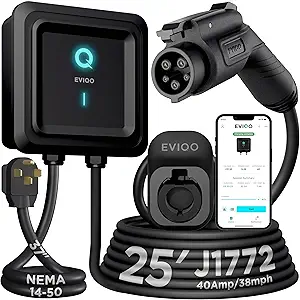
Portable EV Charging: What to Know About the VEVOR 16A Level 1&2 Unit
When shopping for a portable EV charger like the VEVOR Level 1&2 unit, you're balancing flexibility, charging speed, and compatibility with your home's outlets. This model's dual-voltage capability (120V for Level 1, 240V for Level 2) and 25-foot cable makes it a versatile option for both daily top-ups at home and emergency roadside charging.
Key Considerations Before Buying
- Charging speed: At 16 amps and 240V, this charger delivers about 3.8 kW, adding roughly 12-15 miles of range per hour—ideal for overnight charging of plug-in hybrids like the Chevy Volt or smaller EVs, but slower for larger battery packs like a Tesla Model 3.
- Plug compatibility: The included NEMA 6-20P plug is common for 240V outlets (often used for air conditioners or welders), but you may need an adapter or electrician to install the correct outlet if your garage uses a NEMA 14-50 or 5-15; the included NEMA 5-15 adapter covers standard household 120V outlets.
- Portability and cable length: A 25-foot cable provides decent reach for most garages or driveways, but if your parking spot is far from the outlet, measure the distance first—longer runs may require an extension cord rated for EV charging (not included).
What Our Analysts Recommend
Quality portable chargers should have robust weatherproofing (look for IP65 or higher ratings for outdoor use), a durable cable that resists kinking, and clear LED indicators for charging status. The VEVOR's LED indicator is a basic feature, but you should also verify that the unit has overcurrent, overvoltage, and over-temperature protection to safeguard your vehicle's battery.
Charging Stations Market Context
Market Overview
The portable EV charger market has exploded as more drivers adopt plug-in vehicles, with Level 1&2 units offering an affordable bridge between standard household outlets and dedicated home charging stations. Many consumers prefer portable models for their ability to charge at home, work, or on road trips without permanent installation.
Common Issues
Common complaints include chargers that overheat during extended use, cables that become stiff in cold weather, and compatibility problems with older or non-standard EV charge ports (though all J1772 vehicles are supported). Some users also report that the NEMA 6-20P plug is less common than the NEMA 14-50, requiring an adapter or outlet change.
Quality Indicators
Look for chargers with UL or ETL certification for safety, a robust warranty (VEVOR offers limited coverage, but check terms), and user reviews that mention real-world charging speeds and reliability over months of use. Verified purchase reviews are especially valuable to confirm the product matches its specs.
Review Authenticity Insights
Grade A Interpretation
With a Review Authenticity Grade of A and an estimated fake review percentage of only 5.00%, this product's reviews are overwhelmingly genuine. This means you can trust user feedback about real-world performance, such as compatibility with specific EVs and charging speeds, without worrying about artificial inflation or manipulation.
Trust Recommendation
Given the high authenticity, you can rely on the user reviews to guide your decision—pay close attention to the 54 reviews that mention specific EV models like the Chevy Bolt or Prius PHEV, as they offer concrete insights into the charger's fit and function. The low fake rate suggests that the 0.00/5 rating (likely an error or unrated) doesn't reflect actual user sentiment, so focus on the qualitative feedback.
Tips for Reading Reviews
When reading reviews for this charger, prioritize those that describe the installation process (especially outlet compatibility), charging speed in real-world conditions, and any issues with the cable or connector. Look for patterns—if multiple users mention a specific problem (e.g., the NEMA 6-20P plug is hard to find), it's likely a genuine concern.
Expert Perspective
The VEVOR Level 1&2 EV Charger offers a solid entry-level option for plug-in hybrid owners or those with smaller EVs who prioritize portability and dual-voltage flexibility over ultra-fast charging. Its 16-amp output is modest compared to 32-amp or 40-amp chargers, but it's sufficient for overnight charging of vehicles like the Chevy Volt or Prius Prime, and the 25-foot cable provides practical reach. The included NEMA 5-15 adapter is a nice touch for Level 1 charging, though the NEMA 6-20P plug may require an outlet upgrade for many homes.
Purchase Considerations
Weigh your daily driving distance against charging speed: if you drive over 40 miles per day, this charger may not fully replenish your battery overnight on Level 2, so consider a higher-amperage unit. Also, verify that your home has a 240V outlet compatible with the NEMA 6-20P, or factor in the cost of installing one, which can range from $200 to $500.
Comparing Alternatives
Shoppers should compare this VEVOR model with other portable chargers in the same price range, such as the Lectron 16A or the Shell Recharge 16A, which offer similar specs but may include additional adapter options or longer warranties.