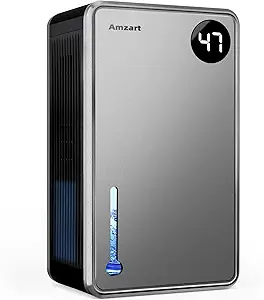
Master Basement Moisture: 80-Pint Dehumidifier Buying Essentials
When tackling basement dampness, a high-capacity dehumidifier like this 80-pint (50-pint DOE) model is your frontline defense. This guide focuses on what matters for spaces up to 5,000 sq ft, including drainage, app control, and the critical distinction between pint ratings.
Key Considerations Before Buying
- Check the DOE pint rating: The Department of Energy (DOE) standard reflects performance at 65°F/60% RH, which is closer to real basement conditions. This unit's 50-pint DOE rating means it's effective for large, damp spaces, not just the '80-pint max' marketing number.
- Evaluate drainage options: Continuous drain capability is essential for unattended operation. This model includes a drain hose, saving you from frequent tank emptying (8L capacity) and preventing shut-offs during heavy humidity spells.
- Consider control and connectivity: App control and turbo mode are valuable for scheduling and rapid moisture removal. If you want to monitor and adjust settings remotely, especially for a vacation home, these features add convenience and efficiency.
What Our Analysts Recommend
Quality dehumidifiers in this class often feature a washable filter to maintain air quality and efficient operation, plus a reliable auto-defrost function for cooler basement temperatures. Look for a clear humidity readout and a sturdy, easy-to-roll body, as you'll likely need to move it for optimal placement. The inclusion of a drain hose and an integrated pump (if available) can significantly enhance usability.
Dehumidifiers Market Context
Market Overview
The dehumidifier market has evolved to meet the demands of larger basements and 'smart home' integration. Modern units like this one are expected to offer both high moisture removal (80 pints max) and digital controls, with app connectivity becoming a standard feature in the mid-to-high price range. Consumers are also increasingly aware of energy efficiency and the distinction between maximum and DOE ratings.
Common Issues
A frequent complaint among dehumidifier owners is inaccurate humidity readings, leading to inefficient operation. Another common issue is the breakdown of the compressor or fan motor within the first couple of years, often due to dust accumulation or continuous use. Also, many users find that the auto-defrost feature may not activate soon enough, causing ice to build up in cooler basements, which reduces efficiency.
Quality Indicators
A quality dehumidifier is characterized by a robust build, a reliable humidistat, and efficient operation at lower temperatures. Look for units with a good warranty and positive long-term reviews. The presence of a washable filter, a clear water level indicator, and a well-designed continuous drain system are also signs of a well-engineered product.
Review Authenticity Insights
Grade B Interpretation
The 'B' grade and 15% estimated fake review rate indicate that while the majority of reviews are genuine, a significant minority may be incentivized or fabricated. This is a common issue in the dehumidifier category, where brands sometimes seed reviews to boost initial ratings. The adjusted rating of 3.70/5, down from 4.00/5, suggests that real user experiences are slightly less positive than the raw average suggests.
Trust Recommendation
Given the 15% fake review rate, it's prudent to focus on reviews that are verified purchases and provide detailed, contextual feedback. Be wary of overly brief, effusive reviews that lack specifics. Instead, look for long-term usage reports that mention performance after several months, as these are more likely to be authentic.
Tips for Reading Reviews
When reading reviews for this dehumidifier, pay special attention to comments about noise levels, ease of setting up the drain hose, and whether the app actually works as described. Also, search for reviews that mention the unit's performance in 'basement' conditions, as this is the primary use case. Filter by 'verified purchase' and look for a mix of positive and negative experiences to get a balanced view.
Expert Perspective
This 80-pint dehumidifier offers a solid feature set for large basements, including app control, turbo mode, and a generous 8L tank. The 50-pint DOE rating is a realistic indicator of its performance, making it suitable for spaces up to 5,000 sq ft, though the 3.70 adjusted rating suggests there may be some reliability or performance issues. The 15% fake review rate is a red flag, but the core functionality appears to meet the needs of many users, especially those who appreciate remote monitoring and continuous drainage.
Purchase Considerations
Weigh the convenience of app control and the included drain hose against the potential for minor reliability issues. Consider whether the extra cost over a simpler model is justified by the smart features. If you have a large, damp basement, the capacity is appropriate, but be prepared for potential noise or humidity sensor inaccuracies, which are common in this category.
Comparing Alternatives
Before committing, compare this model with other 50-pint DOE dehumidifiers from established brands like Frigidaire, hOmeLabs, and GE, which often have similar features but may have more consistent long-term reviews and lower fake review percentages. Look for models with a proven track record in the basement environment.