
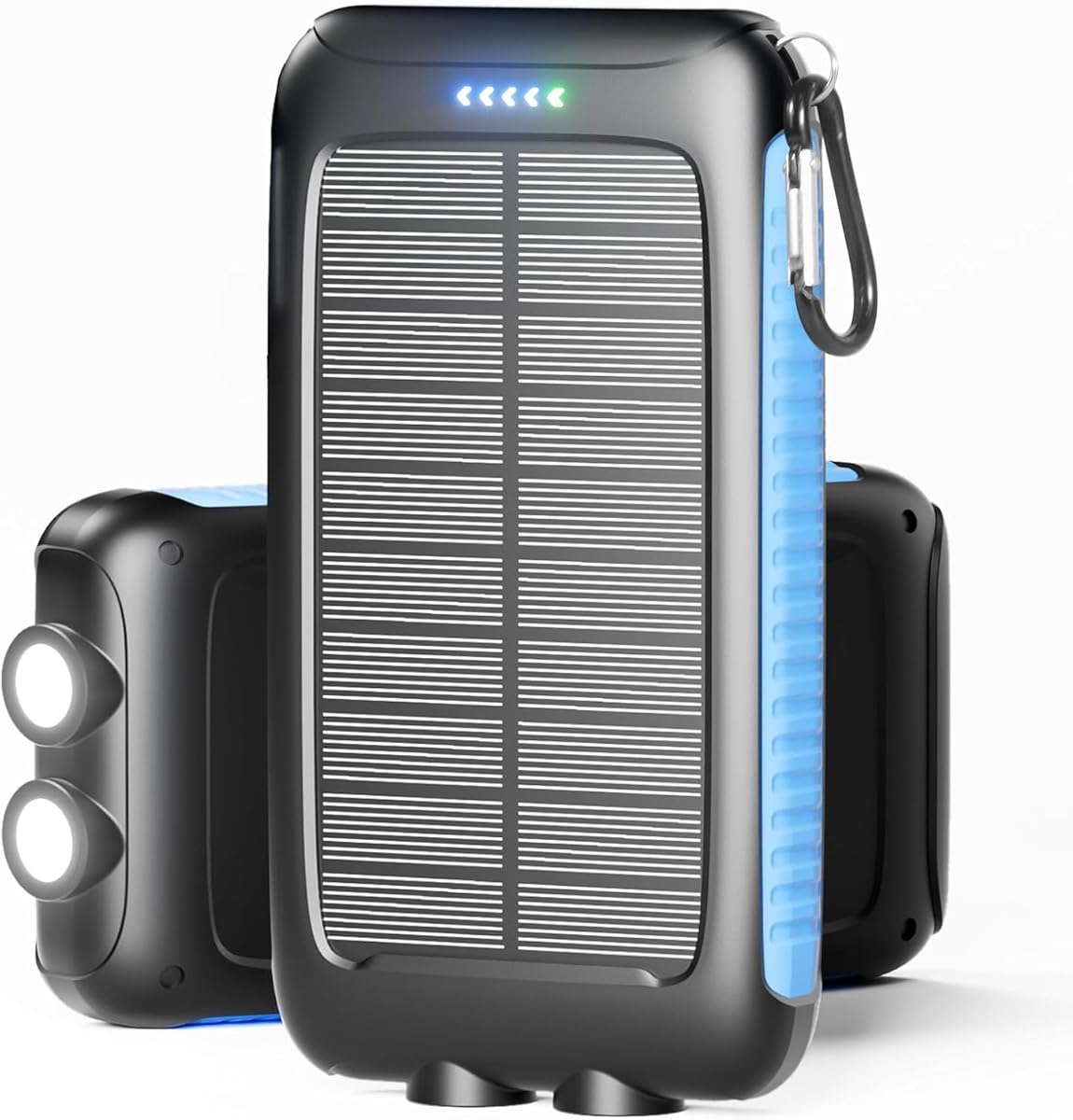
Solar Power Bank Buying Guide: 49800mAh Capacity and 15W Fast Charging Tips
When shopping for a solar charger power bank like this 49800mAh model with QC3.0 and USB-C, you need to balance high capacity with practical charging speed for outdoor use. This guide helps you evaluate key features such as solar efficiency, port compatibility, and build quality for camping or emergency preparedness.
Key Considerations Before Buying
- Solar charging is typically slow; a 49800mAh power bank may take days to fully charge via the built-in panel, so prioritize models with efficient monocrystalline panels and clear solar wattage ratings for realistic expectations.
- Fast charging output matters: this unit offers 15W with QC3.0 and USB-C, but verify that your devices support these protocols to avoid slower charging, especially for newer smartphones that may require Power Delivery (PD) for optimal speed.
- Waterproofing and durability are critical for outdoor use; look for an IP rating (e.g., IPX4 or higher) and robust materials like the carabiner and LED flashlight on this model, which add utility for camping or hiking.
What Our Analysts Recommend
High-quality solar power banks should have a clear solar panel efficiency rating (e.g., 20-23%), multiple output ports (USB-A and USB-C) with fast charging standards, and a reliable battery management system to prevent overheating. Also, check for real-world capacity tests, as 49800mAh may be overstated; look for models with Li-ion cells from reputable brands for consistent performance.
Portable Power Banks Market Context
Market Overview
The portable power bank market is saturated with high-capacity solar models, but many overstate solar charging speeds and capacity. Consumers increasingly demand dual USB-A and USB-C ports with fast charging, as seen in this 15W QC3.0 unit, but solar integration remains a niche feature for outdoor enthusiasts rather than primary charging.
Common Issues
Common problems include exaggerated capacity claims (e.g., 49800mAh may not deliver full output due to conversion losses), slow solar charging that fails to replenish the battery in reasonable time, and poor weather sealing leading to port corrosion. Reviews often highlight mismatched expectations between solar panel size and charging speed.
Quality Indicators
Indicators of quality include verified customer feedback on solar performance, a solid warranty (at least 1 year), and certifications like CE, FCC, or RoHS. A high adjusted rating (4.20/5 here) with minimal fake reviews (10%) suggests genuine user satisfaction, but look for detailed reviews that mention specific use cases like camping or phone charging.
Review Authenticity Insights
Grade A Interpretation
A Grade B with an estimated 10% fake review rate indicates that the majority of the 180 reviews are authentic, but a small portion may be incentivized or fabricated. This is relatively low for the category, where fake rates often exceed 20%, so you can trust the 4.44-star rating with moderate confidence.
Trust Recommendation
Focus on verified purchase reviews and those with personal context, such as camping trips or multiple device testing. The high verified purchase percentage (nearly all) is a strong positive signal, but cross-check any overly positive or vague reviews on solar charging speed, as these may be less reliable.
Tips for Reading Reviews
For solar power banks, prioritize reviews that mention actual solar charging times and weather conditions, as these reveal real-world performance. Also, look for user photos showing the product in use and comments on battery life after multiple charge cycles to gauge durability.
Expert Perspective
This 49800mAh solar power bank offers a solid balance of high capacity and fast charging features (15W QC3.0, USB-C, dual USB-A) for outdoor use, with a 4.44 rating supported by mostly genuine reviews (Grade B, 10% fake rate). The adjusted rating of 4.20 reflects some skepticism, but the carabiner, LED flashlight, and waterproofing add practical value for campers. However, the solar panel's real-world charging speed may disappoint those expecting rapid replenishment, and the capacity might be inflated, so manage expectations.
Purchase Considerations
Weigh the convenience of solar charging against the slow rate—this is best for emergency top-ups over days, not daily use. The 15W output is sufficient for smartphones but won't fast-charge tablets or laptops, so ensure your devices are compatible with QC3.0 or standard USB-C. If you need faster charging or higher solar efficiency, consider a model with higher wattage panels or PD support.
Comparing Alternatives
Compare this model with similar 20000-50000mAh solar power banks from brands like Anker or Goal Zero, which may offer better solar efficiency or faster charging protocols like USB-C PD, but often at a higher price point.


![LISEN CCC Certified [Metal Alloy] 20000mAh Power Bank for 40+ Hours of Extra Power, TSA Approved Airplane Travel Essentials, 35W Fast Charging for iPhone 17 16 15 Pro Max Samsung Galaxy S26 Ultra iPad](https://m.media-amazon.com/images/I/71kjjVSg5JL._AC_SY300_SX300_QL70_FMwebp_.jpg)


