
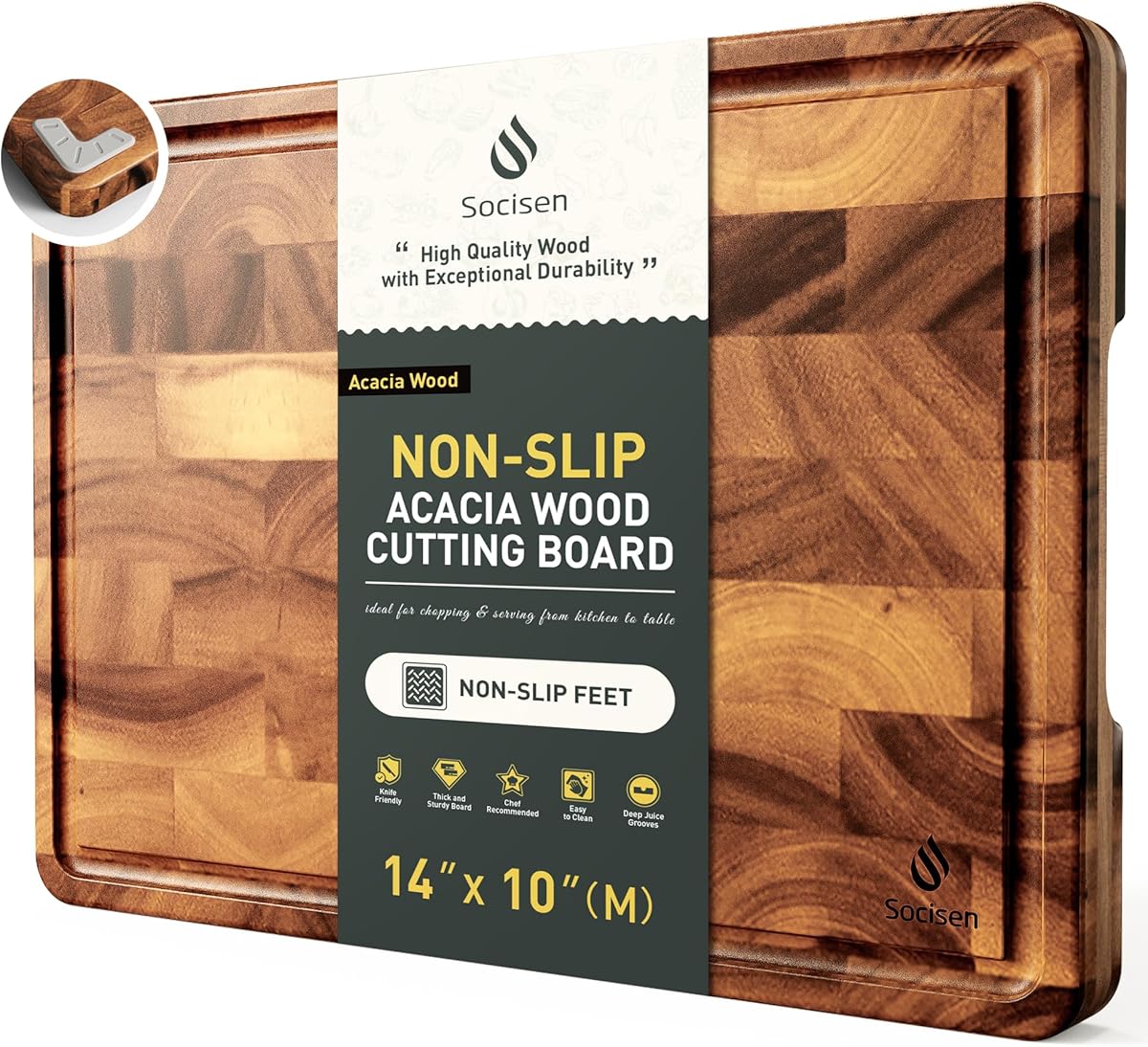
Acacia End Grain Boards: Balancing Durability, Maintenance, and Aesthetic Appeal
This handcrafted acacia end grain cutting board represents a premium category where construction details significantly impact performance. The checkered pattern isn't just decorative—it indicates end grain construction where wood fibers face upward, creating a self-healing surface that's gentler on knife edges than edge or face grain alternatives. With non-slip feet and heavy-duty thickness, this board targets serious home cooks who prioritize both function and presentation.
Key Considerations Before Buying
- End grain construction requires more maintenance than plastic or bamboo—you'll need to regularly oil this acacia board to prevent drying and cracking, especially in dry climates or with frequent washing.
- The 1.5-inch thickness and substantial weight (typically 8-10 lbs for this size) provide stability during chopping but make this board less convenient for frequent lifting and storage than thinner options.
- Acacia wood's natural variations mean each board has unique grain patterns and color variations; this aesthetic appeal comes with the understanding that the wood may develop character marks and patina over time.
What Our Analysts Recommend
Examine the joinery where wood pieces meet—tight, seamless seams indicate quality craftsmanship that will withstand expansion and contraction. Check that the non-slip feet are securely attached with waterproof adhesive or screws, as poorly attached feet compromise stability during vigorous chopping. The hand-rubbed oil finish should feel smooth but not overly glossy, suggesting proper initial conditioning.
Cutting Boards Market Context
Market Overview
The premium wooden cutting board market has shifted toward sustainably harvested hardwoods like acacia, which offers similar durability to traditional maple at a slightly lower price point. End grain construction, once found only in professional butcher blocks, has become increasingly popular for home kitchens despite its higher maintenance requirements.
Common Issues
Poorly constructed end grain boards can develop gaps at seams when exposed to moisture fluctuations, while inadequate initial sealing leads to premature warping or cracking. Some manufacturers use inferior food-safe finishes that require complete sanding and reconditioning, adding unexpected maintenance for buyers.
Quality Indicators
Genuine end grain construction shows the circular wood grain pattern on the surface, not straight lines. Quality boards use food-grade mineral oil or beeswax finishes rather than varnishes or lacquers that can chip into food. Thicker boards (1.5+ inches) resist warping better but require proper storage away from direct heat and moisture.
Review Authenticity Insights
Grade B Interpretation
A Grade B authenticity rating with 11% estimated fake reviews suggests mostly genuine feedback but warrants careful review reading. The drop from 4.56 to 4.30 when excluding suspicious reviews indicates some inflated positive ratings, though the remaining 4.30 still represents strong authentic satisfaction.
Trust Recommendation
Focus on verified purchase reviews that mention specific long-term use details—how the board holds up after months of use, how the finish wears, or how the wood responds to seasonal humidity changes. The presence of critical 1-star reviews discussing actual defects adds credibility to the overall rating profile.
Tips for Reading Reviews
Prioritize reviews that discuss maintenance experiences, knife edge preservation, and stability during use over generic praise about appearance. Look for mentions of board thickness, weight, and how the non-slip feet perform on different counter surfaces—these specific details typically indicate genuine ownership.
Expert Perspective
This acacia end grain board sits in the premium home cook segment, offering professional-style construction at a consumer price point. The 4.30 adjusted rating from verified purchasers suggests it delivers on core promises of durability and aesthetics, though the maintenance requirements of end grain acacia mean it's not ideal for casual users. The checkered pattern indicates proper end grain orientation, which genuinely benefits knife edges compared to cheaper face-grain boards. The inclusion of non-slip feet addresses a common stability issue with heavy wooden boards.
Purchase Considerations
Consider your willingness to maintain a wooden board with regular oiling (monthly for heavy use) versus the convenience of dishwasher-safe alternatives. The substantial weight provides stability but makes this less suitable for those who need to frequently store their board. If you primarily use ceramic or Japanese steel knives, the end grain surface provides meaningful edge protection worth the investment.
Comparing Alternatives
Compare this board's thickness and wood type against other end grain options in maple or walnut, as different hardwoods offer varying hardness levels and maintenance characteristics.


