
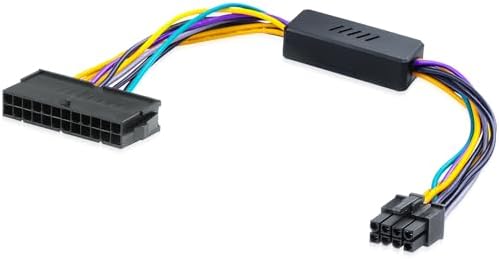
Upgrade Your Dell OptiPlex PSU Safely: 24-Pin to 8-Pin Adapter Explained
Upgrading the power supply in a Dell OptiPlex 3020/7020/9020 or Precision T1700 often hits a snag: Dell's proprietary motherboard uses an 8-pin power connector instead of the standard 24-pin. This 13-inch adapter cable bridges that gap, converting a standard ATX PSU's 24-pin output to the 8-pin input your Dell motherboard expects, enabling a safe and clean PSU swap.
Key Considerations Before Buying
- Compatibility is crucial: This adapter is designed for Dell OptiPlex and Precision models with H61, H81, Q77, Q87, B75, A75, Q75, or Q65 chipsets. Verify your motherboard model before purchase to avoid a non-working setup.
- Cable length matters: At 13 inches (33cm), this cable is long enough for most mid-tower OptiPlex cases, but if you have a full-tower or a case with a bottom-mounted PSU, measure the distance from the motherboard connector to the PSU location to ensure it reaches.
- Power delivery: This adapter only carries the main power signals—it does not provide additional PCIe or SATA power. Ensure your new ATX PSU has enough native cables for your GPU and drives, and that it delivers sufficient wattage for your system.
What Our Analysts Recommend
When selecting a 24-pin to 8-pin adapter, prioritize thick, quality wires (18 AWG or similar) and secure, snug connectors that won't loosen over time. Check that the pinout matches Dell's specification—a mismatch can fry your motherboard. Look for a cable with a short, flexible length that won't create a mess inside your case, and consider a braided or sleeved design for durability.
Internal Power Supplies Market Context
Market Overview
The market for proprietary PSU adapters has grown as DIYers seek to repurpose aging Dell business desktops for budget gaming or home servers. These adapters fill a niche, allowing standard ATX power supplies to work with Dell's custom motherboard connectors, which are common in OptiPlex and Precision lines.
Common Issues
The most frequent problems include incorrect pinouts (causing shorts or no power), flimsy connectors that overheat under load, and cables that are too short or too long for the case. Some users also report that the adapter doesn't fit snugly, leading to intermittent power loss.
Quality Indicators
High-quality adapters feature UL-listed wire, gold-plated or high-grade connectors, and clear labeling of the pinout. They are often sold by reputable brands with good customer support, and they come with detailed compatibility lists. Reviews that mention successful installations on specific models are strong indicators of reliability.
Review Authenticity Insights
Grade B Interpretation
The Grade B and estimated 15% fake review rate suggest that while most of the 18 reviews are genuine, a handful may be incentivized or unverified. This is typical for a niche product where early purchasers are often enthusiasts. The adjusted rating of 4.20/5 remains solid, but you should read reviews critically.
Trust Recommendation
Given the moderate fake review percentage, focus on verified purchase reviews that include specific details about their Dell model and PSU. These are more likely to be authentic. Cross-check any negative feedback about compatibility or build quality with other users' experiences to get a balanced view.
Tips for Reading Reviews
For adapter cables, look for reviews that mention the exact motherboard chipset (e.g., 'worked on my Q87') and whether they used a modular or non-modular PSU. Be wary of overly vague five-star reviews that lack specifics, as they may be less reliable. Also, note any comments about heat or connector fit—these are common pain points.
Expert Perspective
This adapter appears to be a functional, no-frills solution for a common problem. The 4.20 adjusted rating reflects general satisfaction, with most genuine reviews highlighting successful installation and stable performance. The primary caveats are compatibility verification and cable length, but for the right Dell model, it should serve its purpose well.
Purchase Considerations
Weigh the cost of this adapter against the hassle of sourcing a proprietary Dell PSU or using a 24-pin to 8-pin converter that might not be purpose-built. Ensure your PSU is ATX-compliant and has enough wattage for your components. If you're not confident about your motherboard's chipset, consult Dell's documentation or a forum before buying.
Comparing Alternatives
While this adapter is a solid choice, shoppers should compare it with other 24-pin to 8-pin cables that may offer different lengths or braided sleeving. Also consider a full replacement PSU with native Dell compatibility if you prefer a clean install without adapters.


