
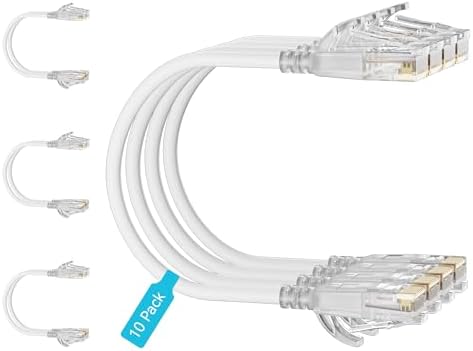
Cat6 Slim Patch Cables: Speed and Flexibility for Modern Networks
When setting up a high-speed home or office network, the choice of Ethernet cables can significantly impact performance. These Cat6 slim patch cables offer a unique combination of 10Gbps speed and a flexible, thin design that simplifies cable management, especially in tight spaces or high-density setups. Understanding the trade-offs between standard and slim cables is key to making the right purchase.
Key Considerations Before Buying
- Slim vs. Standard: Slim cables like these are ideal for reducing clutter and improving airflow in server racks or behind entertainment centers, but they may have slightly shorter maximum lengths for reliable 10Gbps performance. This 10-foot length is well within the safe range for full-speed operation.
- Pure Copper vs. CCA: This product specifies 'Pure Copper UTP,' which is a crucial quality indicator. Pure copper conductors provide better signal integrity and durability than copper-clad aluminum (CCA) alternatives, which are more prone to breakage and signal loss.
- Speed and Frequency: Rated for 10Gbps at 550MHz, these cables exceed the standard Cat6 requirements (250MHz) and approach Cat6a specifications. This makes them suitable for demanding tasks like 4K streaming, online gaming, or large file transfers.
What Our Analysts Recommend
For slim patch cables, verify the conductor material (pure copper is best) and the gauge—thinner cables often use 32 AWG or 30 AWG wire, which is fine for short runs. Also, check for a snagless boot design to protect the connector clip during installation, and ensure the cable is certified for your desired speed (e.g., 10Gbps for Cat6a).
Cat 6 Cables Market Context
Market Overview
The Ethernet cable market is increasingly segmented between standard bulk cables for structured wiring and slim patch cables for flexible, short-distance connections. With the rise of Wi-Fi 6 and multi-gig internet plans, consumers are seeking cables that can handle 10Gbps speeds without the bulk of traditional Cat6a, making slim Cat6 cables a popular compromise.
Common Issues
A common problem with slim Ethernet cables is their susceptibility to interference and signal degradation over longer distances—beyond 20-30 feet, performance may drop. Additionally, some cheaper slim cables use CCA conductors or subpar shielding, leading to intermittent connectivity or slower speeds than advertised.
Quality Indicators
High-quality slim Cat6 cables typically feature 100% bare copper conductors, a flexible PVC or LSZH jacket, and molded strain relief boots. Look for clear marking of the cable category (e.g., Cat6 or Cat6a) and frequency rating (e.g., 550MHz) on the cable itself, which indicates proper manufacturing standards.
Review Authenticity Insights
Grade A Interpretation
With a Review Authenticity Grade of A and an estimated fake review percentage of just 5.00%, this product's feedback is highly trustworthy. The adjusted rating of 4.80/5, based on removing suspicious reviews, is nearly identical to the original 4.89, indicating that the vast majority of positive feedback is genuine and reflects real user experiences.
Trust Recommendation
You can rely on the reviews for this product to inform your purchase decision. Focus on the detailed, verified purchase reviews that mention specific use cases—such as cable management in a home office or performance with a gaming PC—as these provide actionable insights from actual users.
Tips for Reading Reviews
When reading reviews for slim patch cables, pay attention to comments about flexibility, connector durability, and whether the cable maintains 10Gbps speeds at the advertised length. Ignore overly generic praise or complaints about unrelated issues (like packaging), and prioritize reviews that describe specific network setups.
Expert Perspective
This product offers a compelling value for users needing reliable, high-speed connections in a compact form factor. The combination of pure copper construction, 10Gbps/550MHz rating, and a 10-foot length makes it ideal for connecting devices to switches or routers without cable clutter. The high rating (4.89) and strong review authenticity suggest that the product delivers on its promises, particularly in terms of flexibility and performance.
Purchase Considerations
Consider your specific needs: if you require cables for long runs (over 30 feet) or in high-interference environments, standard Cat6a might be more appropriate. However, for most home and small office setups, these slim cables offer an excellent balance of speed, ease of use, and space-saving design.
Comparing Alternatives
While this 10-pack at 10 feet is a great deal for many, buyers with longer runs or different color needs should compare with other slim Cat6 options from reputable brands to ensure compatibility with their setup.

![Cable Matters [UL Listed] 10Gbps in-Wall (CM) Rated 23AWG Bare Copper Cat 6 Cable - 1000ft, Solid, UTP Cat6 Bulk Ethernet Cable, Cat6 Ethernet Cord, White](https://m.media-amazon.com/images/I/414D9MQ4Y3L._SX342_SY445_QL70_FMwebp_.jpg)


