
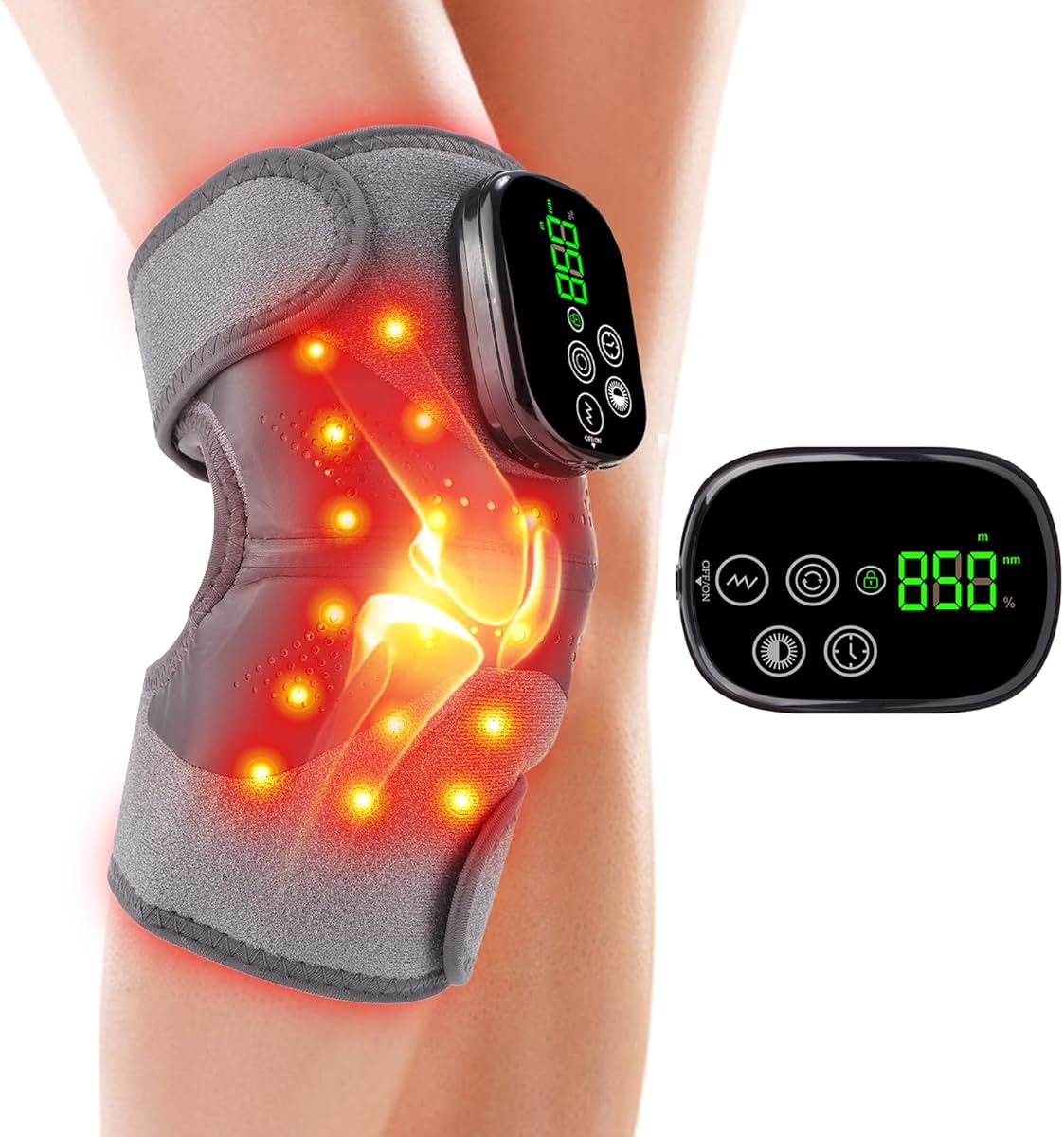
Choosing a Multi-Modal Knee Massager: Heat, Vibration, and Dual-Wavelength Light Therapy
This specific knee massager combines three therapeutic modalities—heat, vibration, and dual-wavelength infrared light therapy (660nm & 850nm)—into a portable, rechargeable brace. Buyers should understand that the effectiveness hinges on the integration of these technologies and the quality of the 5000mAh battery for cordless use. It's designed for targeted relief on knees, joints, elbows, and shoulders.
Key Considerations Before Buying
- Dual-wavelength infrared therapy (660nm for surface tissue, 850nm for deeper penetration) is a key feature; verify the product specifications list these exact wavelengths for legitimate photobiomodulation effects.
- The 5000mAh battery capacity directly impacts portability and session length; a larger capacity supports longer, cord-free use of combined heat and light functions, which are power-intensive.
- Consider the brace's fit and adjustability, as effective light therapy and consistent heat transfer require snug contact with the skin on various joint sizes from knee to shoulder.
What Our Analysts Recommend
High-quality devices in this category will clearly specify the infrared wavelengths (like 660nm/850nm) and light intensity. Look for detailed descriptions of the heating element distribution and vibration patterns, not just generic claims. A robust, adjustable strap system is a critical quality indicator for ensuring proper therapeutic contact.
Light Therapy Market Context
Market Overview
The market for at-home light therapy devices, particularly for pain management, is growing rapidly, with many products combining red/NIR light with heat and massage functions. Products like this knee massager represent a convergence of wellness technologies aimed at providing multi-symptom relief without prescription interventions.
Common Issues
Common concerns include vague or unscientific light therapy claims, poor battery life that limits portability, and flimsy construction that fails to maintain consistent skin contact for effective heat and light delivery. Overstated pain relief promises without clinical backing are also prevalent.
Quality Indicators
Identify quality through technical transparency: reputable products specify light wavelengths in nanometers (nm), battery capacity in mAh, and heating temperature ranges. Build quality is evident in durable, medical-grade fabrics and secure, adjustable fastenings that don't slip during use.
Review Authenticity Insights
Grade B Interpretation
A 'B' grade with an estimated 15% fake review rate suggests a generally trustworthy review profile, but advises cautious optimism. For this product, it means most reviews detailing personal pain relief experiences and portability are likely genuine, but the perfect 5.0 average is slightly inflated.
Trust Recommendation
Prioritize reviews that discuss specific, practical use—like using the device while working, the actual battery life per charge, or comparing its dual-wavelength light to single-wavelength alternatives. Be slightly skeptical of overly effusive, non-specific pain relief claims that dominate the top reviews.
Tips for Reading Reviews
For this tech-integrated brace, focus on reviews that mention using all three functions (heat, vibration, light) together and describe the tangible effects over several weeks. Reviews noting the fit on different body parts (elbow vs. knee) provide more actionable insight than generic praise.
Expert Perspective
This product's strong adjusted rating of 4.60/5, derived from largely authentic reviews, indicates it likely delivers on its core promises for many users. The combination of modalities is its primary appeal, offering a non-invasive, drug-free approach to managing joint discomfort. The high rating, even after adjusting for suspicious reviews, points to satisfactory performance in its niche. However, the effectiveness of the 660nm & 850nm light therapy will vary individually and is best viewed as a complementary therapy.
Purchase Considerations
Weigh the convenience of an all-in-one portable device against the potential need for more powerful, standalone therapies. Consider if your primary need is heat and massage with light therapy as a bonus, or if clinical-grade photobiomodulation is your main goal, which might require a different device type.
Comparing Alternatives
Shoppers should compare the battery life, wavelength specifications, and strap design of similar combo devices, as these are key differentiators beyond marketing claims.


