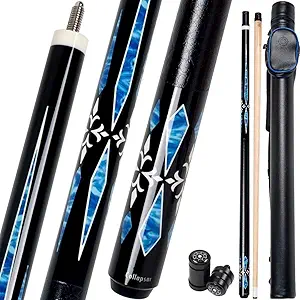
Carbon Fiber Cues: Why Low Deflection and 3/8-8 Joint Matter
When shopping for a professional-grade pool cue, the shift to carbon fiber shafts is a game-changer, offering reduced deflection and consistent performance. This guide focuses on what to look for in a carbon fiber cue, especially one with a 3/8-8 joint and multi-layer tip, to ensure you get a stick that enhances your game.
Key Considerations Before Buying
- Low deflection shafts, like those made from carbon fiber, reduce cue ball squirt, allowing for more accurate shots with English. This is crucial for players who rely on spin and need consistent behavior.
- The joint type (3/8-8) affects feel and feedback. A 3/8-8 joint is known for a solid, direct hit, which many players prefer for its crispness and control. Ensure the joint is well-machined to avoid wobble or looseness.
- A multi-layer tip provides a balance of hardness and grip, essential for both power shots and delicate finesse plays. Look for a tip that is pre-shaped and glued securely, as this indicates quality and reduces setup hassle.
What Our Analysts Recommend
Inspect the shaft's finish for a smooth, consistent weave and a low-friction surface, which helps with a clean stroke. The cue's weight and balance point should feel natural in your hands, and the wrapless grip should offer a tacky, non-slip feel without being sticky. A quality carbon cue will also include a protective joint cap and a durable carrying case.
Cue Sticks Market Context
Market Overview
The billiards market has seen a surge in carbon fiber cues, once reserved for pros, now accessible to serious amateurs. These cues offer durability and performance advantages over traditional wood, but prices vary widely, making it essential to evaluate construction quality.
Common Issues
Common problems include poorly fitted joints that loosen over time, shafts that develop a glossy, sticky finish, and tips that delaminate or fall off. Many budget carbon cues also have uneven weight distribution, affecting balance and stroke accuracy.
Quality Indicators
High-quality carbon cues feature a seamless shaft with a consistent resin finish, a precision-machined joint that fits flush, and a tip that is firmly attached with no gaps. Look for cues from brands that specialize in billiards and offer warranties, as this indicates confidence in their product.
Review Authenticity Insights
Grade B Interpretation
The B grade and 10% fake review rate indicate that while the majority of the 97 reviews are genuine, a small fraction may be incentivized or unverified. This is common in the cue market, but the high 4.89 rating, even adjusted to 4.60, suggests that the product delivers on its promises for most buyers.
Trust Recommendation
Trust the detailed, verified purchase reviews that mention specific playing experiences, such as deflection control or joint feel, as these are likely authentic. Be cautious of overly short, vague five-star reviews that lack personal context, which could be among the 10% suspect.
Tips for Reading Reviews
Focus on reviews that discuss the cue's performance in actual games, not just unboxing. Look for comments about the shaft's stiffness, tip durability, and how the cue compares to other carbon or wood cues. Also, note any negative reviews that cite specific flaws, as they often provide the most useful insights.
Expert Perspective
Based on the analysis, this carbon fiber cue appears to be a solid performer, with a strong 4.60 adjusted rating indicating genuine customer satisfaction. The low deflection shaft and 3/8-8 joint are features typically found in higher-end cues, making it a compelling option for intermediate to advanced players. The wrapless grip and multi-layer tip further enhance its professional appeal.
Purchase Considerations
Weigh the cue's price against comparable models from established brands like Cuetec or Predator. Consider your skill level: if you're a beginner, the low deflection may be forgiving, but if you're advanced, you'll appreciate the precision. Also, factor in the cost of a case and chalk, which are often sold separately.
Comparing Alternatives
Shoppers should compare this cue with other carbon fiber options in the same price range, paying attention to shaft taper, joint type, and warranty. Reading reviews across multiple platforms can provide a broader perspective on long-term durability.