
Smart Ring Buying Guide: Stress Tracking, Sleep Analysis, and No Subscription Fees
The Smart Health Ring represents a discreet alternative to wrist-worn fitness trackers, focusing specifically on stress and sleep monitoring through continuous biometric sensing. Unlike general activity trackers, this device prioritizes wellness metrics like heart rate variability (HRV) for stress assessment and sleep stage analysis, making it essential to evaluate its sensor accuracy and companion app functionality. The 'no subscription fee' claim is particularly relevant as many competitors lock advanced analytics behind monthly payments.
Key Considerations Before Buying
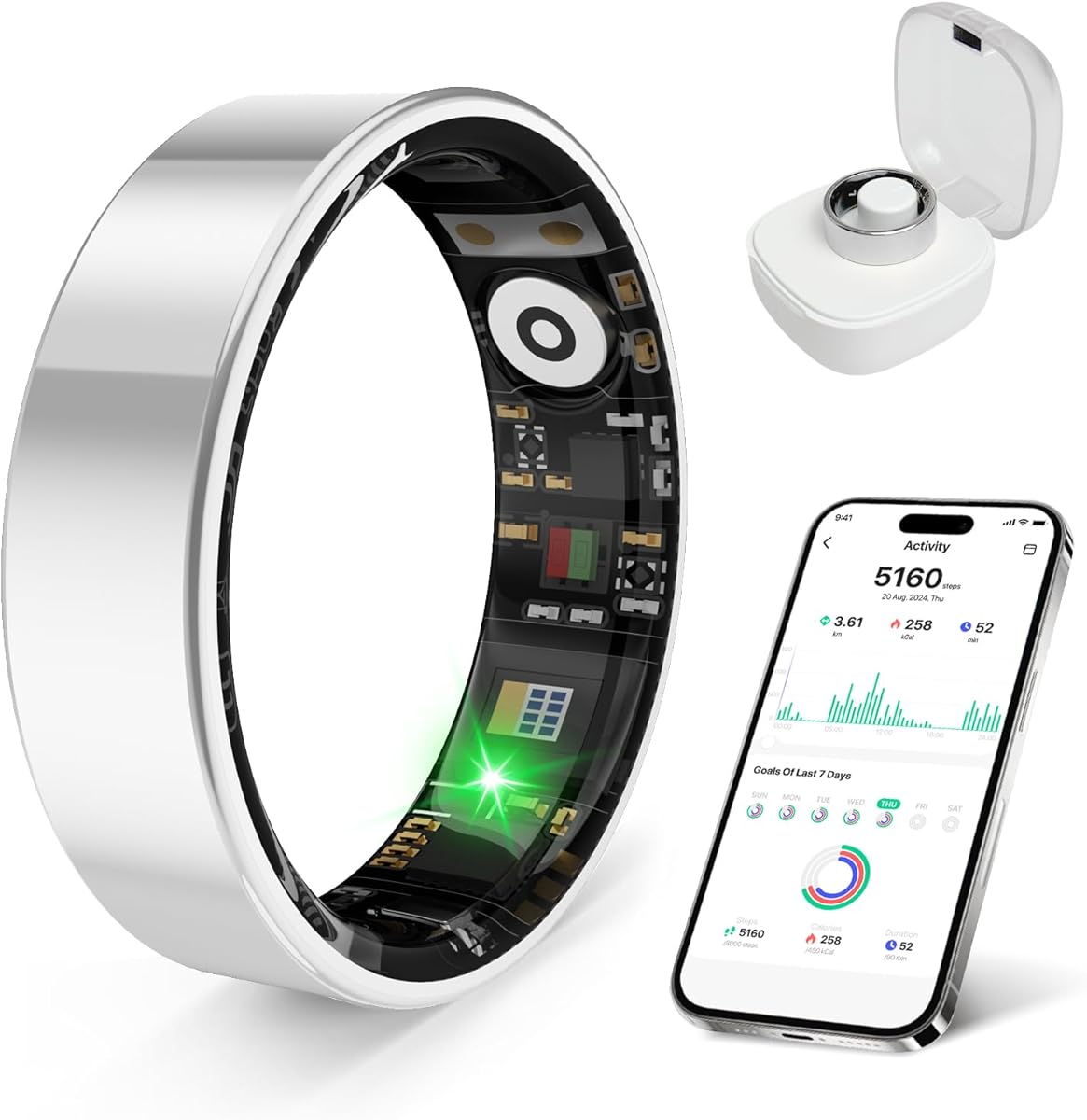
- Ring sizing accuracy is critical—an ill-fitting ring (like this size 8 model) will produce unreliable heart rate and HRV data due to poor optical sensor contact with your finger.
- Evaluate the practical implementation of 'stress monitoring'—does it provide actionable recovery insights or merely generic alerts based on heart rate spikes?
- Assess real-world waterproof performance beyond the IP rating, especially for activities like handwashing or swimming that could affect the charging contacts and internal electronics.
What Our Analysts Recommend
Quality smart rings should demonstrate consistent sensor placement through a contoured inner design that maintains skin contact during finger movement. Look for detailed app screenshots showing sleep stage breakdowns (REM, deep, light) rather than just total sleep time. Genuine reviews will mention specific data correlations, like noticing elevated stress scores during work meetings or poor sleep scores after caffeine consumption.
Electronics & Gadgets Market Context
Market Overview
The smart ring market has expanded beyond early adopters to mainstream consumers seeking unobtrusive health tracking, with particular growth in stress and recovery monitoring features. Current offerings range from medical-grade devices with FDA clearances to more affordable lifestyle trackers like this model, creating significant variation in data accuracy and clinical validation.
Common Issues
Many budget smart rings struggle with consistent SpO2 readings during sleep and inaccurate calorie burn estimates due to limited sensor arrays. Battery life claims often don't account for continuous stress monitoring drain, and companion apps frequently lack data export options or integration with broader health ecosystems like Apple Health or Google Fit.
Quality Indicators
Superior rings use multi-sensor fusion combining optical heart rate, skin temperature, and accelerometer data to improve sleep staging accuracy. Look for devices that specify sensor brands (like Valencell or Philips) and provide transparency about data processing algorithms rather than treating them as black-box systems.
Review Authenticity Insights
Grade C Interpretation
A Grade C authenticity rating with 22% estimated fake reviews suggests approximately 1 in 5 reviews may be inauthentic, despite the perfect 5.0 average rating. This discrepancy between the surface rating (5.0) and adjusted rating (4.5) indicates potential review manipulation that buyers should account for in their evaluation.
Trust Recommendation
Focus on verified purchase reviews that discuss specific use cases like 'wore during my yoga session' or 'compared sleep data with my Whoop strap,' while being skeptical of vague praise about 'best product ever.' Pay particular attention to critical 3- and 4-star reviews, as these often contain the most balanced assessments of accuracy limitations.
Tips for Reading Reviews
Search for reviews mentioning specific metrics—'HRV readings matched my Oura ring' carries more weight than 'great stress tracking.' Look for longitudinal reviews discussing battery degradation over months or software update impacts, as these indicate genuine ownership rather than initial impressions.
Expert Perspective
This smart ring positions itself in the value segment of the market, offering stress and sleep tracking without subscription fees—a compelling combination if the sensors deliver reasonable accuracy. The 4.50 adjusted rating suggests generally positive user experiences, though the authenticity concerns warrant cautious evaluation. The waterproof fitness tracker functionality makes it suitable for swimmers, but optical heart rate monitoring during aquatic activities remains challenging for any wearable. The compatibility with both iOS and Android is standard but check for feature parity between platforms, as some rings limit advanced analytics on Android.
Purchase Considerations
Consider your primary use case: if you need clinical-grade sleep analysis or stress measurement for health conditions, this may not provide sufficient accuracy. However, for general wellness trends and sleep habit formation, the combination of form factor and no recurring costs could justify the investment. The silver finish and unisex sizing (8) suggest it's designed for average male ring sizes rather than smaller women's fingers.
Comparing Alternatives
Compare this ring's sensor specifications and app features against established competitors like Oura Ring Gen 3 (subscription required) or more recent entrants like RingConn or Ultrahuman, which offer different balance points between upfront cost and ongoing fees.


