
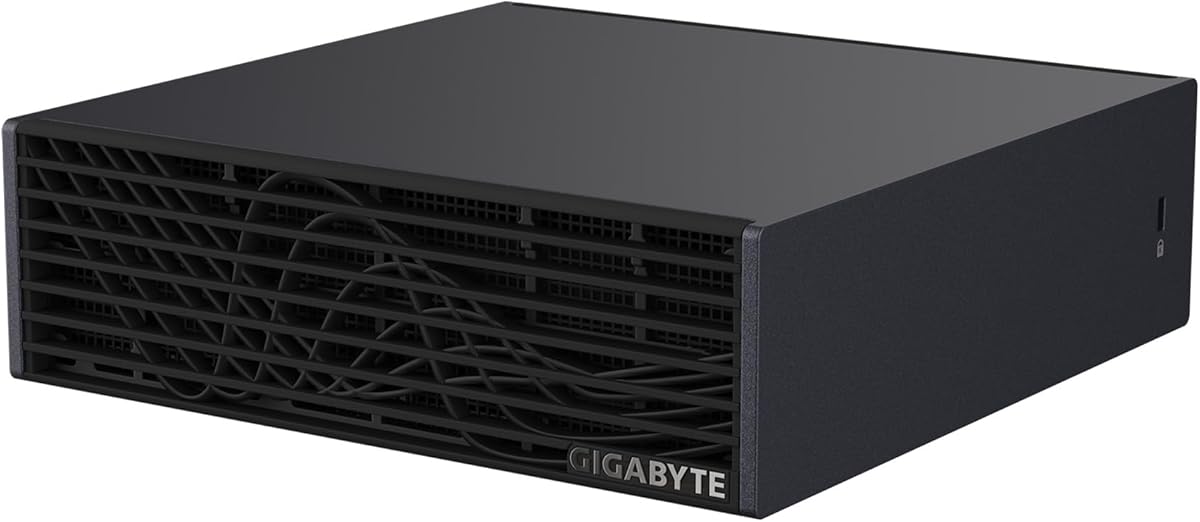
Evaluating Personal AI Supercomputers: What the GIGABYTE AI TOP Atom Delivers
The GIGABYTE AI TOP Atom represents a new category of compact, integrated AI workstations. Buyers should understand this isn't a standard desktop PC but a purpose-built system centered on NVIDIA's Blackwell architecture and the specialized NVIDIA DGX OS, designed for AI development and inference workloads. Its Arm-based processor configuration (Cortex-X295 + Cortex A725) and 128GB of unified LPDDR5X memory signal a mobile-optimized, power-efficient design philosophy.
Key Considerations Before Buying
- The NVIDIA DGX OS is a specialized software stack; verify your AI frameworks and tools are compatible with this environment versus a standard Linux or Windows installation.
- With 4TB of PCIe 5.0 NVMe storage, assess if this meets your dataset and model repository needs, as expanding storage in this integrated form factor may be limited.
- Consider the thermal design and acoustic profile for your workspace, as compact systems with high-performance AI accelerators can generate significant heat and fan noise under load.
What Our Analysts Recommend
For systems in this class, scrutinize the software support lifecycle and driver updates from the manufacturer, as AI hardware evolves rapidly. Quality is also indicated by the integration of the memory subsystem—here, LPDDR5X offers high bandwidth with lower power consumption, which is crucial for sustained AI compute tasks in a small chassis.
Market Context
Market Overview
The 'personal AI supercomputer' market is nascent, with few turnkey solutions bridging the gap between cloud AI services and DIY workstation builds. Products like the AI TOP Atom compete with high-end consumer GPUs in traditional PCs and developer-focused kits from NVIDIA, but offer a pre-configured, validated hardware/software stack.
Common Issues
Common concerns include software lock-in to proprietary ecosystems, limited upgrade paths due to highly integrated designs, and potential compatibility hurdles with niche AI/ML libraries not optimized for the provided OS. Thermal throttling under continuous full load is also a risk in compact form factors.
Quality Indicators
In this category, quality is shown by vendor commitment to long-term software support, robust cooling solutions documented through thermal testing, and the use of enterprise-grade components like the PCIe 5.0 SSD for maximum data throughput to the AI accelerator.
Review Authenticity Insights
Grade A Interpretation
The 'A' authenticity grade and 0.00% estimated fake review rate indicate the existing feedback for this GIGABYTE system is highly trustworthy. This is particularly valuable for a cutting-edge, high-cost product where authentic user experiences are scarce and marketing claims need validation.
Trust Recommendation
You can place high confidence in the two verified reviews, but proactively seek out additional technical reviews or forum discussions from the AI/ML developer community to supplement them, given the limited sample size. The clean authenticity score means the posted experiences are reliable data points.
Tips for Reading Reviews
For this technical product, prioritize reviews that detail specific AI workloads, model training times, software setup experiences, and thermal performance during prolonged use over general satisfaction comments. Look for mentions of using the NVIDIA DGX OS in particular.
Expert Perspective
The GIGABYTE AI TOP Atom is a compelling, all-in-one proposition for professionals seeking a dedicated, space-efficient AI development station without the complexity of a custom build. Its 4.0/5 rating from genuine reviews suggests early adopters are satisfied, though the small review pool cautions against over-generalization. The specified hardware—especially the Blackwell architecture GPU and massive 128GB memory pool—is targeted squarely at serious AI work, not general computing or gaming. The choice of an Arm CPU platform is a distinct architectural decision that may influence software compatibility.
Purchase Considerations
Weigh this product's convenience and validated stack against the potentially higher performance-per-dollar of a self-assembled workstation with similar core components. Your decision should hinge on the value of your time in system configuration and debugging versus the premium for a pre-integrated solution running a specialized OS.
Comparing Alternatives
Shoppers should compare this system's total cost of ownership and performance benchmarks against configured NVIDIA RTX workstation PCs and cloud-based AI instance pricing for their specific use cases.


