
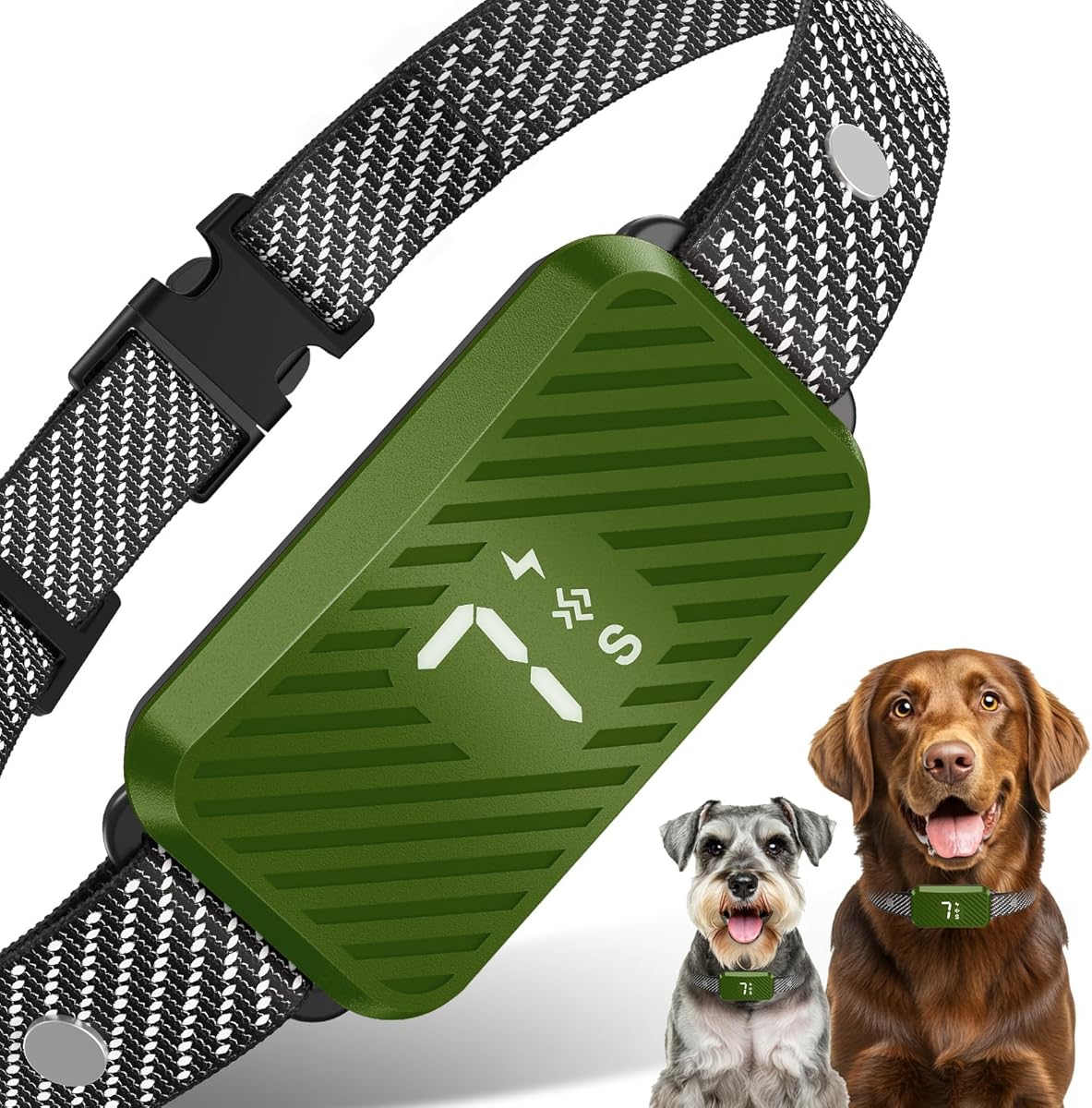
Choosing a Smart Bark Collar: Sensitivity Levels, Modes, and Fit Are Critical
When evaluating this specific rechargeable bark collar with 7 sensitivity levels and 3 modes, focus on how its adjustable features match your dog's temperament and barking triggers. The waterproof green collar design suggests outdoor durability, but the effectiveness hinges on proper sensor calibration and contact points for your dog's neck size. Unlike basic static collars, this model's 'smart' designation implies it attempts to distinguish nuisance barking from other sounds.
Key Considerations Before Buying
- The 7 sensitivity levels are crucial—start at the lowest setting (1) to avoid over-correction, especially for sensitive or small dogs, and increase only if barking persists without reaction.
- Test each of the 3 modes (likely beep, vibration, and static) to find which provides the most effective interruptive cue for your dog with the least stress; vibration often works for attention-seeking barkers.
- Ensure the contact points maintain consistent skin contact without being overly tight; improper fit on large, medium, or small dogs can cause inconsistent detection or skin irritation.
What Our Analysts Recommend
Quality indicators for this collar include a secure magnetic charging port that maintains its waterproof rating (IP67 or similar), clearly differentiated mode buttons to prevent accidental changes, and durable, flexible prongs. The rechargeable battery should hold a charge for several days of typical use, not just hours, based on genuine reviewer feedback about battery life.
Bark Collars Market Context
Market Overview
The bark collar market is saturated with products claiming 'smart' detection, but true audio discrimination that ignores non-bark noises remains a technical challenge. Rechargeable models like this one are displacing battery-operated collars due to long-term cost savings, but reliability varies widely. Collars offering multiple corrective modes (beep/vibe/static) have become standard for progressive training approaches.
Common Issues
Frequent problems include collars triggered by other dogs' barks on TV or nearby, leading to inappropriate corrections, and sensitivity sensors that fail to detect lower-pitched or 'under-the-breath' grumbling. Waterproof claims often fail at charging port seals, and poorly designed contact points can cause pressure sores on dogs with thick or thin coats.
Quality Indicators
Look for collars with adjustable contact point length to accommodate coat thickness, separate sensitivity and mode controls for fine-tuning, and detailed manuals explaining calibration. Genuine customer photos showing the collar on dogs similar in size to yours provide better fit insight than stock images.
Review Authenticity Insights
Grade B Interpretation
A Grade B with an 11% estimated fake review rate indicates generally reliable reviews but suggests some incentivized or overly promotional content is present. The significant drop from the displayed 4.89 to the adjusted 4.60 rating shows that the suspicious reviews were disproportionately positive, artificially inflating the score.
Trust Recommendation
Prioritize verified purchase reviews that mention specific usage scenarios, like 'worked for my Labrador's backyard barking but not for doorbell reactions.' Be skeptical of reviews lacking detail about dog size, barking context, or settings used, as these may be less authentic. The high number of reviews (4,172) means there's substantial genuine data to analyze.
Tips for Reading Reviews
Search for reviews mentioning the 'green' color specifically to confirm you're reading about this exact model. Pay close attention to comments about battery life per charge and whether the 7 sensitivity levels provide a true gradient of response. Look for patterns in complaints—if multiple genuine reviews note the same flaw (e.g., mode button confusion), it's likely a real issue.
Expert Perspective
This collar's strong adjusted rating of 4.60 from a large review pool suggests it performs reliably for most users when properly fitted and calibrated. The three-mode flexibility is a significant advantage, allowing owners to use the least aversive effective method. However, the discrepancy between the displayed and adjusted ratings warrants caution; the product may be good, but not quite as exceptional as the top rating implies. The waterproof feature and rechargeable battery address two major pain points in this category.
Purchase Considerations
Weigh your dog's barking motivation—this collar may excel at deterring territorial barking but be less effective for anxiety-driven vocalizations. Consider your willingness to experiment with the 7 sensitivity settings; improper calibration is the leading cause of user failure. The collar's value depends heavily on consistent charging habits, as a dead collar provides zero training benefit.
Comparing Alternatives
Compare this model's sensitivity range and mode sequencing against competitors offering similar features, particularly noting if others include a 'bark limit' setting before correction activates.


![ABBIDOT 3300 Ft Dog Training Collar with Remote - [New Version] Shock Collar, 5 Training Modes, 88 Levels e Collar, Waterproof Training Collar for Small Medium Large Dogs(15~120 lbs)](https://m.media-amazon.com/images/I/61qp3VKMcPL._AC_SY300_SX300_QL70_ML2_.jpg)


