Choosing a Prosumer NAS: Balancing Intel i3 Power with 10GbE Connectivity
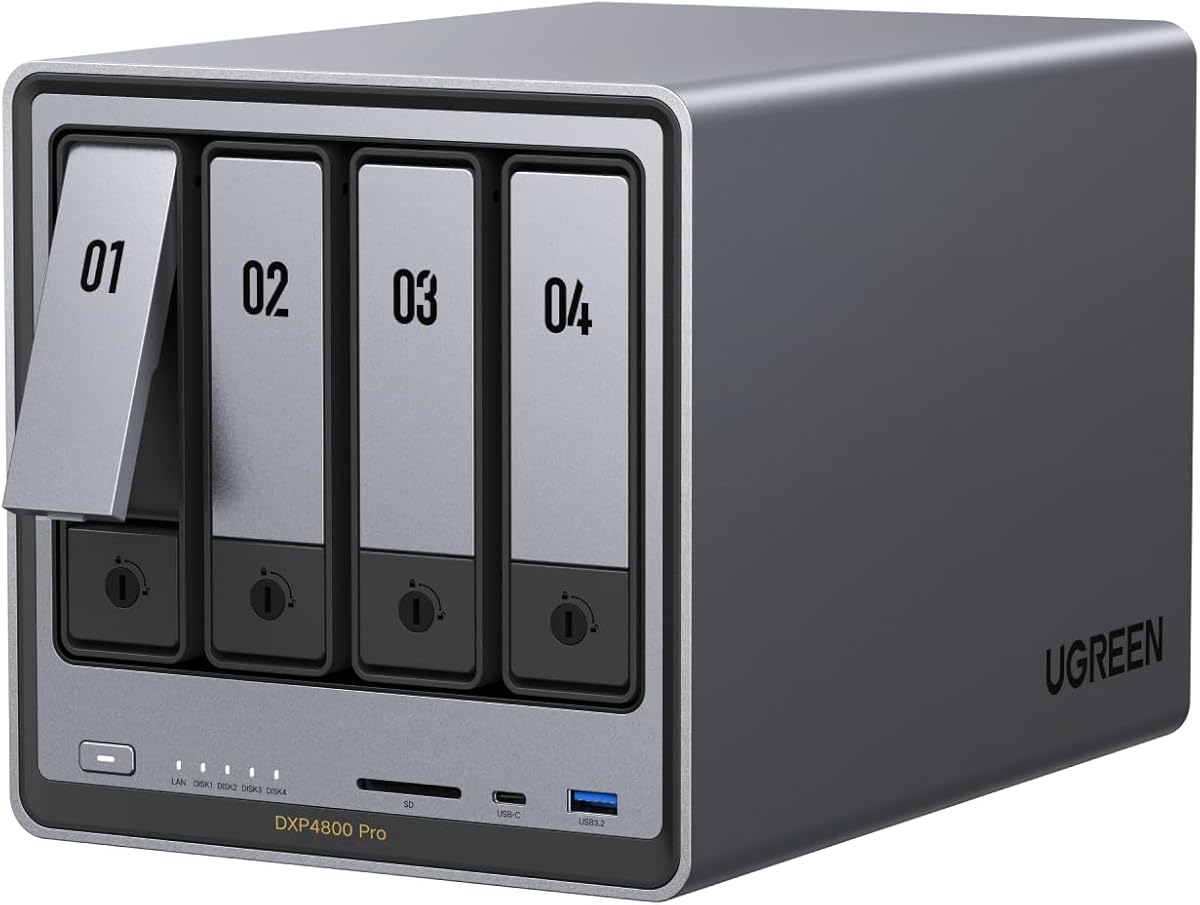
The UGREEN DXP4800 Pro targets users who need more than basic file storage, offering desktop virtualization and media transcoding capabilities. Its Intel Core i3-1315U CPU and dual high-speed network ports position it uniquely between consumer NAS devices and expensive enterprise solutions. Buyers should assess whether their workflow justifies this hardware versus more common ARM-based systems.
Key Considerations Before Buying
- The 10GbE port is a major differentiator; ensure your network infrastructure (switches, cabling) supports this speed to avoid a bottleneck, or plan to use the 2.5GbE port as a fallback.
- The 'diskless' nature means adding a significant upfront cost for four compatible 3.5" hard drives or SSDs, impacting the total system price substantially.
- The dual M.2 NVMe slots and built-in 128GB SSD suggest a design optimized for caching or hosting applications/VMs, which benefits power users running Plex, Docker, or virtual machines directly on the NAS.
What Our Analysts Recommend
In this tier, prioritize units with ECC memory support for data integrity and a robust cooling system for the 6-core CPU under sustained load. The UGREEN's inclusion of an HDMI port directly signals its intent as a potential lightweight home server, not just a storage box. Check for vendor lock-in on the operating system and app ecosystem versus open platforms like TrueNAS.
Enclosures Market Context
Market Overview
The prosumer 4-bay NAS market is increasingly competitive, with established players like Synology and QNAP facing new challengers like UGREEN offering higher-spec hardware at competitive prices. The trend is toward integrating more PC-like components, such as Intel Core processors and DDR5 RAM, to handle compute tasks alongside storage.
Common Issues
Users often underestimate the complexity of managing a powerful NAS OS and the thermal/noise challenges of cooling a desktop-class CPU in a compact enclosure. Another frequent issue is software maturity; new entrants may have less polished or feature-limited operating systems compared to veterans, despite superior hardware.
Quality Indicators
Look for detailed specifications on drive compatibility (SATA vs. SAS, supported capacities), warranty length on the enclosure itself, and the frequency of security/feature updates for the OS. A quality prosumer NAS will have clear documentation on RAID rebuild times and remote access features beyond simple port forwarding.
Review Authenticity Insights
Grade B Interpretation
A 'B' grade with an 11% estimated fake review rate suggests the majority of feedback is trustworthy, but a small cluster of reviews may be overly promotional. The high adjusted rating of 4.60/5 remains strong, indicating genuine satisfaction among verified buyers, particularly regarding the hardware specs.
Trust Recommendation
Focus on reviews that detail specific use cases, like video editing over 10GbE or Docker container deployment, as these are harder to fabricate. Be slightly more skeptical of reviews that only praise the unboxing experience or generic 'speed' without technical context, as these could be part of the estimated 11%.
Tips for Reading Reviews
For technical products like this, prioritize reviews that mention setup hurdles, software bugs, or real-world transfer speeds with their specific drive configuration. Reviews discussing the UGREEN OS experience over time are more valuable than initial hardware impressions, as software is often the long-term pain point.
Expert Perspective
The UGREEN DXP4800 Pro is a hardware powerhouse for its class, with its Core i3 and 10GbE port offering clear performance advantages for demanding tasks. The high authentic rating (4.60/5) signals that early adopters are pleased with its raw capability. However, this is a first-generation product in a mature category, so the primary consideration shifts from hardware specs to the stability and feature set of UGREEN's nascent NAS operating system compared to established alternatives.
Purchase Considerations
This NAS makes the most sense for tech-savvy users or small offices who will actively utilize its compute power for virtualization, as a high-bandwidth media server, or for fast shared project storage. It's likely overkill for simple backup or basic file sharing. Weigh the cost of drives and a 10GbE network upgrade against the total system benefit.
Comparing Alternatives
Shoppers should compare the total cost and software ecosystem with similarly priced units from Synology (like the DS923+ or DS1522+) and QNAP, which may offer less raw CPU power but more mature, integrated software experiences.