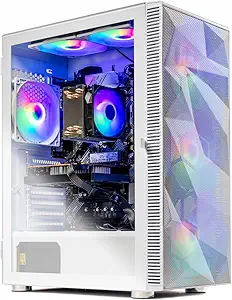
Skytech O11 Vision: Is the RTX 5070 Build Worth Your $2,000?
The Skytech Gaming O11 Vision with an AMD Ryzen 7 7700X and NVIDIA RTX 5070 targets high-refresh 1440p and entry-level 4K gaming. With 32GB of DDR5 RAM and an 850W Gold PSU, it's positioned as a premium mid-tower, but you should weigh the GPU's 12GB VRAM against future titles.
Key Considerations Before Buying
- The RTX 5070 12GB is a strong 1440p card, but its 12GB VRAM may feel constrained in 4K or with heavy texture mods; prioritize this build if you game at 2560x1440.
- The 360mm ARGB AIO cooler and X670 motherboard suggest excellent thermal headroom and upgrade paths, but ensure your case airflow matches the O11 Vision's open-glass design to avoid heat buildup.
- 1TB Gen4 NVMe SSD is fast but fills quickly with modern games (e.g., Call of Duty at 200GB+); consider budget for additional storage shortly after purchase.
What Our Analysts Recommend
In prebuilt gaming PCs like this Skytech, check that the PSU is ATX 3.0 (it is here) for stable power delivery to the RTX 5070, and verify that the RAM runs at its rated 5600MHz speed in the BIOS—some systems ship with slower defaults. Also, inspect the AIO mounting for proper contact; the 360 radiator needs adequate top or side clearance in the O11 Vision chassis.
Towers Market Context
Market Overview
The $1,800–$2,200 prebuilt gaming PC segment is crowded with Ryzen 7000 and Intel 13th/14th gen systems paired with RTX 4070 Ti Super or 5070 cards. Skytech competes with brands like CyberPower and iBuyPower, often differentiating on case aesthetics (like the dual-chamber O11 Vision) and liquid cooling.
Common Issues
Common complaints in this price tier include bloatware (though Skytech is relatively clean), RAM not running at XMP/EXPO speeds out of the box, and GPU coil whine under load. Some users also report that the 850W PSU is adequate but leaves little headroom for future GPU upgrades.
Quality Indicators
Look for verified reviews mentioning thermals under stress (e.g., CPU temps under 85°C with the 360 AIO), actual framerates in specific games, and whether the system arrived with all protective foam intact. A high proportion of verified purchases (as seen here) is a strong sign of a reliable prebuilt.
Review Authenticity Insights
Grade B Interpretation
With a 'B' grade and an estimated 10% fake review rate, the Skytech O11 Vision's feedback is mostly trustworthy but not pristine. The 4.44 Amazon rating likely dips to a more realistic 4.20 after removing suspicious reviews—still solid, but don't expect perfection.
Trust Recommendation
Focus on verified-purchase reviews with specific performance numbers (e.g., 'I get 120 fps in Cyberpunk 2077 at 1440p') rather than vague praise. Given the 10% fake rate, treat any review lacking details or using generic language with caution.
Tips for Reading Reviews
For gaming PCs, prioritize reviews that mention noise levels under load, out-of-box experience (e.g., cable management), and any DOA issues. Skip reviews that only say 'fast' or 'works great' without context—they may be incentivized.
Expert Perspective
The Skytech Gaming O11 Vision offers a compelling balance of current-gen CPU (Ryzen 7 7700X) and GPU (RTX 5070) with premium aesthetics, but the 12GB VRAM and 1TB storage are potential bottlenecks for enthusiast use. The 360 AIO and X670 board provide excellent upgrade flexibility, though the 850W PSU may limit future GPU swaps. Overall, it's a strong 1440p machine that should stay relevant for 3-4 years, but power users might want more VRAM.
Purchase Considerations
Weigh the 12GB VRAM cap against your gaming resolution—if you plan to stick to 1440p, this is a great buy. Factor in an extra $100–150 for a second SSD if you're a heavy game hoarder. The 4.20 adjusted rating and Grade B authenticity suggest most buyers are satisfied, but check return policies for potential DOA units.
Comparing Alternatives
Compare this Skytech with similarly priced builds featuring an RTX 4070 Ti Super (16GB VRAM) if 4K gaming is a priority, or consider a Ryzen 7 7800X3D variant for better CPU-bound performance in esports titles.