Choosing a Mechanical Micrometer: Precision with Carbide-Tipped Anvils
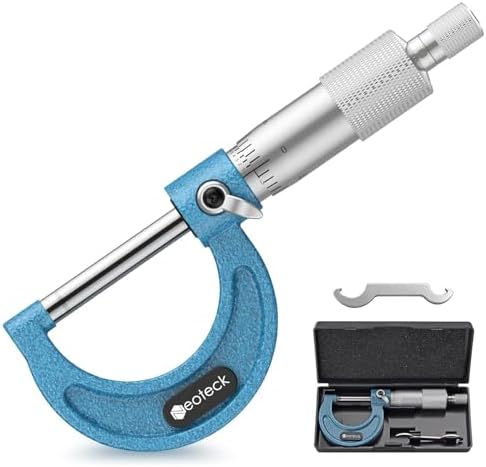
When selecting an outside micrometer like the Neoteck 0-1” model, understanding the role of carbide-tipped anvils and anti-glare graduations is crucial for accurate measurements in machining and automotive work. This guide helps you assess key features that impact durability and readability in demanding shop environments.
Key Considerations Before Buying
- Resolution and accuracy: A 0.0001” resolution is standard for precision work, but ensure the micrometer's frame and spindle are rigid enough to maintain that accuracy under repeated use.
- Anvil material: Carbide-tipped anvils offer superior wear resistance compared to hardened steel, making them ideal for measuring hard or abrasive materials without losing calibration over time.
- Ease of reading: Anti-glare graduations and a satin chrome finish reduce eye strain and parallax errors, especially in bright workshop lighting or when taking quick measurements.
What Our Analysts Recommend
Quality indicators include a smooth, consistent ratchet thimble action, a locking lever that secures the spindle without backlash, and a protective case that prevents dust and impacts. Also check for a calibration wrench and certificate to verify initial accuracy out of the box.
Outside Micrometers Market Context
Market Overview
The mechanical outside micrometer market remains strong among machinists and automotive technicians who prefer battery-free reliability and tactile feedback over digital gauges. Many budget-friendly options now incorporate features once found only on premium brands, such as carbide anvils and friction thimbles.
Common Issues
Common problems include inconsistent ratchet mechanisms that lead to over-tightening, graduations that wear off or are hard to read under shop lights, and anvils that lose flatness after moderate use. Cheaper models may also have frames that flex under heavy pressure, compromising repeatability.
Quality Indicators
Look for micrometers with a hardened steel frame, a carbide-tipped anvil and spindle, and a finely graduated thimble with clear, etched markings. A positive locking lever and a smooth, uniform spindle movement are signs of proper manufacturing tolerances.
Review Authenticity Insights
Grade B Interpretation
The Neoteck micrometer earned a B grade with an estimated 10% fake review rate, meaning the majority of feedback is genuine but a small portion may be incentivized or exaggerated. This is typical for moderately popular tools in this price range, where some sellers seek to boost visibility.
Trust Recommendation
You can trust the 4.20 adjusted rating as a realistic benchmark, but focus on verified purchase reviews that describe specific use cases like measuring shaft diameters or checking brake rotors. These offer the most actionable insights for machining and automotive applications.
Tips for Reading Reviews
When reading reviews, prioritize those that mention the micrometer's feel, consistency over multiple measurements, and any issues with the ratchet or lock. Look for photos showing the tool in use or the graduations up close, as these often reveal real-world quality.
Expert Perspective
The Neoteck 0-1” outside micrometer offers strong value for hobbyists and professionals needing a reliable mechanical gauge with carbide-tipped anvils. Its 0.0001” resolution and anti-glare graduation address common pain points in shop measurement, and the included case and wrench add convenience. However, with a B authenticity grade and a 10% fake review rate, buyers should verify the tool's feel and consistency upon receipt, as some units may vary.
Purchase Considerations
Weigh the cost savings against potential calibration drift or finish imperfections that can occur in this price tier. If you require NIST-traceable accuracy for critical tolerances, consider spending more on a brand with documented quality control, but for general machining and automotive inspection, this micrometer is a competent choice.
Comparing Alternatives
Shoppers should compare this model with offerings from Mitutoyo or Fowler for similar features, especially if long-term durability or certified calibration is a priority.