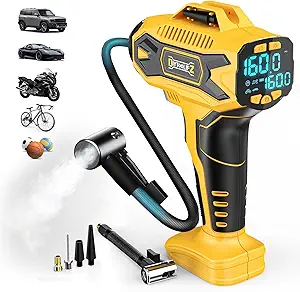
Speed and Convenience: Choosing a Cordless Tire Inflator That Works
When you’re shopping for a portable air compressor like the AUTOONE Tire Inflator, you’re likely prioritizing speed and ease of use. This cordless model promises 3X faster inflation and a one-click smart function, which are key features to evaluate for emergency roadside use or routine top-ups.
Key Considerations Before Buying
- Consider the maximum PSI rating: At 150 PSI, this inflator covers most passenger car, motorcycle, and bike tires, but verify it meets your specific vehicle’s requirements—especially for larger trucks or SUVs.
- Battery life and rechargeability matter: Cordless models rely on internal batteries, so check if the unit holds enough charge for multiple tires or if it needs frequent recharging. User reviews often highlight runtime in real-world conditions.
- Ease of use with the preset function: The one-click smart feature lets you set a target pressure and stop automatically, which saves time and prevents overinflation. Look for clear controls and an accurate gauge.
What Our Analysts Recommend
Quality indicators for cordless inflators include a robust pressure gauge (preferably digital), durable hose and connectors, and a compact design for storage. Also, check for included adapters for balls and other inflatables, as well as a built-in LED light for nighttime use.
Air Compressors & Inflators Market Context
Market Overview
The portable air compressor market has shifted toward cordless, battery-powered models that offer greater convenience than traditional 12V plug-in units. Consumers increasingly demand fast inflation, digital precision, and multi-use versatility for cars, bikes, and sports equipment.
Common Issues
Common concerns include battery life degradation over time, inaccurate pressure readings, and slow inflation speeds despite marketing claims. Users also report that some units overheat after continuous use, which can affect reliability.
Quality Indicators
High-quality inflators typically feature brushless motors for longevity, lithium-ion batteries for consistent power, and a pressure gauge accuracy within ±1 PSI. Look for units with good thermal management and a warranty that covers defects.
Review Authenticity Insights
Grade B Interpretation
With a Grade B and an estimated 10% fake review rate, the AUTOONE inflator’s review pool is mostly trustworthy but has some noise. This means the 4.30/5 adjusted rating is likely a more reliable reflection of real user satisfaction than the 4.56/5 raw average.
Trust Recommendation
We recommend focusing on verified purchase reviews that mention specific use cases, like inflating a slow-leaking tire or pairing with a patch kit. These provide concrete evidence of performance, while overly generic five-star praise should be viewed with caution.
Tips for Reading Reviews
For this product type, prioritize reviews that discuss battery life after several months of use, ease of setting the desired pressure, and whether the unit holds up during multiple tire inflations. Also, note any consistent complaints about gauge accuracy or charging issues.
Expert Perspective
The AUTOONE Tire Inflator stands out for its speed and cordless convenience, backed by a solid 4.30/5 adjusted rating from mostly genuine reviews. Its 150 PSI capacity and one-click smart feature make it a strong contender for everyday drivers and cyclists who want a hassle-free inflation tool. However, the 10% fake review rate suggests some marketing hype, so real-world performance may vary slightly from the most glowing testimonials.
Purchase Considerations
Weigh the benefits of cordless mobility against potential battery limitations—if you frequently need to inflate multiple tires in one session, ensure the battery capacity meets your needs. Also, compare the AUTOONE’s price and features with similar cordless models to confirm it offers the best value for your specific use case.
Comparing Alternatives
Shoppers should compare this inflator with other cordless units like the Viair or Ryobi models, which may offer different battery ecosystems or higher PSI ratings for heavy-duty use.