
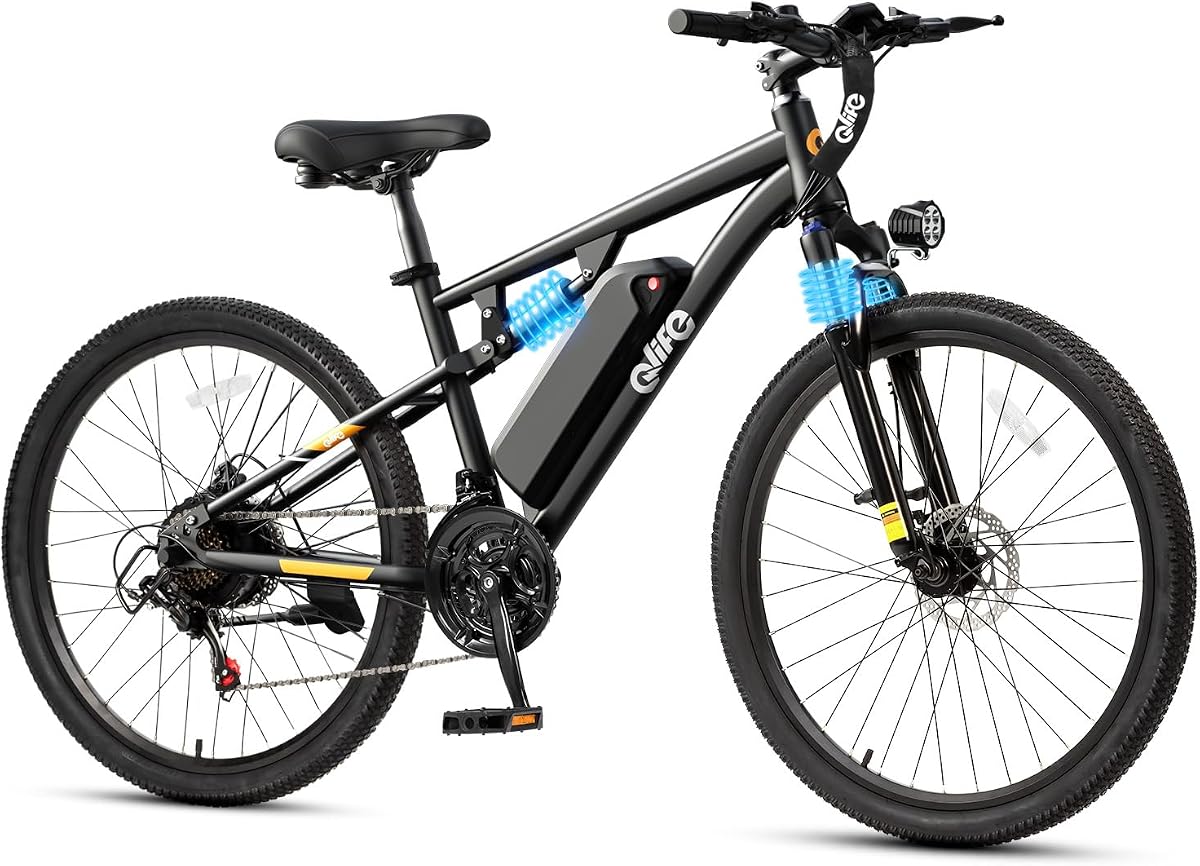
Balancing Power and Range: What to Know About Mid-Power E-MTBs Like the Qlife Racer
The Qlife Racer positions itself as a versatile e-MTB with a 750W/1000W peak motor and a 375Wh battery, targeting riders who want both trail capability and urban commuting range. Buyers should understand that its 'peak' power rating differs from continuous output, and the 40-mile range is highly dependent on terrain and assist level. This specific configuration prioritizes a lightweight frame with moderate battery capacity, making weight-to-power ratio a key consideration.
Key Considerations Before Buying
- The 375Wh removable battery is on the smaller side for a 1000W-peak motor; expect real-world range to be 20-30 miles when using higher assist levels on varied terrain, not the advertised 'up to 40' miles.
- A 21-speed drivetrain paired with a mid-drive motor is ideal for technical climbs, but the Qlife Racer uses a hub motor; assess if the gearing adequately compensates for potential torque limitations on steep inclines.
- The 'lightweight' claim for an e-MTB with a hub motor and battery requires scrutiny; compare its actual assembled weight against competitors to gauge true portability and handling.
What Our Analysts Recommend
For e-MTBs in this class, examine the motor's torque rating (in Newton-meters, not just watts) and the battery's amp-hour (Ah) rating alongside watt-hours. Quality indicators include a branded battery cell manufacturer (like Samsung or LG) mentioned in the specs, and a waterproof rating for the motor and battery connectors, which is crucial for trail use.
Electric Bicycles Market Context
Market Overview
The sub-$1,500 e-MTB market is crowded with direct-to-consumer brands like Qlife offering high peak power ratings, but often with smaller batteries to hit price points. There's a current trend toward 'hybrid' e-MTBs that blend mountain bike geometry with commuter features, though true off-road durability at this price requires careful component scrutiny.
Common Issues
Common pain points include overstated range claims, proprietary charging systems that are hard to replace, and hub motors that lack the fine-tuned torque control of mid-drives for technical trail riding. Assembly quality and post-purchase support from online-only brands are frequent review themes.
Quality Indicators
Look for specifics on the motor's waterproof standard (IP rating), the inclusion of torque sensors versus basic cadence sensors for natural pedal assist, and the quality of the mechanical disc brakes (branded brakes like Tektro are preferable over generic). A removable battery with a clear charge cycle warranty is a strong plus.
Review Authenticity Insights
Grade B Interpretation
A 'Grade B' with a 10% estimated fake review rate suggests the majority of the Qlife Racer's reviews are trustworthy, but shoppers should be mildly cautious of overly glowing assessments. The adjusted rating of 4.10/5, down from 4.33/5, indicates the genuine feedback is still strongly positive, just slightly less so.
Trust Recommendation
Focus on verified purchase reviews that detail long-term ownership (mentioning months of use) and discuss specific scenarios like hill climbing performance or battery degradation. Be skeptical of reviews that only praise the unboxing or assembly without addressing real-world ride quality after 50+ miles.
Tips for Reading Reviews
For this e-bike, prioritize reviews that mention actual range tests, motor performance on specific grade hills, and interactions with customer service for parts or tuning. Reviews noting the bike's behavior in both pedal-assist and throttle-only modes are particularly valuable for understanding its versatility.
Expert Perspective
The Qlife Racer's specifications suggest a competitively priced, power-focused e-MTB that likely excels on moderate trails and paved paths where its peak 1000W output provides a fun boost. However, the 375Wh battery is a compromise; it reduces weight but limits all-day adventure potential. The strong authentic review rating (4.10/5) indicates most real buyers are satisfied, particularly with its power delivery and value proposition. The hub motor design means maintenance is simpler than a mid-drive, but true mountain biking enthusiasts might find its weight distribution and climbing torque less optimal for technical terrain.
Purchase Considerations
This bike is a compelling choice for a rider seeking a powerful, agile e-MTB for shorter, aggressive rides or a hilly commute where they can recharge daily. It's less ideal for riders prioritizing maximum range, the most natural pedal feel (likely uses a cadence sensor), or rigorous daily off-road use where a mid-drive motor's efficiency would be superior.
Comparing Alternatives
Shoppers should compare the Racer's power-to-battery ratio and component spec (brakes, derailleur) against similar models from brands like Ecotric or Ancheer to assess true value.


