
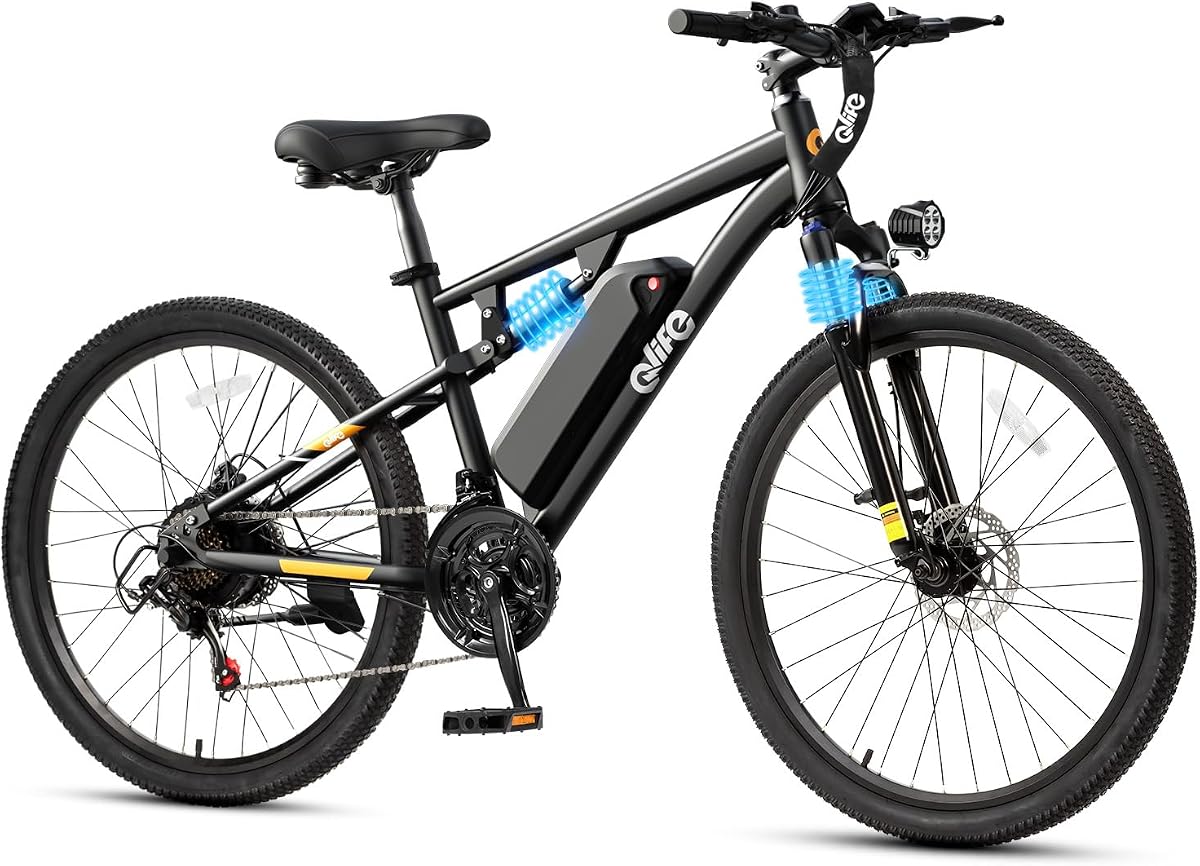
Qlife Racer E-MTB: 21-Speed Power & Range for Trail Riders
If you’re shopping for an electric mountain bike that balances trail capability with commuter practicality, the Qlife Racer stands out with its 21-speed gearing and a peak 1000W motor. This step-over e-MTB is designed for adults who want a lightweight frame without sacrificing power, offering a removable 375Wh battery for up to 40 miles of range. Before you buy, it’s crucial to understand how its dual-speed motor options (25 mph or 22 mph) and 26x2.1-inch tires fit your riding terrain and local regulations.
Key Considerations Before Buying
- Motor power and speed settings: The Qlife Racer offers a peak 1000W motor with a 25 mph option (likely for off-road) and a 750W/22 mph setting—check your state’s e-bike class laws to ensure compliance on public trails or roads.
- Battery range vs. real-world use: While the 375Wh battery claims up to 40 miles, actual range drops significantly with throttle-only riding, steep hills, or higher assist levels—plan for 20-30 miles under typical mixed terrain.
- Weight and portability: At roughly 50 lbs, this lightweight e-MTB is easier to lift than many fat-tire models, but the step-over frame and 26-inch tires still require a sturdy rack or storage space for transport.
What Our Analysts Recommend
In an e-MTB like the Qlife Racer, quality indicators include a reliable brushless motor (here rated at 750W sustained), a removable battery with a lockable mount, and a drivetrain that shifts smoothly under load. Check for hydraulic or mechanical disc brakes—this model uses mechanical, which are adequate but may need more frequent adjustment for aggressive off-road use. Also, verify that the 21-speed Shimano derailleur is properly tuned out of the box, as misalignment is a common assembly issue.
Electric Bicycles Market Context
Market Overview
The e-MTB segment is rapidly growing, with consumers seeking affordable alternatives to premium brands like Trek or Specialized. Models like the Qlife Racer target the mid-range market, offering respectable power and range at a lower price point, but often compromise on component durability and warranty support. Battery technology is improving, but 375Wh packs are considered entry-level for serious trail riders.
Common Issues
Common complaints in this price tier include inconsistent battery life estimates, motor noise under load, and assembly difficulties—some bikes arrive with misaligned brakes or loose spokes. The Qlife Racer’s reviews mention good packaging but occasional tuning needs, which is typical for direct-to-consumer e-bikes. Another concern is replacement parts availability for lesser-known brands like Qlife.
Quality Indicators
Look for a UL-certified battery, a motor with at least 500W continuous output, and a frame material that balances weight and strength—aluminum alloy is standard here. Verified purchaser reviews that describe specific ride experiences (e.g., hill climbing, range tests) are more trustworthy than vague praise. Also, a brand’s customer support responsiveness is a key quality signal in this category.
Review Authenticity Insights
Grade B Interpretation
A Grade B authenticity rating with 10% estimated fake reviews suggests the Qlife Racer’s feedback is mostly reliable, but you should still approach with cautious optimism. The analysis found clear signals of genuine experiences—such as specific details about delivery speed and assembly—so the core narrative is trustworthy. However, the 10% suspicious rate means a few reviews may be incentivized or exaggerated, particularly those lacking concrete usage context.
Trust Recommendation
Given the moderate fake review percentage, I recommend focusing on reviews that mention specific ride conditions (e.g., “climbed a 15% grade on assist level 3”) and verified purchase badges. Cross-check the 4.33-star average with the adjusted 4.10 rating—this suggests the product is solid but not exceptional. For a purchase this significant, consider ordering from a retailer with a solid return policy to mitigate risk.
Tips for Reading Reviews
When reading reviews for e-bikes like the Qlife Racer, prioritize those that discuss battery life in miles (not just “good”), motor responsiveness on hills, and assembly difficulty. Be skeptical of reviews that use generic phrases like “works great” without specifics, or that appear to be posted shortly after launch. Also, look for photos of the actual bike setup, as these often indicate genuine ownership.
Expert Perspective
The Qlife Racer is a competitive entry-level e-MTB that delivers on its core promises: a powerful 1000W peak motor, 21-speed versatility, and a lightweight build that doesn’t break the bank. The 4.10 adjusted rating (from a B-grade authenticity pool) suggests most buyers are satisfied, particularly with its speed and range for the price. However, the mechanical disc brakes and 375Wh battery may leave experienced riders wanting more for technical trails or long-distance tours. Overall, it’s a solid choice for casual off-roaders and commuters who value power and gearing options over premium components.
Purchase Considerations
Weigh the Qlife Racer’s affordable price against potential hidden costs like professional assembly (if you’re not handy) or a backup battery for longer rides. The 21-speed drivetrain is a clear advantage over single-speed e-bikes, but ensure the gear range matches your local terrain—steep hills may still require significant pedaling effort. Also, consider that the 25 mph top speed is only available in off-road mode, so verify local e-bike class laws before riding on public paths.
Comparing Alternatives
Shoppers should compare the Qlife Racer with similarly priced e-MTBs like the Ancheer 26-inch or the Ride1Up 700 Series, which offer different trade-offs in motor placement, battery capacity, and warranty length. Test-riding a comparable model at a local shop can help clarify your priorities.


