
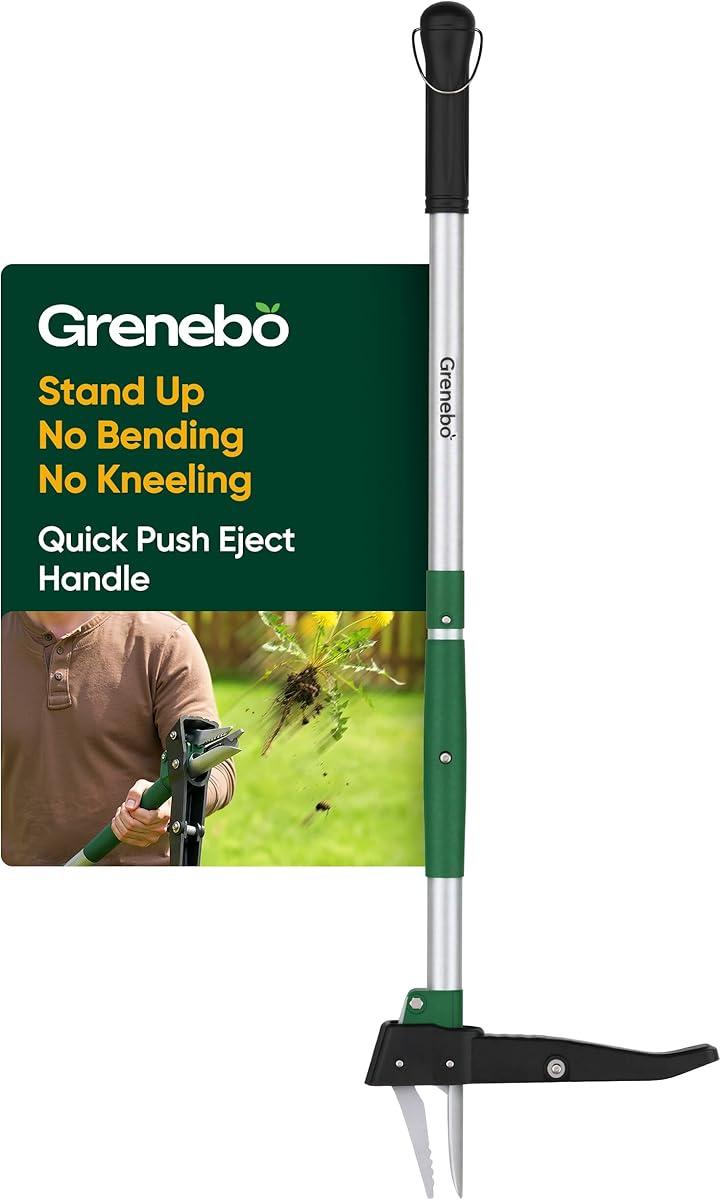
Choosing a Stand-Up Weeder: Eject Mechanisms, Claw Design, and Ergonomic Considerations
When evaluating a stand-up weed puller like this specific claw-and-eject model, focus on its ability to remove entire taproots without bending. This tool's success hinges on its four-claw mechanism's grip strength and the smoothness of its foot-activated ejection system, which are critical for tackling dandelions and crabgrass.
Key Considerations Before Buying
- Assess the claw's material and tine spacing; too wide and it misses slender weeds, too brittle and it snaps on mature roots.
- The ejection mechanism's reliability is paramount—a sticky or weak spring defeats the core 'no bending' benefit and leads to hand-cleaning the tool.
- Consider handle length and foot pedal placement; improper ergonomics can transfer strain to your back despite the standing design, especially on uneven ground.
What Our Analysts Recommend
High-quality stand-up weeders feature hardened steel claws that resist spreading under pressure and a robust, sealed ejector spring to prevent soil jamming. The connection between the shaft and head should be reinforced, as this is a common stress point during levering actions.
Manual Weeders Market Context
Market Overview
The manual stand-up weeder market is crowded with similar claw-style tools, making differentiation difficult. Recent innovations focus on improved ejection mechanisms and composite materials to reduce weight without sacrificing leverage.
Common Issues
Frequent failures include claws bending on compacted soil, ejection mechanisms clogging with mud, and handles loosening at the joint. Many tools struggle with weeds that break at the surface, leaving the root intact.
Quality Indicators
Superior tools use a single, solid metal rod for the shaft rather than tubing, and incorporate a positive 'click' or clear engagement feedback when the claws penetrate fully. Look for models specifying heat-treated claws for durability.
Review Authenticity Insights
Grade B Interpretation
A 'Grade B' with an estimated 15% fake review rate suggests most feedback is genuine, but shoppers should be slightly cautious of overly effusive praise. The adjusted rating of 4.30/5, down from 4.67/5, is a more reliable performance indicator.
Trust Recommendation
Prioritize reviews that mention specific use cases, like removing mature dandelions or working in clay soil, over vague 'works great' comments. The high rate of verified purchases (all 9 analyzed) adds credibility to the performance claims.
Tips for Reading Reviews
For this product, seek out reviews detailing the eject mechanism's performance over time and any issues with the claw's grip on wet or dry roots. Reviews discussing handle comfort during extended use are particularly valuable.
Expert Perspective
The analysis data indicates a well-received product with a strong authentic rating of 4.30/5. The design addresses a core gardening pain point—root removal without kneeling—but its long-term durability depends on the claw and ejector's construction. The high proportion of genuine reviews provides confidence in the reported ease of use for common lawn weeds.
Purchase Considerations
This tool is best suited for those with larger lawn areas plagued by broadleaf weeds like dandelions. Consider your soil type; very rocky or heavy clay soil may challenge the claw's penetration and increase wear. It's less ideal for delicate garden beds where precision is required.
Comparing Alternatives
Shoppers should compare the claw design and ejection action with similar stand-up models, as mechanisms vary significantly in reliability.


