
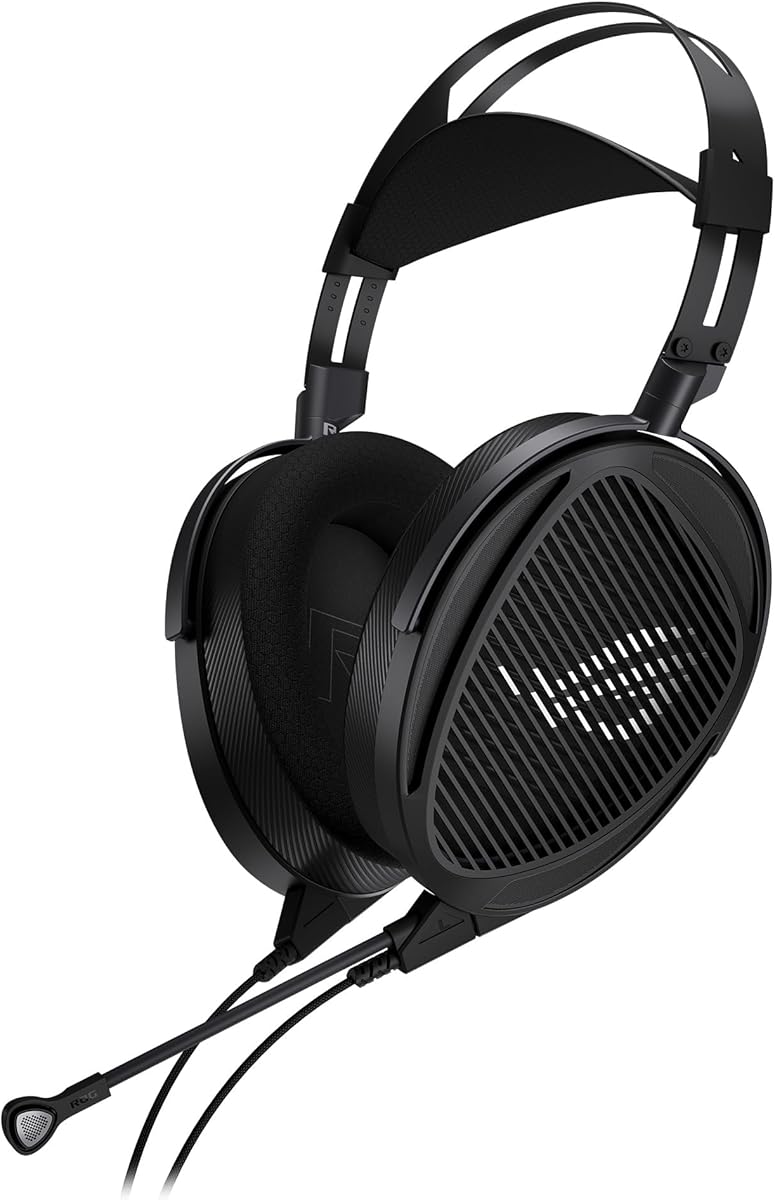
Evaluating the ASUS ROG Kithara: A Hybrid Gaming-Audiophile Headset with Planar Magnetic Drivers
The ASUS ROG Kithara represents a specific convergence of gaming and audiophile headphone design, featuring open-back construction and HIFIMAN planar magnetic drivers tuned by ROG. Buyers should understand that this product targets users who want both competitive gaming audio cues and high-fidelity music listening from a single wired headset. Its compatibility with external DACs and amps indicates it's designed for users willing to invest in audio quality beyond basic gaming headsets.
Key Considerations Before Buying
- Planar magnetic drivers, like the HIFIMAN units in the Kithara, typically offer faster transient response and lower distortion than dynamic drivers, which can benefit both gaming precision and music detail, but often require more power to drive properly.
- Open-back design provides a wider, more natural soundstage ideal for immersive gaming and critical listening, but leaks sound both ways, making it unsuitable for noisy environments or situations where you need audio privacy.
- The inclusion of extra ear pads suggests ASUS recognizes comfort is crucial for long gaming sessions, but the actual material quality and breathability will determine real-world wearability during extended use.
What Our Analysts Recommend
For a hybrid product like the Kithara, examine the impedance and sensitivity specifications to determine if it truly needs external amplification or can run adequately from a console controller or PC motherboard. Check the microphone's specifications and implementation—audiophile-grade headphones often compromise on mic quality, but gaming headsets cannot. The build quality of the adjustable headband and yoke system is critical, as planar magnetic drivers can be heavier than traditional dynamic drivers.
Headsets Market Context
Market Overview
The premium gaming headset market is increasingly segmented, with products like the Kithara targeting the niche intersection of competitive gaming and high-fidelity audio. Traditional gaming brands like ASUS are partnering with established audiophile manufacturers like HIFIMAN to create hybrid products that appeal to discerning users who refuse to compromise between gaming performance and musical accuracy.
Common Issues
Hybrid gaming-audiophile headsets often struggle with identity, delivering neither the ultimate gaming communication features nor the purest audiophile sound. Open-back designs, while sonically superior, sacrifice noise isolation completely. Additionally, planar magnetic drivers, while technically impressive, can be demanding on power sources, potentially underperforming when connected directly to mobile devices or underpowered console controllers without proper amplification.
Quality Indicators
In this category, quality is indicated by detailed driver specifications (size, magnet type, frequency response), robust construction materials at stress points (headband sliders, yoke hinges), and thoughtful accessories like high-quality cables with in-line controls or adapters. The inclusion of a detachable microphone with good off-axis rejection is particularly important for a product claiming both gaming and audiophile credentials.
Review Authenticity Insights
Grade B Interpretation
The 'Grade U' and 0.00% fake review rate indicate this product has no verified customer reviews on this platform. This is common for newly launched or niche products, especially in the hybrid gaming-audiophile segment where early adopters are limited. The absence of data means there's no crowd-sourced feedback to validate ASUS's performance claims.
Trust Recommendation
Given the complete lack of user reviews, you must rely entirely on professional technical reviews, manufacturer specifications, and your understanding of planar magnetic technology and open-back design. Seek out hands-on reviews from trusted audio and gaming publications that can test the headset with DACs/amps as intended, rather than relying on any early marketing impressions.
Tips for Reading Reviews
When reviews eventually appear, prioritize those that discuss the Kithara's performance in both specific gaming scenarios (like FPS positional audio) and with various music genres. Look for mentions of its power requirements—does it truly need an amp, or does it function well with a console? Scrutinize any comments about build quality, especially the adjustable headband's long-term durability.
Expert Perspective
The ASUS ROG Kithara is a technically ambitious product that makes clear trade-offs. Its use of HIFIMAN planar magnetic drivers suggests a genuine commitment to audio quality uncommon in mainstream gaming headsets. However, the open-back design and likely higher power requirements position it as a specialist tool for dedicated gamers with a quiet environment and possibly existing audio equipment (DAC/amp). The lack of any user reviews (0.00 rating) means its real-world comfort, microphone performance, and durability are complete unknowns, representing a significant purchase risk for early adopters.
Purchase Considerations
Only consider the Kithara if you specifically value planar magnetic sound characteristics and open-back acoustics for gaming, and have the equipment to drive it properly. You must be comfortable being an early adopter without the safety net of community feedback. Evaluate your need for the included microphone versus using a standalone mic with dedicated audiophile headphones, which might offer better sound quality at a similar total price point.
Comparing Alternatives
Shoppers should compare the Kithara's promised specifications and price against established open-back gaming headsets and entry-level planar magnetic headphones from brands like HIFIMAN or Audeze, paired with a separate microphone.


